
Juneau Alaska 2026 — What to Know Before Visiting Alaska’s Capital
Juneau surprises most first-time visitors in the same way: you land at the airport, the mountains close in on all sides, and you realize there’s no road out. Alaska’s capital city is accessible only by air or sea — a quirk that shapes everything about visiting, from how you pack to how long you stay. Here’s what you actually need to know before you go.
Getting There: No Road Access
Juneau is one of the few state capitals in the U.S. with no highway connection to the rest of the state or country. Your options are flying into Juneau International Airport (JNU) or arriving by ferry through the Alaska Marine Highway system. Alaska Airlines serves Juneau daily from Anchorage, Seattle, and a handful of other hubs; flights from Anchorage run around 90 minutes.
The Alaska Marine Highway is the slower but more scenic choice. Ferries run through the Inside Passage connecting Juneau to Bellingham (Washington), Ketchikan, Sitka, and other Southeast Alaska communities. If you have the time, it’s one of the great underrated Alaska travel experiences. For a deeper breakdown of ferry routes and booking, the full Alaska Marine Highway guide covers everything you need to plan it.
Cruise ships are the other major arrival mode — Juneau is one of the busiest cruise ports in Alaska, with ships docking almost daily May through September. If you’re arriving independently, be aware that downtown gets crowded on days when multiple ships are in port simultaneously.
When to Visit
Juneau’s peak season runs May through September, when daylight is long, wildlife is active, and the Mendenhall Glacier is fully accessible. Summer temperatures hover between 50°F and 65°F — cool by most standards but comfortable for hiking and glacier walks. Rain is frequent year-round; Juneau averages over 60 inches of precipitation annually. Pack a quality waterproof jacket regardless of when you visit.
Shoulder seasons (April and October) offer fewer crowds and lower prices. The surrounding mountains typically hold snow well into spring, making for dramatic scenery even before peak season opens. Winter is quiet but can be genuinely beautiful — especially for anyone interested in aurora viewing from the surrounding hills.
Mendenhall Glacier
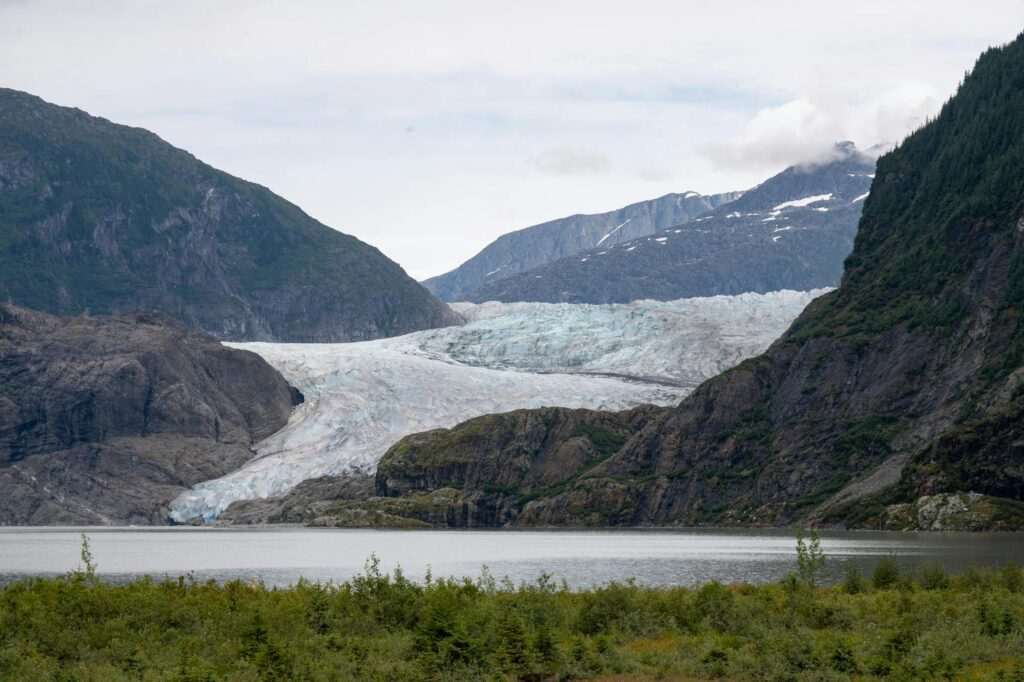
The Mendenhall Glacier is Juneau’s signature attraction, and for good reason: it’s one of the few glaciers in the world that’s accessible on foot from a major city. The Mendenhall Glacier Visitor Center sits about 12 miles from downtown, and a network of trails leads to multiple viewpoints along the ice face and Mendenhall Lake.
The ice caves inside the glacier have become one of the most sought-after experiences in Southeast Alaska. Access requires a guided kayak or small-boat tour to reach the cave entrances — these sell out well in advance during summer. The caves themselves are extraordinary: blue-lit chambers of glacial ice with waterfall passages carved by meltwater. Book early if this is on your list.
For a more accessible glacier experience, the Photo Point Trail (0.3 miles) and the East Glacier Loop (3.5 miles) can both be done independently with no guide required.
Glacier Bay National Park
Juneau is the primary gateway to Glacier Bay National Park, one of the crown jewels of the U.S. park system. The park protects 3.3 million acres of tidewater glaciers, fjords, and coastal wilderness — and it’s only reachable by boat or small plane from Juneau.
Glacier Bay Tours by Phillips Cruises & Tours offers day cruises into the bay. These are full-day excursions from the Juneau waterfront, typically running 8–10 hours and covering multiple glaciers. Humpback whale sightings are common inside the bay. Plan one full day for this if it’s on your itinerary — it’s not a half-day activity.
Wildlife
Juneau has exceptional wildlife density for a city its size. Humpback whales feed in Stephens Passage and Auke Bay throughout summer. Bald eagles are year-round residents — you’ll see them perched on utility poles and fishing the waterfront regularly. Harbor seals haul out near the boat harbor downtown.
Black bears are common in Juneau’s residential neighborhoods, particularly in the Mendenhall Valley. They’re drawn to berry bushes, fish streams, and unsecured garbage. This is a normal part of living in and visiting Juneau — be aware on trails, secure food properly when camping, and don’t approach or feed bears.
Getting Around
Juneau’s downtown core is walkable: the waterfront, historic district, state capitol building, and Mount Roberts Tramway are all within easy walking distance of each other and the cruise ship docks. For the Mendenhall Glacier and Auke Bay, you’ll need transportation — the city bus (Capital Transit) reaches both, though schedules can be infrequent. Rideshare apps operate in Juneau, and taxis are available at the airport.
A rental car is worth considering if you plan to explore the road system beyond downtown, though be aware: Juneau’s road network is limited to roughly 100 miles total. There’s nowhere to drive out of town.
Flightseeing
One of the best ways to understand the scale of Juneau’s glacial landscape is from the air. Alaska Helicopter Tours and floatplane operators offer glacier landings and scenic circuits over the Juneau Icefield — the 1,500-square-mile expanse of ice that feeds Mendenhall and a dozen other glaciers. A 30-minute helicopter tour typically includes a landing on the ice itself. For something more personalized, Salmonberry Travel & Tours builds custom Southeast Alaska itineraries including Juneau-based experiences.
Practical Notes
- Weather: Always carry a waterproof layer. Rain can arrive quickly in any season.
- Cruise ship days: Check the port schedule — when three ships are in port simultaneously, downtown can feel overcrowded. Plan glacier or trail activities for busy ship days and save downtown shopping and dining for quieter ones.
- Elevation: Trailheads above town gain elevation quickly. The Mount Juneau Ridge trail gains 3,500 feet — come prepared.
- Cell service: Coverage is generally good downtown and along main roads, but trails and backcountry areas have spotty or no service.
- Cost: Juneau isn’t a budget destination. As an island community with no road access, most goods arrive by barge or air, which elevates prices on food, lodging, and supplies.
Juneau rewards visitors who lean into its isolation rather than fighting it. The fact that there’s no highway exit means the surrounding wilderness is genuinely wild, the wildlife is genuinely present, and the glaciers are genuinely close. Give yourself at least two full days — one for the glacier, one for everything else — and you’ll leave with a sharper picture of what Alaska is actually like beyond the postcard version.
Featured photo by Beth Fitzpatrick on Pexels.



No comments yet.