
Midnight Sun Anchorage: 2026 Guide to Alaska’s Endless Summer Light
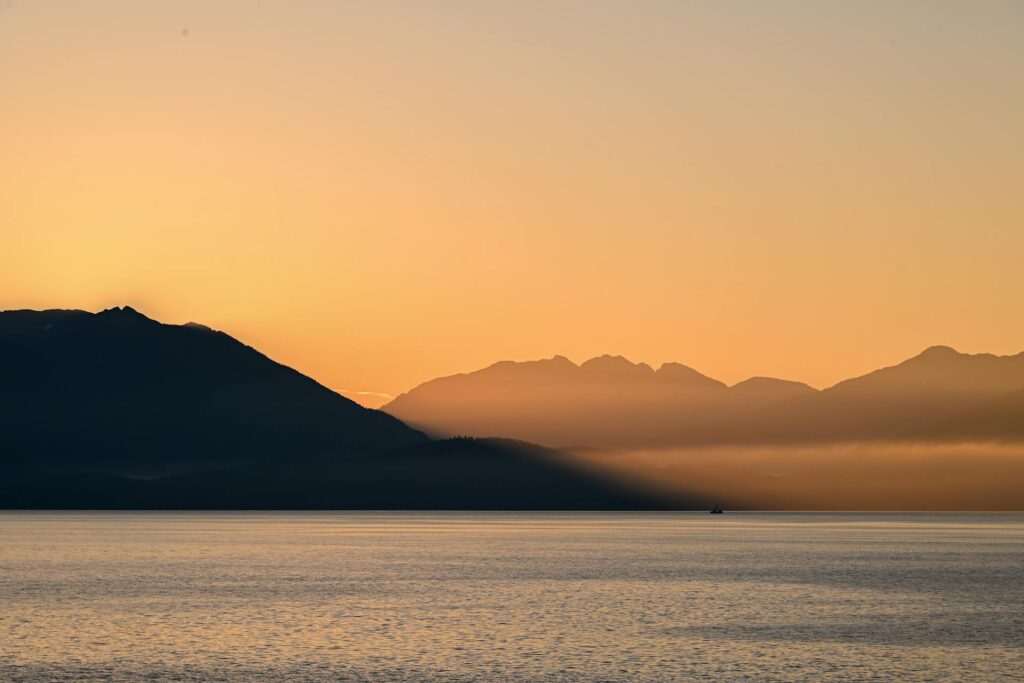
Sometime in June, Anchorage visitors notice something strange: it’s 11 p.m. and the sky is still blazing gold over the mountains. Children play in front yards. Restaurants fill for late dinners. The sun barely dips toward the horizon before it climbs again. This is the midnight sun in Anchorage — one of Alaska’s most disorienting, exhilarating, and utterly unforgettable natural phenomena. If you’ve never experienced a night that never really gets dark, here’s how to make the most of it.
What Is the Midnight Sun?
Anchorage sits at 61° north latitude — far enough toward the Arctic that the summer solstice brings extraordinary daylight. On June 21, the city sees approximately 19.5 hours of daylight, with sunrise around 4:21 a.m. and sunset around 11:42 p.m. Even after technical sunset, civil twilight keeps the sky bright enough to read outside well past midnight. The effect runs from roughly mid-May through late July, with the most dramatic light in the two weeks on either side of the solstice. You won’t see the sun literally not set unless you travel north of the Arctic Circle, but in Anchorage the difference is subtle — the sky never fully darkens to black.
How It Affects Daily Life
For locals, the midnight sun is both a blessing and a calibration problem. Sleeping is legitimately difficult without blackout curtains. Dinner gets pushed back to 8 or 9 p.m. naturally. People mow lawns at 10 p.m. and think nothing of it. Hardware stores sell out of blackout curtains by late May. As a visitor, give yourself a few days to adapt — or embrace the chaos and stay up for it.
Top Midnight Sun Experiences
Midnight Sun Baseball (June): Alaska’s most celebrated midnight sun sports tradition is the annual Midnight Sun Game, played by the Fairbanks Goldpanners at Growden Field in Fairbanks on the solstice — first pitch at 10:30 p.m., no artificial lighting, a tradition running since 1906. The drive from Anchorage is roughly 4.5 hours, making it a full road trip. Closer to home, Anchorage has its own summer collegiate baseball tradition: the Glacier Pilots and the Anchorage Bucs both play evening games at Mulcahy Baseball Park throughout June and July under the extended natural light. Games starting at 7 p.m. in late June don’t reach full darkness — the light quality in the late innings is genuinely memorable. Check the Alaska Baseball League schedule for 2026 home game dates.
Late-night hiking: Trails that would be impassable in darkness are fully accessible at midnight in June. Flattop Mountain, the Chugach State Park foothills, and the Tony Knowles Coastal Trail are stunning in the long golden light of a Southcentral Alaska evening. Bring layers — it cools off above treeline even in summer — and a camera, because the light quality in that two-hour window before and after nominal sunset is extraordinary.
Midnight fishing on Ship Creek: Ship Creek runs right through downtown Anchorage and hosts king salmon and silver salmon runs through summer. It’s one of the only places in the world where you can stand in an urban drainage channel in a major American city, hear commercial jets overhead, and catch a 30-pound king salmon. During the midnight sun, anglers fish well into what would normally be night — the fish don’t know the difference, and neither does your sense of time.
Sunset views from Kincaid Park: Kincaid Park occupies a bluff at the southwestern tip of Anchorage where the city meets Cook Inlet. The views west toward the Alaska Range are extraordinary in any light, but on a clear evening in June the sky goes through orange, pink, and gold for hours. The park has 12 miles of trails and is an easy 20-minute drive from downtown. Plan to arrive around 10 p.m. for peak color.
Sleep Tips for the Midnight Sun
If you want to function as a tourist rather than a sleep-deprived zombie, a few strategies help:
- Blackout curtains: Most hotels in Anchorage have them. If your room doesn’t, ask the front desk — they usually have extras. Bring a sleep mask as backup.
- Stick to a schedule: Your phone thinks you should sleep. Follow the clock rather than the light and your body will adapt within 2–3 days.
- Earplugs: Birds start singing at 3:30 a.m. in June. Robins, specifically. Loudly.
- Lean into it one night: Pick one evening — ideally near the solstice — and just stay up. Walk the coastal trail at midnight. It’s worth the fatigue.
Best Viewpoints for Midnight Sun Photography
Beyond Kincaid Park, a few spots consistently deliver for photographers chasing the golden light:
- Earthquake Park: Flat, open access to Cook Inlet views and the Alaska Range silhouette — free parking, no trail required.
- Point Woronzof: Tucked at the end of a road past the airport, this viewpoint looks directly into the sunset and is a favorite local spot for solstice evenings.
- Flattop Mountain summit: The 360-degree view at 3,510 feet puts Denali, Cook Inlet, and the Anchorage bowl all in a single frame. Sunset from the top in June is a bucket-list photograph.
Photography Tips for the Midnight Sun
The golden-hour window in Anchorage during late June runs roughly 10:30 p.m. to 1 a.m. — about two and a half hours of warm, low-angle light. Arrive at your chosen viewpoint 20–30 minutes before nominal sunset so you can frame the shot in normal light before the color starts. A tripod improves results at Point Woronzof and Earthquake Park, where longer exposures help on overcast nights. Phone cameras tend to underexpose these extreme light levels — manually increase exposure compensation by +1 to +2 stops. The most dramatic skies come when thin high clouds diffuse the sun without blocking it entirely; a fully clear sky produces soft pastels, while scattered mid-level clouds can ignite in orange and red in the final hour before midnight.
When to Visit
The midnight sun window runs roughly May 10 through August 2 for meaningful extended twilight in Anchorage. June 21 is the solstice peak and the date of the Midnight Sun Baseball Game in Fairbanks. For the most dramatic light and warmest temperatures, the last two weeks of June and first two weeks of July hit every variable simultaneously: maximum daylight, peak wildflower season, and the best odds of clear skies.
One Night Without a Plan
The most effective way to experience the midnight sun isn’t to schedule it — it’s to leave one evening deliberately open. After dinner, around 9 or 10 p.m., just walk outside and go somewhere without a hard end time. The Tony Knowles Coastal Trail, the lower Flattop trailhead, Point Woronzof, or even a park bench near the inlet all work. The quality of light between 9 p.m. and midnight during the solstice window is extraordinary — warm, golden, low-angle light that photographers call the “magic hour” but that here simply doesn’t end. Couples, solo travelers, and families with older kids all report that this unstructured evening time becomes one of the defining memories of an Anchorage visit. It doesn’t require gear, a reservation, or a plan. It just requires staying up a little past your normal bedtime and letting Alaska’s latitude do the rest.
Featured photo by Beth Fitzpatrick on Pexels.


No comments yet.