
Thunderbird Falls Trail Anchorage 2026 — Easy Hike & Waterfall Guide
A Short Walk to a Big Payoff
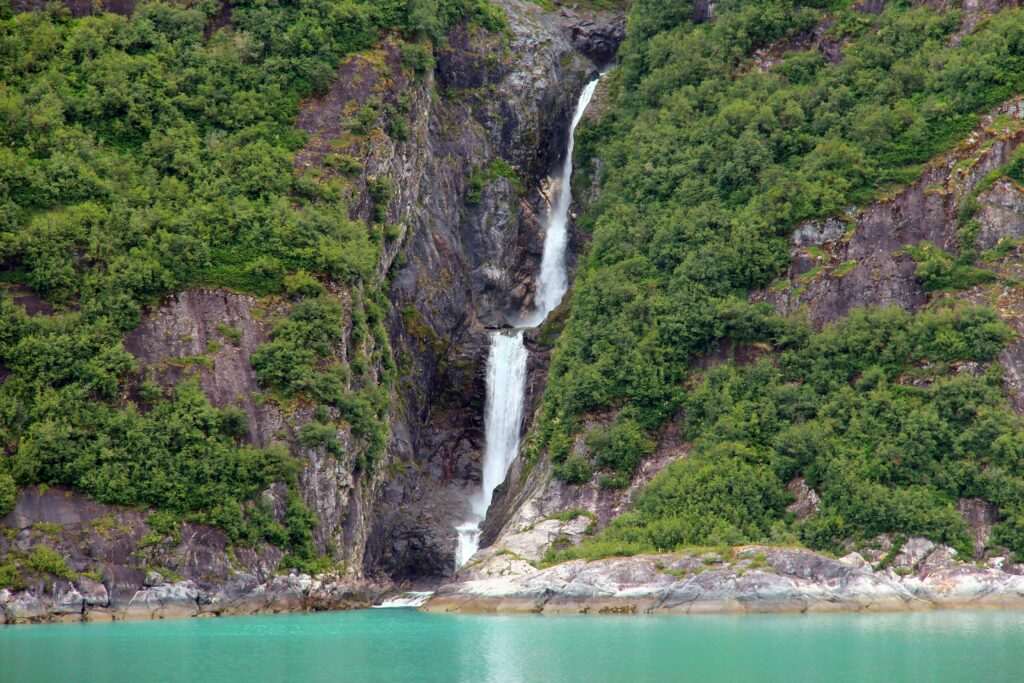
Thunderbird Falls Trail in Anchorage delivers one of the best effort-to-reward ratios of any hike in the region. A roughly two-mile round trip with minimal elevation gain leads through a quiet birch forest gorge to a dramatic two-tier waterfall — the upper tier dropping around 200 feet into a rocky canyon. For visitors with limited time, families with young children, or anyone looking for a genuine Alaska wilderness experience without a full day’s commitment, this trail belongs at the top of the list.
Getting to the Trailhead
The trailhead sits about 26 miles north of downtown Anchorage — an easy 30-minute drive up the Glenn Highway. Take the Eklutna Lake Road exit and follow the signs to Thunderbird Falls Trailhead. Parking is free and the lot handles a fair number of cars, though it fills quickly on summer weekends. Arrive before 9 a.m. on Saturdays and Sundays if you want a spot without circling.
The trail is part of Chugach State Park, Alaska’s largest state park, which wraps around Anchorage and contains hundreds of miles of trails across all difficulty levels. Thunderbird Falls is among its most accessible and well-maintained routes.
What to Expect on the Trail
The path starts flat and forested, winding through a classic interior Alaska birch and spruce woodland. The trail is well-signed and easy to follow. After about three-quarters of a mile, the forest opens and the sound of rushing water becomes audible before the falls come into view. A wooden viewing platform at the lower falls provides the first major viewpoint — a good stopping point for families with very young children or anyone with limited mobility.
To reach the upper falls viewpoint, a slightly rougher spur trail climbs a short distance above the platform. The footing here requires more care, especially on wet or early-season days, but the payoff is a full view of the main cascade dropping through a narrow canyon framed by mossy walls and hanging vegetation. The whole round trip takes between one and one and a half hours at a relaxed pace.
Family Suitability
Thunderbird Falls ranks among the best family hikes near Anchorage. The main trail is stroller-accessible up to the lower falls platform, and the modest distance means even young walkers handle the route without trouble. The waterfall itself is visually dramatic enough to hold children’s attention in a way that a simple forest walk might not. Plan a snack break at the platform — it’s a natural rest spot with a good view — before heading back.
Seasonal Notes
The trail is accessible for most of the year. Spring conditions (April–May) bring mud and some icy patches in shaded sections, so waterproof footwear is worth packing. Summer is the busiest period and the easiest time to visit. Late August and September offer some of the most visually striking conditions — the birch canopy turns gold and the water runs high from late-summer rain, making the falls even more impressive. Winter visitors can reach the lower falls on snowshoes or microspikes, though conditions vary significantly by year.
Combining with Eklutna Lake
The Eklutna Lake trailhead sits about 10 minutes further up the same road from Thunderbird Falls, making a natural two-stop outing. Eklutna Lake is the largest body of water in Chugach State Park — a vivid glacial-blue lake ringed by peaks — with a flat trail along its eastern shore, seasonal kayak and bike rentals at the far end, and primitive camping sites for overnight visitors. Pairing Thunderbird Falls in the morning with a lakeside lunch and a short paddle makes for a genuinely full Alaska day without leaving the Eklutna corridor.
What to Bring and Wear
Waterproof trail shoes handle the mud and creek-adjacent sections well. Bring water and a light layer — the gorge stays cool and shaded even in summer. Bug spray is useful from late May through July. Alaska Outdoor Gear Rental and REI Anchorage are both convenient stops for footwear, trekking poles, or daypack rentals before heading out.
Wildlife
Beavers are active in the creek below the falls — their dams and cuttings are visible along the approach trail. Moose frequent the birch stands near the trailhead year-round; give them a wide berth, especially cows with calves in spring.
The birch forest along the approach trail hosts some of the most characteristic songbirds of the boreal zone. Swainson’s thrushes fill the forest with their spiraling, flute-like calls from late May through July — the sound is quintessentially Alaska interior. Yellow-rumped warblers flit through the upper canopy and can often be spotted from the trail without binoculars. In the creek itself, American dippers — stocky gray birds that hunt aquatic insects by walking along the stream bottom — bob and dip from rocks at the water’s edge near the lower platform. In winter, the falls freeze into dramatic ice formations that draw photographers and ice climbers to the lower overlook through January and February, when the upper tiers sometimes run as colored curtains of blue-green ice above a silenced pool.
Seasonal Highlights
Thunderbird Falls is a year-round trail, though each season offers a distinctly different experience. In spring (late April through May), snowmelt swells the falls to their maximum volume — the roar is audible from several hundred yards down the trail, and the spray at the base is significant. This is arguably the most dramatic time to visit, though the trail can be muddy and patches of ice may linger in shaded sections.
Summer (June through August) brings the most reliable conditions: dry trail, full foliage in the birch forest, and long daylight hours that make evening visits after 7 p.m. pleasant and crowd-free. Fall offers golden birch leaves along the trail corridor, typically peaking in mid-September. Winter visits are possible for experienced hikers with microspikes — the frozen falls create a dramatic ice formation that draws photographers, though the trail becomes genuinely technical and the cascade itself is largely silenced by ice.
Frequently Asked Questions
How long is Thunderbird Falls Trail near Anchorage?
Thunderbird Falls Trail is approximately 2 miles round trip with around 200 feet of elevation gain. At a relaxed pace, plan 1 to 1.5 hours for the full out-and-back hike to the upper falls viewpoint.
Is Thunderbird Falls Trail good for kids?
Yes — it’s one of the best family hikes near Anchorage. The main path is stroller-accessible to the lower falls platform, the distance is manageable for young children, and the waterfall is a genuinely exciting destination. It’s rated easy and well-maintained throughout.
Is there a fee to hike Thunderbird Falls?
Parking and trail access are free. The trailhead is within Chugach State Park, which does not charge a day-use fee at the Thunderbird Falls parking area.
Can I combine Thunderbird Falls with Eklutna Lake?
Yes, and it’s a popular combination. Eklutna Lake is about 10 minutes further up the same road. The lake offers flat shoreline trails, seasonal kayak and bike rentals, and picnic areas — making a natural second stop after the falls hike.



No comments yet.