
Alaska State Fair 2026 — Palmer Dates, Giant Vegetables & What to Expect
Every August, the Mat-Su Valley transforms into Alaska’s biggest celebration of agriculture, food, and family entertainment. The Alaska State Fair 2026 returns to Palmer for its annual 11-day run, drawing roughly 340,000 visitors from across the state and beyond. Whether you’re a lifelong Alaskan or a summer visitor, the fair is one of those quintessential experiences that belongs on every late-summer itinerary.
Alaska State Fair 2026: Dates & Hours
The Alaska State Fair 2026 runs August 21 through September 1, 2026 at the Fairgrounds in Palmer, about 42 miles northeast of Anchorage. General hours are 11 a.m. to 10 p.m. on most days, with some variation on opening and closing weekends — check the official Alaska State Fair website for exact daily schedules as the event approaches.
The fair closes out on Labor Day (September 1), making it a natural anchor for the long weekend. Plan accordingly if you’re visiting from out of state.
Getting There from Anchorage
Palmer is an easy 42-mile drive from Anchorage along the Glenn Highway — roughly 45 minutes in normal traffic, though expect slower going on peak weekend days when half of Anchorage seems to head north simultaneously. Leave early (before 10 a.m.) or mid-afternoon to avoid the worst of it.
For a more scenic and stress-free option, consider the Alaska Railroad State Fair train. The railroad runs special round-trip excursions from Anchorage to Palmer during the fair, letting you skip the parking hassle entirely and enjoy the Matanuska Valley scenery on the way. It’s a popular option for families — check Alaska Railroad’s website for 2026 excursion dates and booking.
Parking at the fairgrounds is available but fills quickly on weekends. Arrive before noon or use the shuttle lots if you’re driving.
The Giant Vegetables: Alaska’s Most Famous Attraction
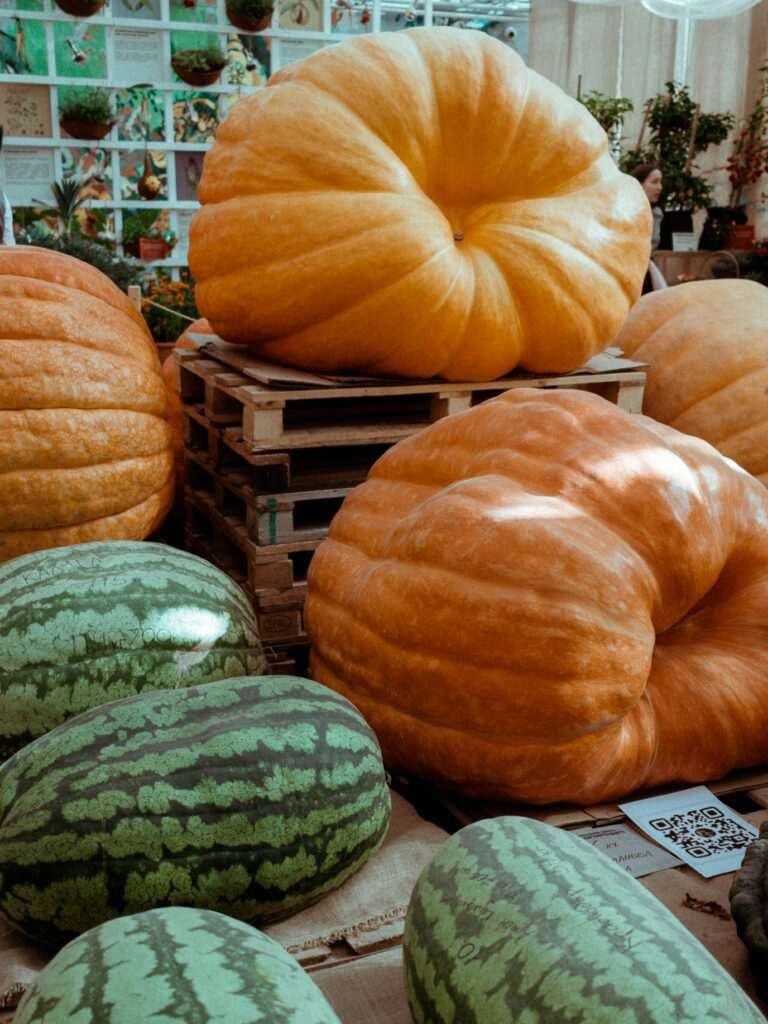
Nothing defines the Alaska State Fair quite like the giant vegetables. The combination of Alaska’s long summer days — up to 19 hours of sunlight at peak — and the rich volcanic soil of the Mat-Su Valley produces vegetables of almost absurd scale. Think 90-pound cabbages. Pumpkins over 1,000 pounds. Zucchini the size of baseball bats.
The giant vegetable competitions draw contestants from across the state, and the weigh-in events are genuinely suspenseful. Even if you have no interest in agriculture, watching a forklift maneuver a record-breaking pumpkin onto a scale is something you won’t forget. The exhibition hall where the prize vegetables are displayed is a must-stop early in your visit.
The giant vegetables connect directly to the fair’s agricultural heritage. Palmer was settled in the 1930s as part of a New Deal colonization project, and farming has been central to the community’s identity ever since. That history is woven throughout the Alaska State Fair experience — from the livestock barns to the 4-H competitions to the produce exhibits.
Midway Rides, Livestock & Demolition Derby
The midway at the Alaska State Fair is a full carnival experience: dozens of rides ranging from gentle options for young kids to stomach-dropping thrill rides for teenagers. The Ferris wheel offers a panoramic view of the Matanuska Valley on clear days — one of the better vantage points you’ll find in the region.
The livestock barns showcase everything from sheep and pigs to draft horses and dairy cattle. The shows are judged competitions, and the barns are open for general viewing between events — a surprisingly engaging stop for kids who don’t spend much time around farm animals.
The demolition derby is consistently one of the most popular ticketed events at the fair. Vehicles get demolished, crowds go wild, and the noise is spectacular. Buy tickets in advance if you want a specific night — it sells out.
Food: The Real Reason People Come Back
Fair food at the Alaska State Fair goes well beyond corn dogs. Look for:
- Reindeer dogs: Alaska’s signature fair food — a grilled reindeer sausage in a bun, served with caramelized onions. Get one (or two).
- Fresh-pressed cider: Made from apples grown in the Mat-Su Valley, served cold at the agriculture pavilion.
- Alaska-grown produce: Vendors sell farm-direct vegetables, jams, and berries throughout the fairgrounds.
- Deep-fried everything: The state fair tradition holds strong — deep-fried Oreos, cheese curds, and whatever inventive new item vendors dream up for 2026.
- Halibut fish and chips: Multiple vendors offer fresh-caught Alaska halibut battered and fried — hard to beat.
Food lines get long from noon to 3 p.m. on peak days. Eat an early lunch (before 11:30 a.m.) or a late one (after 3 p.m.) to avoid the worst waits.
Entertainment: Concerts, Rodeo & Pig Racing
The Alaska State Fair books nightly concerts across multiple stages, ranging from nationally touring country and rock acts to Alaska-based artists. Some concerts are included with fair admission; others require separate tickets. The lineup is typically announced in June or July — if you have a favorite act, check early.
The PRCA rodeo brings professional cowboys to Palmer for several nights during the fair’s run, with bull riding, barrel racing, and team roping competitions. It’s one of the few PRCA-sanctioned events in Alaska and draws serious rodeo fans.
Don’t miss pig racing. It sounds absurd, and it is — small pigs sprint around a track while the announcer provides play-by-play commentary. It runs multiple times daily, lasts about five minutes, and the crowd loves every second of it. Pig scramble events (where kids chase pigs in an arena) are equally chaotic and entertaining.
Practical Tips for 2026
- Weekdays are less crowded. If you have flexibility, Tuesday through Thursday see significantly smaller crowds than weekends. You’ll spend less time in lines and have easier parking.
- Dress in layers. August afternoons in Palmer can be warm and sunny. By 7 p.m., temperatures drop noticeably. Bring a fleece or light jacket for evenings.
- Rain gear matters. Late August in Alaska can bring rain — pack a compact rain jacket rather than an umbrella, which is awkward in crowds.
- Buy a multi-day pass if you plan to go more than once. Single-day admission for adults typically runs $18–$22; multi-day passes offer meaningful savings.
- Combine with a day trip. Palmer sits at the gateway to the Mat-Su Valley, making it easy to pair with a visit to Matanuska Glacier (about 100 miles east on the Glenn Highway) or a drive up to Hatcher Pass and Independence Mine.
Admission & Planning Ahead
General admission for 2026 is expected to run approximately $18–$22 for adults, $12–$16 for children (ages 6–12), and free for children 5 and under. Senior discounts are typically available. Parking ranges from $10–$15 per vehicle in on-site lots.
Some attractions — the demolition derby, certain concerts, and carnival rides — require additional tickets or separate purchases. The fairgrounds are cashless at most vendor locations, so plan accordingly.
The Alaska State Fair is one of those events that rewards going in without too rigid a plan. Wander the barns, eat something you wouldn’t normally eat, cheer for a pig you’ve never met, and let a 90-pound cabbage genuinely impress you. That’s the spirit of it.

No comments yet.