
Gold Panning in Alaska 2026: Crow Creek, Hope & Hatcher Pass
Alaska’s gold rush legacy runs deep, and you don’t have to be a professional prospector to experience it firsthand. Within a few hours of Anchorage, three distinct sites offer visitors the chance to try gold panning in Alaska — each with its own character, history, and real flakes waiting to be found. Whether you’re planning a solo adventure or a family outing, this 2026 guide covers everything you need to know about gold panning near Anchorage.
A Brief History: Alaska’s Gold Rush Roots
Alaska’s gold rush era spans more than a century, from the Klondike stampede of 1897 to the quieter placer mining operations that continue today. The region around Anchorage was particularly rich — Crow Creek, Hope, and the Little Susitna drainage all saw significant activity in the early 1900s. Many of the creeks where miners once sluiced by hand still carry gold, and Alaska’s unique mineral laws allow recreational panning on most public lands without a permit. That accessibility makes gold panning alaska anchorage trips uniquely rewarding for visitors.
The Three Best Gold Panning Spots Near Anchorage
1. Crow Creek Mine, Girdwood — Best for Beginners & Families
Crow Creek Mine sits about 38 miles south of Anchorage near Girdwood and is the most visitor-friendly option in the region. The historic mine operated continuously from 1896 through the 1940s, and several original buildings still stand on the property. Today, the privately operated mine charges a daily fee (around $20–$25 per adult in 2026) and provides buckets of pre-salted gravel for guaranteed finds — making it ideal for kids and first-timers who want to take something home.
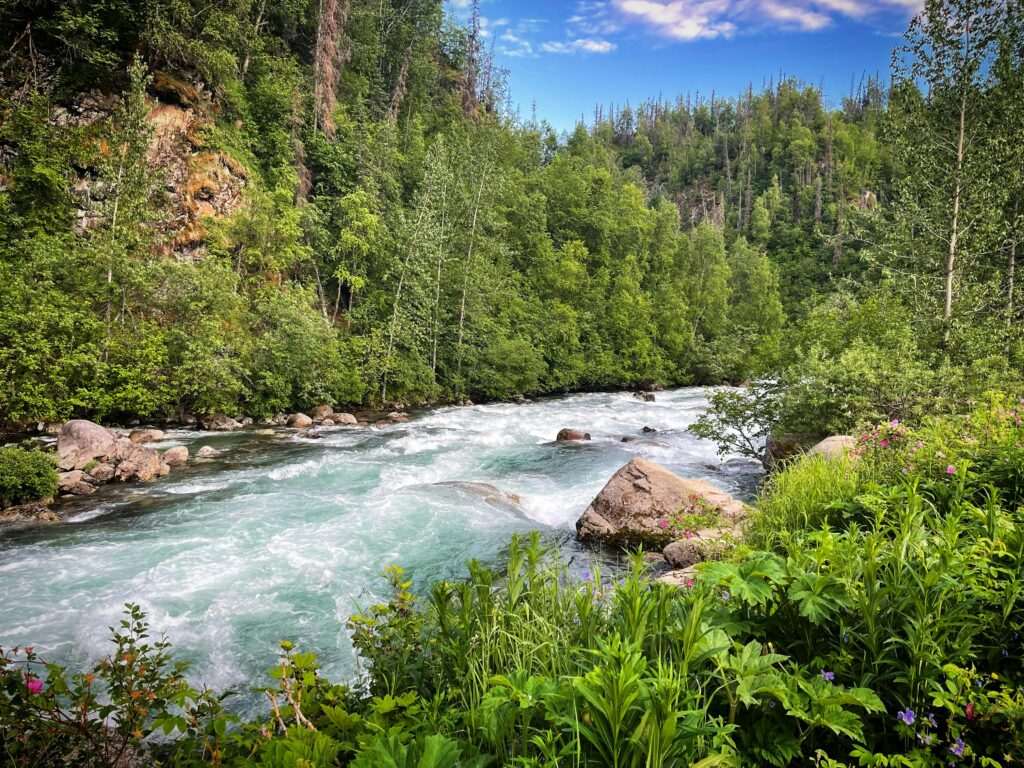
The creek itself is stunning, fed by glacial snowmelt and flanked by spruce forest. Even experienced panners can wade the natural creek sections adjacent to the mine property and work fresh material. Combine your visit with a scenic drive through Girdwood or a cruise out of Whittier — Portage Glacier Cruises on the MV Ptarmigan makes an excellent same-day pairing for families.
Getting there: Take Seward Highway south to Girdwood, then follow Crow Creek Road about 3 miles to the mine. Open May through September.
2. Hope & Resurrection Creek — Most Authentic Experience
The small town of Hope, roughly 87 miles from Anchorage on the Kenai Peninsula, was one of Alaska’s earliest gold rush settlements. Resurrection Creek — which flows right through the townsite — still produces placer gold, and public panning is permitted along much of its length. This is where you’ll find the most authentic experience: no entrance fee, no pre-salted gravel, just a pan, cold mountain water, and the same creek that drew prospectors here in 1895.
Plan to spend several hours working the gravel bars below road crossings, where heavier materials concentrate. Gold here is typically fine flour gold and small flakes — don’t expect nuggets, but finding even a few flecks makes the effort worthwhile. The drive itself through Turnagain Pass is spectacular. Hope is a peaceful detour from the highway crowds, and the few local businesses (including a small café) add charm to the trip.
Getting there: Seward Highway south to Hope Road, then west about 17 miles to Hope. Free public access along Resurrection Creek.
3. Hatcher Pass & Little Susitna River — Wild Alaska Setting
For those willing to venture north of Anchorage (about 65–75 miles depending on your route), the Hatcher Pass area offers both stunning alpine scenery and genuine gold panning along the Little Susitna River. The drainage was heavily worked in the early 20th century, and the remnants of the Independence Mine — now a State Historical Park — tell that story vividly. The mine itself processed gold-bearing ore from the late 1930s through the 1940s and is one of the best-preserved hard-rock gold mining complexes in Alaska.
Public panning is allowed along the Little Susitna on state lands outside of any active claims. Always check Alaska DNR claim maps before setting up in a spot, as active claims do exist in the drainage. The tradeoff for the wilder setting is that you’re working harder for less-guaranteed results — but the scenery, wildflowers, and sense of space are unmatched. Visit Hatcher Pass and Independence Mine State Historical Park to combine history with your panning trip. While you’re in the Mat-Su Valley, Chugach State Park’s trail systems offer additional outdoor adventures on your way back to Anchorage.
Getting there: Glenn Highway north to Palmer, then Fishhook-Willow Road into Hatcher Pass. Some sections close in winter; check road conditions in early spring.
What Equipment Do You Need?
Gold panning requires minimal gear, which is part of its appeal:
- Gold pan: A 10–14 inch plastic pan (green or black shows gold best) costs $10–$15 at any sporting goods store in Anchorage. Avoid metal pans — they’re heavier and harder to read.
- Classifier/screen: A mesh classifier sifts out large rocks before you pan, saving time. Not essential but helpful.
- Small vials or snuffer bottle: For collecting and transporting your finds.
- Rubber boots or waders: Alaska’s creeks are cold even in summer. Waterproof footwear is non-negotiable.
- Gloves: Thin waterproof gloves extend your comfortable working time in cold water.
Most outfitters in Anchorage carry panning supplies; REI and Sportsman’s Warehouse both stock basics. Crow Creek Mine rents pans on-site if you’d rather travel light.
Alaska DNR Regulations: What You Need to Know
Alaska allows recreational gold panning on most state lands and navigable rivers without a permit, as long as you’re using hand tools only — pans, small sluice boxes, and shovels. Key rules for 2026:
- No suction dredges without a permit. Even small dredges require an Alaska DNR Miscellaneous Land Use Permit and must comply with Fish and Game stream closure periods.
- Respect active mining claims. Panning on a valid claim without the claim holder’s permission is illegal. Check the Alaska DNR’s online claim locator (dnr.alaska.gov) before you dig.
- High-water buffer: During certain salmon spawning periods, some streams have temporary closures. Check current ADF&G regulations for specific creek closures before your trip.
- Pack out what you pack in. Leave creek banks and surrounding areas clean — this matters both legally and ethically on public lands.
Tips for Finding Gold
Gold is heavy — it settles where water slows down. Focus your panning on the inside curves of bends, behind large boulders, and at the base of bedrock outcrops. Black sand (magnetite) is your friend; gold concentrates with other heavy minerals. Work material from the base of gravel bars rather than the surface. Be patient: experienced panners work slowly and thoroughly, not quickly.
If you’re new to panning technique, several YouTube tutorials demonstrate the swirling motion well, and Crow Creek Mine’s staff can give you a quick lesson on arrival. Most people get the hang of it within 20–30 minutes.
Planning Your Trip: Costs & Timing
The best gold panning season near Anchorage runs from late May through early September, when water levels drop enough to expose productive gravel bars. June and July offer long daylight hours and the most accessible conditions. Budget roughly:
- Crow Creek Mine: $20–$25/adult, $10–$15/child (2026 pricing; confirm on-site)
- Hope/Resurrection Creek: Free (public land)
- Hatcher Pass/Little Susitna: Free (public state land outside active claims)
All three locations are day-trip distance from Anchorage. Pack a lunch, dress in layers, and expect cool temperatures even on warm summer days — Alaska creek bottoms stay cold regardless of the air temperature.
Is Gold Panning Worth It?
Practically speaking, you won’t get rich. Realistically, you might find a few flakes or small grains — enough to fill a small vial and take home as a genuine Alaskan souvenir. But the real value is the experience: working the same creeks that drew thousands of hopeful prospectors a century ago, in some of the most beautiful wilderness on earth. For families with kids, the tangible thrill of finding even a tiny flake of real gold is hard to match. Alaska’s gold panning opportunities are one of the state’s most accessible adventures — and one most visitors leave wishing they’d spent more time doing.

No comments yet.