
Beluga Whale Watching Near Anchorage, Alaska 2026: Shore Spotting Guide
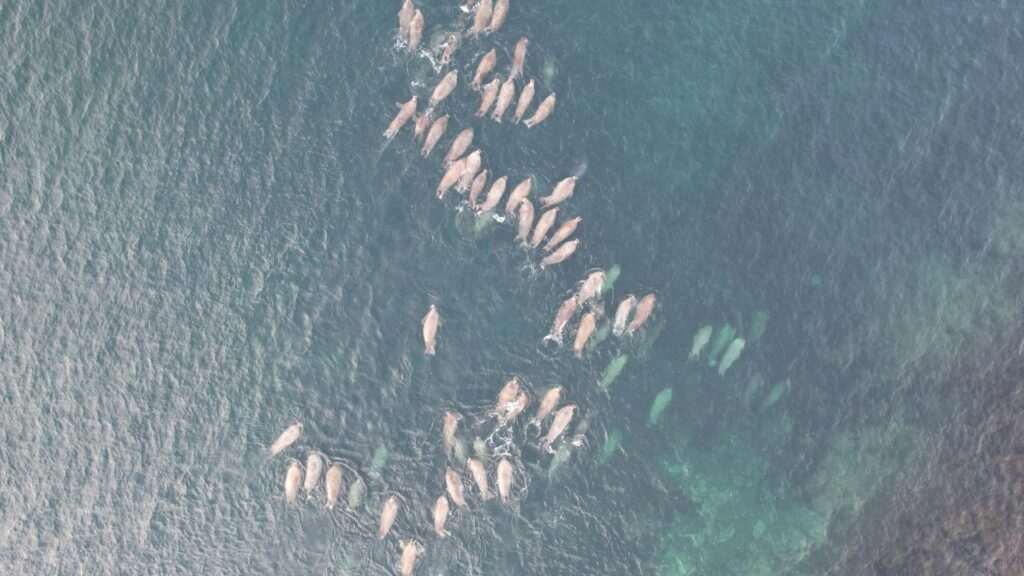
Few wildlife encounters in Alaska compare to watching a pod of white beluga whales surge through the dark waters of Cook Inlet just minutes from downtown. Beluga whale watching near Anchorage, Alaska requires no boat ticket and no gear — just good timing and a knowledge of where to stand. This guide covers the best free shore-based spots for summer 2026, when to go, and what to look for.
Cook Inlet Belugas: A Rare Urban Population
The Cook Inlet beluga is one of the world’s most unusual whale populations: a distinct, genetically isolated group of roughly 279 animals that spend their summers feeding on salmon runs in the murky, glacial waters of Cook Inlet, directly adjacent to Alaska’s largest city. Listed as endangered under the Endangered Species Act, the Cook Inlet beluga has not recovered at the rate scientists had hoped, and every sighting carries real conservation weight.
Belugas are unmistakable — pure white adults (juveniles are gray) with a round melon forehead and no dorsal fin. They typically travel in small groups of 3–10, rolling at the surface in a distinctive slow-motion cadence as they breathe. Unlike humpbacks, belugas do not breach dramatically. Look instead for the white curve of a back and the barely-visible dorsal ridge breaking the waterline, then disappearing.
Best Shore-Based Viewing Spots
Tony Knowles Coastal Trail — Point Woronzof & Earthquake Park
The 11-mile Tony Knowles Coastal Trail hugs the western edge of Anchorage along the Knik Arm of Cook Inlet, making it the single best free beluga viewing corridor in the city. The two premier spots are Point Woronzof (at the trail’s north end, off International Airport Road) and Earthquake Park (accessed from West Northern Lights Blvd). Both overlooks give you direct sightlines to the open inlet water where belugas surface during high-tide feeding runs on salmon.
Belugas at Point Woronzof appear most reliably between late May and mid-August, especially in the hour before and after high tide, when salmon congregate near the surface and the whales push close to shore. Bring binoculars — distances vary from 100 yards to a quarter mile.
The Coastal Trail extends north to Point Woronzof Park, giving you options for a longer morning or evening walk while you wait for whale activity.
Beluga Point (Turnagain Arm)
About 30 miles south of Anchorage on the Seward Highway, Beluga Point is literally named for the whale sightings that have drawn visitors here for generations. Park at the marked pullout at roughly Mile 110.3 of the Seward Highway. The spot sits at the northeast end of Turnagain Arm, where belugas follow sockeye and silver salmon runs from Cook Inlet into the narrow arm.
Beluga Point also delivers two bonus wildlife encounters: Dall sheep are frequently visible on the cliff faces directly above the pullout, and if you time your visit right you may catch an incoming bore tide — the 4- to 6-foot wall of tidal water that pushes up Turnagain Arm twice daily. Check the tide tables at Anchorage (NOAA tidal station 9455920) and arrive 1–2 hours before high tide for the best combined beluga and bore tide window.
Potter Marsh Boardwalk
At the southern edge of Anchorage off Seward Highway, the Potter Marsh Wildlife Sanctuary boardwalk is primarily known for Arctic terns, trumpeter swans, and spawning salmon — but the adjacent Turnagain Arm shoreline sees occasional beluga passes from July onward, particularly during strong salmon runs. It is a secondary site compared to the Coastal Trail and Beluga Point, but worth a scan while you are birding the marsh.
Reading the Tides: When to Look
Belugas follow salmon, and salmon stack up near the surface during the final push before high tide. The formula that works most reliably:
- Check Anchorage tide predictions on NOAA’s tidesandcurrents.noaa.gov (station 9455920)
- Plan to arrive at your viewing spot 60–90 minutes before high tide
- Beluga activity often peaks in the 30-minute window before and just after the tide turns
- Early morning and late evening — when Cook Inlet light goes flat and golden — improve sighting odds and make for better photographs
Peak season runs late May through mid-August. Late July through early August, when multiple salmon runs overlap, tends to be the highest-concentration period.
Watching Ethics and Conservation Rules
Cook Inlet belugas are federally protected. There are hard rules that apply to every visitor:
- No kayaking within 100 yards of belugas. NOAA enforces the 100-yard approach rule under the Marine Mammal Protection Act; first-time violations can carry fines of $10,000 or more.
- No drones below 1,000 feet over marine mammals without a federal scientific permit.
- Shore viewing with binoculars or a telephoto lens causes zero disturbance and is encouraged by wildlife managers.
- Do not make loud noises or throw objects into the water near feeding animals.
If you want a water-based wildlife perspective on Cook Inlet, the safest path is a guided charter that operates under an MMPA permit. Big Time Alaskan Fishing Adventures and similar Cook Inlet operators know the tides and salmon timing — and their captains are tuned into beluga activity throughout the season. For a complementary shore-based experience, Westchester Lagoon along the Coastal Trail is a worthwhile birding stop any day you are already on the Tony Knowles path.
What to Pack
- Binoculars — 8×42 or 10×42 is ideal for waterside scanning
- Layers — Cook Inlet waterfront is reliably 5–10°F cooler than downtown; wind is the variable
- Tide table — printed or bookmarked on your phone before you lose cell signal on the Seward Highway
- Patience — allow 60–90 minutes at your viewing spot; belugas do not follow exact schedules
The Eagle River Nature Center makes an excellent pairing activity if the morning tide window comes up whale-free — it is a 45-minute drive from Beluga Point and a completely different Alaska experience.
Getting There
Tony Knowles Coastal Trail (Point Woronzof): From downtown Anchorage, take International Airport Road west to the Point Woronzof park area. Free parking. Trail access is year-round; beluga season May–August.
Beluga Point: Head south from Anchorage on the Seward Highway. The marked pullout is at approximately Mile 110.3, roughly 30 miles (40 minutes) from downtown. No fee, open year-round.
Standing at Beluga Point as a pod of white shapes rolls through the gray-green water below the Chugach peaks — with Dall sheep picking across the cliffs above — is one of those Alaska moments that reminds you this city is unlike anywhere else on Earth. The whales are free to watch, and the tide does the work of bringing them to you.
Featured photo by Putulik Jaaka on Pexels.


No comments yet.