
Alyeska Resort & Girdwood 2026: Summer Hiking Guide
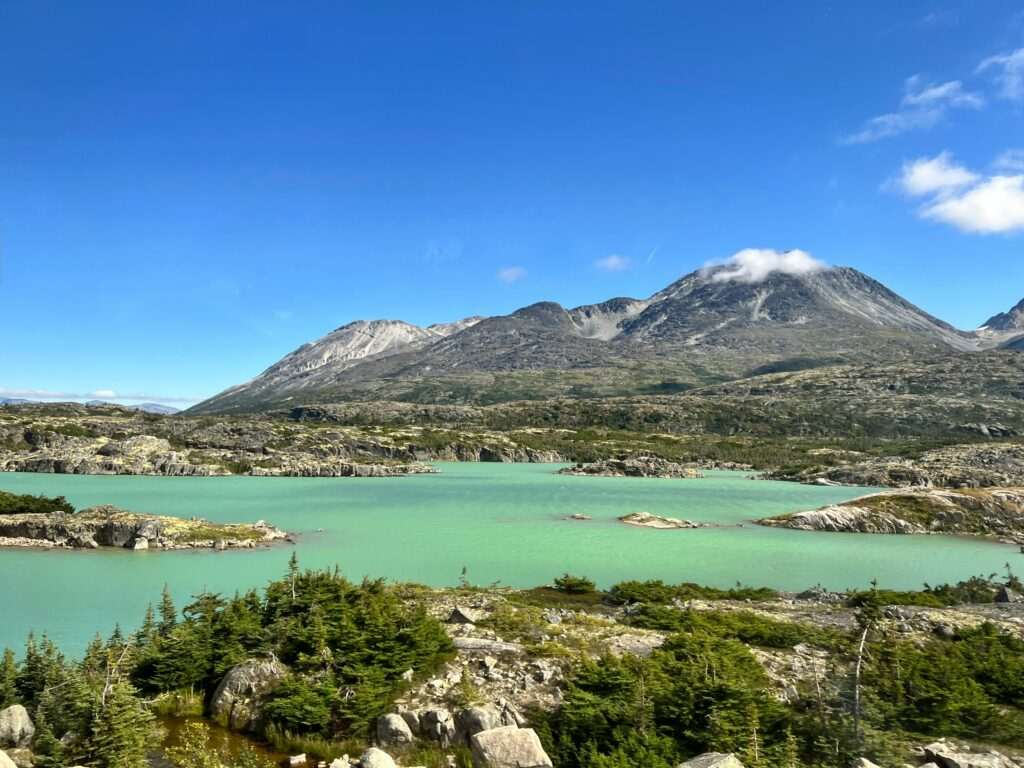
Most visitors driving the Seward Highway south from Anchorage are focused on what comes next: Kenai Fjords, Homer, the Kenai Peninsula. They pass the Girdwood exit at Mile 90 without stopping, registering the sign for Alyeska Resort and filing it away as a ski destination for another season. This is a reasonable mistake that produces an unreasonable outcome, because Girdwood in summer is one of the most concentrated outdoor recreation environments accessible from Anchorage, and Alyeska Resort — Alaska’s largest ski mountain — transforms in the summer months into something that skiers don’t often get to see: a mountain community fully alive in the long warm light, its gondola running to wildflower-covered alpine ridges, its village restaurants busy, its hiking trails full of people who came for a day and stayed for two. The drive from Anchorage takes 45 minutes. The excuse for not going is that you didn’t know what was there.
Getting to Girdwood
Girdwood sits at the head of a narrow glacially carved valley that opens onto Turnagain Arm at the base of the Chugach Mountains. The exit from the Seward Highway at Mile 90 leads into a 3-mile access road through dense Sitka spruce forest that opens abruptly into the village proper — a mix of ski condos, locals’ cabins, independent restaurants, and the imposing bulk of the Alyeska Resort hotel at the base of the mountain. The drive from downtown Anchorage runs 40 to 45 minutes in normal traffic; summer construction on the Seward Highway can add 15 to 20 minutes in July and August, and checking Alaska 511 before departure is worth the 30 seconds it takes.
Visitors without a car can reach Girdwood by the Alaska Railroad, which stops at the Girdwood station on its Anchorage-to-Seward route. The Alaska Railroad Glacier Discovery train runs during summer season on specific days, making it possible to arrive by train in the morning and return in the afternoon — a pleasant alternative to driving that adds its own Turnagain Arm scenery along the way.
The Glacier Bowl Gondola
The Glacier Bowl Gondola is the defining Alyeska summer experience. The tram — an enclosed gondola cabin — lifts visitors from the resort base at approximately 250 feet elevation to the top terminal at roughly 2,300 feet in about seven minutes. The ascent covers the full ecological range of the Chugach Mountains in compressed form: dense spruce and hemlock forest give way to open alpine terrain, the tree line dropping away as the gondola climbs through a notch in the ridgeline and delivers passengers into a world that feels genuinely remote despite being seven minutes from a hotel lobby.
At the top, the panoramic views encompass Turnagain Arm stretching east and west below, the Alaska Range visible on clear days across Cook Inlet, and the surrounding Chugach peaks in every direction. In late June and July, the alpine meadows immediately adjacent to the gondola top station are in full wildflower bloom — lupine, fireweed, and various alpine species creating the yellow-and-purple carpets that characterize Alaska’s alpine summer. Interpretive signs along the ridge explain the glacier, the geology, and the ecology of the alpine zone. The air at elevation is noticeably colder than the valley floor — bring a layer even on a warm Girdwood day.
The Seven Glaciers restaurant at the gondola summit is one of Alaska’s most unusual dining experiences: a fine-dining menu served 2,300 feet above sea level with floor-to-ceiling windows facing the glaciers and the arm below. Reservations are strongly recommended; the restaurant fills on clear-day summer evenings when the view is at its most dramatic. The Bore Tide Deli at the gondola base offers casual breakfast and lunch without the reservation requirement, and the quality-to-setting ratio makes it worth including in a Girdwood visit regardless of your gondola plans.
Winner Creek Trail
The Winner Creek Trail is the most popular hike in the Girdwood area and the experience that most reliably generates the specific joy that comes from a trail that delivers more than it promises. The trailhead is accessible from the Alyeska Resort grounds, and the path follows a glacially carved gorge through old-growth spruce and cottonwood forest for 2.3 miles before reaching the highlight: a hand-tram river crossing over the turbulent confluence of Upper and Lower Winner Creek.
The hand-tram is exactly what it sounds like — a hand-operated cable car suspended above the rushing water, large enough for one or two people, propelled by pulling on the overhead cable. It is universally described by hikers as the most fun thing they did in Alaska that didn’t involve a motor, and the description is accurate. The crossing deposits you on the far bank, where the trail continues to the upper gorge. The full out-and-back run is 4.6 miles round trip with minimal elevation gain, making it accessible to most hikers including families with older children. Allow 2.5 to 3 hours. The gorge section near the confluence is worth lingering in — the creek has carved a narrow channel through the bedrock, and the old-growth canopy filters the light into something noticeably quiet and cool. The trail can be muddy after rain; waterproof boots earn their keep here.
Max’s Mountain via the Gondola
For hikers who want elevation without the full commitment of a multi-hour ascent, combining the Glacier Bowl Gondola with a ridge walk to Max’s Mountain provides a full alpine day with minimal uphill suffering. From the gondola top station, a marked route follows the ridgeline north to Max’s Mountain summit at approximately 3,939 feet, adding roughly 1,600 feet of elevation gain from the gondola arrival point. The views from the summit look across Turnagain Arm in both directions and south toward the Kenai Peninsula’s mountains.
The summit plateau is wide enough to walk comfortably, and the absence of trees at this elevation produces unobstructed views in every direction — the same wildflower species visible from the gondola but now accessible on foot, the Chugach ridgelines extending in both directions with no infrastructure interrupting the skyline. The gondola ride down at the end of the day is part of the experience — watching the valley rise to meet you, the resort buildings resolving from a model-scale below, the arm going flat and silver in the evening light. Plan the hike for a clear day; the views are the point, and cloud-obscured ridgelines diminish the return substantially.
Crow Creek Mine
The Crow Creek Mine, accessible via the Crow Creek Road branching off the Alyeska Access Road, is one of the few operating historic gold mines open to visitors in Southcentral Alaska. The mine dates to 1896 and the Klondike Gold Rush era; several of the original buildings remain standing, including a bunkhouse, assay office, and equipment sheds. During summer, visitors can pan for gold in the mine’s sluice operations for a small fee — the technique of using a pan to separate gold flakes from gravel takes about 20 minutes to learn adequately, and most visitors leave with a small vial of genuine Alaskan gold. It is not a high-yield operation, but finding a flake of gold in a creek that has been producing gold for 130 years produces a satisfaction disproportionate to its monetary value.
Crow Creek Road continues past the mine to the trailhead for the Crow Pass Trail — a more serious backcountry route that crosses Crow Pass at approximately 3,700 feet and connects to the Eagle River valley 24 miles north. Day hikers commonly go as far as the pass and back; the full traverse is an overnight or multi-day commitment that requires logistics at both ends.
Eating in Girdwood
Girdwood’s restaurant scene is small, excellent, and genuinely local in character. The Bake Shop, a village institution operating out of a low-ceilinged building near the main intersection, serves cinnamon rolls of legendary size and quality, homemade soups, and simple lunch fare. It is cash only and closes when it sells out, which on summer mornings can be by noon. Arriving before 10 AM ensures full menu availability; arriving at 11 AM on a busy summer Saturday requires acceptance that some items will be gone.
The Double Musky Inn is Girdwood’s most celebrated restaurant — a Cajun-influenced menu in an unlikely setting that has been drawing visitors and Anchorage residents since 1962. The food is serious, the atmosphere is eccentric (a collection of artwork that has accumulated over decades covers every available surface), and the wait is almost always long because the restaurant does not take reservations. Arriving at opening time or calling ahead to gauge the wait is the standard strategy; most regulars consider the wait part of the tradition. Chair 5 is the local pub alternative — good burgers, consistent beer selection, and the reliable atmosphere of a place where the same people have been eating after skiing for 30 years.
Where to Stay
The Alyeska Resort hotel anchors the upper end of Girdwood accommodation — a ski-lodge-style property with full resort services, immediate gondola access, and room rates that reflect the premium setting. The property is large enough that a direct booking search will show current room availability and pricing for 2026. Girdwood’s village also has a significant inventory of vacation rentals in the surrounding forest — independent cabins and houses that provide more local character at varying price points. These are bookable through standard rental platforms and tend to fill weeks in advance for summer weekends; booking four to six weeks out is standard for July and August.
For visitors basing in Anchorage and treating Girdwood as a day trip, the resort’s full menu of activities is accessible without an overnight stay. A full day accommodates the gondola, Winner Creek Trail, Crow Creek Mine, and dinner at the Double Musky — a complete Girdwood experience that leaves you back in Anchorage by 9 PM with something to talk about at dinner tomorrow.
Pairing Girdwood with Portage Glacier
The Portage Glacier Cruises — M/V Ptarmigan visitor area lies just 5 miles past the Girdwood exit on the Seward Highway — an easy addition to a Girdwood day that requires almost no additional driving. The Begich, Boggs Visitor Center operates at the end of the Portage Valley access road, and cruise boat tours of Portage Lake running to the glacier face operate through the summer season. The visual contrast between the dense forest of the Portage Valley and the wide grey face of the glacier is one of the more dramatic close-glacier experiences accessible by road in Alaska. A Girdwood-plus-Portage day covers two genuinely distinct experiences within a 60-mile radius of downtown Anchorage — the kind of combination that makes Southcentral Alaska so productive for visitors willing to drive the Seward Highway corridor carefully in both directions rather than treating it purely as a road to somewhere else.
No comments yet.