
Alaska State Parks Guide 2026: Best Parks Near Anchorage & How to Camp Them
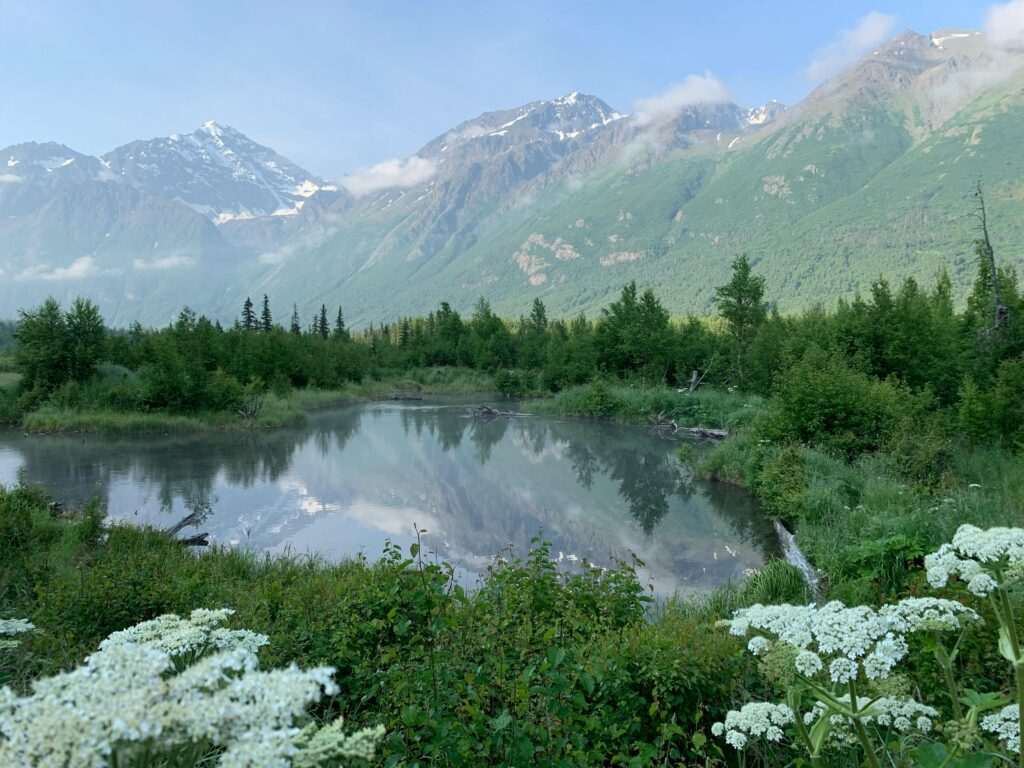
Most visitors arrive in Anchorage with Denali and Kenai Fjords on their itinerary — and those national parks absolutely deliver. But scattered across Alaska is a second system of wild lands that most travelers never discover: the Alaska State Parks network, the largest state park system in the United States by area. Covering more than 3.3 million acres across 130-plus management units, Alaska’s state parks offer the same extraordinary wilderness as the national parks — bears, moose, glaciers, salmon rivers — at a fraction of the cost and crowds.
If you’re based in Anchorage, you’re sitting at the doorstep of some of the best state park access in the country. This guide covers the top parks within striking distance, how to camp them, what to bring, and how to book before summer fills up.
Alaska State Parks vs. National Parks: What’s Different
The difference isn’t wildlife or scenery — it’s infrastructure and price. National parks come with entrance fees ($15–$35 per vehicle), often require timed-entry permits in peak season, and support heavy visitor traffic with shuttle systems, paved roads, and visitor centers. Alaska’s state parks, managed by the Alaska Department of Natural Resources Division of Parks and Outdoor Recreation, largely work on a different model.
Most state park units have no entrance fee. Developed campgrounds charge $15–$30 per night, and primitive camping is free in many backcountry zones. Trails are often unsigned and unmaintained compared to national park standards — which means less crowd pressure and more honest wilderness. You’re expected to bring navigation skills, bear awareness, and self-sufficiency. In return, you get Alaska as it really is: vast, unhurried, and largely to yourself.
Chugach State Park: Half a Million Acres Behind Your Hotel
At 495,000 acres — roughly the size of Rhode Island — Chugach State Park is Anchorage’s backyard mountain range and one of the most-visited state parks in America. It begins at the eastern edge of the city and extends into a wilderness of glaciated peaks, braided rivers, and alpine meadows accessible within minutes of downtown.
Flattop Mountain is the crown jewel for day hikers. At just over 3,500 feet, Flattop is the most-climbed peak in Alaska. The standard route is about 3.5 miles round-trip with 1,300 feet of elevation gain — moderate for fit hikers, challenging for those not accustomed to scree scrambling. On a clear summer day, you’ll see Denali from the summit. Trailhead parking at Glen Alps Trailhead costs $5 per vehicle (fee box on-site).
Powerline Trail follows a broad glacial valley south from the Glen Alps Trailhead for 11 miles one-way. The trail is open to hikers, mountain bikers, and in winter, skiers and snowshoers. It’s one of the best all-abilities routes in the park, with consistent views of the Chugach peaks and easy footing on gravel path. Moose are common in the valley; bear encounters are possible.
Eklutna Lake, 30 minutes north of downtown Anchorage, offers a different experience: a turquoise glacially-fed lake backed by 8,000-foot peaks. A 13-mile round-trip trail circles the lakeshore (or you can bike it, with rentals available at the trailhead). The campground here ($30/night) books fast in July and August — reserve early via Alaska State Parks’ online system. Day use parking is $5.
Eagle River Nature Center on the park’s north side is the gateway for families with young children. The Albert Loop Trail (3.1 miles) winds through old-growth cottonwood and spruce forest along the glacier-carved Eagle River valley. Wildlife sightings here include black and brown bears, bald eagles, and spawning salmon in late summer.
Denali State Park: Views the National Park Can’t Match
Halfway between Anchorage and Denali National Park lies Denali State Park — a 325,000-acre wilderness that most travelers drive straight through on the Parks Highway. That’s a mistake. Unlike Denali National Park, where the mountain is often hidden behind its own weather system, Denali State Park sits at a lower elevation on the southeast side of the Alaska Range, offering unobstructed views of North America’s highest peak on clear days that can last for hours.
Byers Lake Campground is the park’s main camping hub, about 147 miles north of Anchorage near Milepost 147 on the Parks Highway. Sites run $30/night for standard campground spots with fire rings and vault toilets. There are no hookups, but bear boxes are provided. From Byers Lake, the Kesugi Ridge Trail begins — a 27-mile point-to-point backpacking route that traverses the ridge above treeline with continuous Denali views. It’s among the best multi-day trails accessible by car in Alaska, and far less known than comparable routes in the national park.
For day trippers, the short walk to Byers Lake itself is worthwhile: a flat 4.4-mile loop through boreal forest and wetlands, excellent for moose and bear watching in early morning. The two-hour drive from Anchorage makes this feasible as a long day trip in summer’s 18-hour daylight.
Nancy Lake State Recreation Area: Paddle Country Two Hours North
North of Wasilla and about two hours from Anchorage, Nancy Lake State Recreation Area protects a glacially-sculpted landscape of more than 130 interconnected lakes within a compact 22,000-acre area. The park is built for canoes. An 11-lake canoe trail system lets paddlers camp their way through the backcountry over two to four days, portaging between lakes on marked trails and staying at primitive canoe-in campsites ($15/night) accessible only by water.
Canoe rentals are available at the Nancy Lake Store near the park entrance. Loons nest throughout the lake system, making this one of the best spots in Alaska for common loon observation. Mid-June through late July is peak season; by August, mosquito pressure drops and the birch and aspen begin to show early color. This park is especially popular with families and beginner paddlers because the lakes are sheltered and the portages are short.
Day use visitors can access the South Rolly Lake Campground area for swimming and picnicking. The park sees far fewer visitors than Chugach and offers a quieter, wetter, lowland Alaska ecosystem — a good counterpoint to the high-alpine parks.
Kenai River Special Management Area: World-Class Fishing Access
The Kenai River Special Management Area isn’t a park in the traditional sense — it’s a system of public fishing access points and campgrounds along the most productive salmon river in Alaska. The Kenai River runs 82 miles from Kenai Lake to Cook Inlet, and every summer it produces some of the largest king salmon (Chinook) and most prolific sockeye runs on the planet.
During the July sockeye run, bank fishing from state-managed public access points can produce limits of red salmon within an hour. Campgrounds at the confluence of the Kenai and Russian Rivers ($20–$30/night) book months in advance. The Kenai River corridor is about 2.5 to 3 hours from Anchorage via the Seward Highway — a practical overnight destination when the salmon are running.
Worth the Drive: Kachemak Bay State Park
No roads reach Kachemak Bay State Park. That single fact keeps it wild. The park sits directly across Kachemak Bay from Homer, accessible only by water taxi from the Homer Spit — roughly 45 minutes each way, with fares running $25–$40 per person depending on destination. The result is one of the least-visited and most spectacular state parks in Alaska.
The Grewingk Glacier trail is the park’s signature hike: a 6-mile round trip to the toe of a tidewater glacier that once extended miles into the bay. The Saddle Trail and Lagoon Trail system opens up multi-day loops with backcountry camping along the shoreline. Water taxis typically operate May through September; call ahead to confirm scheduling and arrange pick-up times, because there’s no shelter at the trailheads if weather pins you in.
The combination of saltwater, glaciers, old-growth forest, and mountain terrain concentrated in a single day-accessible wilderness is difficult to match anywhere in Alaska. Make the 4.5-hour drive from Anchorage an overnight trip to Homer and build in a full day on the park side of the bay.
Camping in Alaska State Parks: What You Need to Know
Alaska State Parks uses Reserve America (now Recreation.gov in some units) for campground reservations. Developed campground sites typically run $15–$30 per night depending on amenities; primitive and walk-in sites are $5–$15. Most campgrounds have vault toilets but no showers or hookups — generators are generally allowed in designated loops only. Day-use fees at some trailheads are $5 per vehicle, payable at iron ranger fee boxes.
Reservations open in January or February for the summer season. Popular sites at Eklutna Lake, Byers Lake, and the Kenai River confluence fill within hours of opening. If you’re planning a July or August trip to any developed campground, book the moment reservations open. First-come, first-served sites at smaller units remain available throughout summer but disappear quickly on weekends.
Alaska State Parks do not have the same bear canister requirements as some national park backcountry zones, but bear boxes are provided at most developed campgrounds and food hanging is standard practice in the backcountry. Never leave food in your car — bears have learned to break windows and are not deterred by modern vehicle locks.
Wildlife & Bear Safety
Alaska State Parks host the same wildlife as the national parks because they share the same landscape. Brown bears (grizzlies) inhabit every park on this list. Black bears are common in forested areas. Moose are abundant near wetlands and rivers. Dall sheep frequent high alpine ridges in Chugach. Wolves range through Denali State Park.
Bear spray is essential in any Alaska state park backcountry. Carry it accessible — not buried in your pack. Make noise on trails, especially near streams and in dense vegetation where bears may not hear you approaching. If you encounter a brown bear, don’t run; make yourself appear large and speak calmly. Bear spray is statistically more effective than firearms for stopping a charge.
Moose are responsible for more injuries per year in Alaska than bears. Give moose a wide berth — a cow with calves is unpredictable and can charge with little warning. If a moose charges, get behind a large tree or solid object. Unlike bears, moose will typically disengage once they feel you’re not a threat.
Finding Current Conditions
Trail conditions in Alaska state parks change rapidly, especially in spring when snowpack is melting and river crossings are at their highest. Before any overnight or remote day trip, check current conditions through the Alaska State Parks website at dnr.alaska.gov/parks. Ranger district phone numbers are listed by park unit — a quick call can save you from arriving at a flooded trailhead or a campground still under snow in late May.
For road access, the Alaska 511 system (dial 511 or visit 511.alaska.gov) provides real-time road conditions on the Parks Highway, Seward Highway, and Sterling Highway — all critical access routes for these parks. Landslides and seasonal closures are more common in Alaska than in the lower 48; it’s worth a 3-minute check before a 3-hour drive.
Plan Your Alaska State Parks Trip
Alaska State Parks offer some of the most authentic wilderness access in North America at a price that won’t require a second mortgage. Start with Chugach State Park — it’s accessible from downtown Anchorage and gives you immediate orientation to Alaska’s landscape and wildlife. Then build your itinerary outward: Denali State Park for a highway road trip, Nancy Lake for paddling, Kachemak Bay for a true expedition feel.
Book campgrounds early, carry bear spray always, and check conditions the day before you leave. The rest of Alaska will reveal itself on its own terms — unhurried, enormous, and largely uncrowded compared to the national park alternatives. That’s the whole point.

No comments yet.