
Alaska Dog Mushing Experiences 2026: Sled Dog Tours, Kennel Visits & More
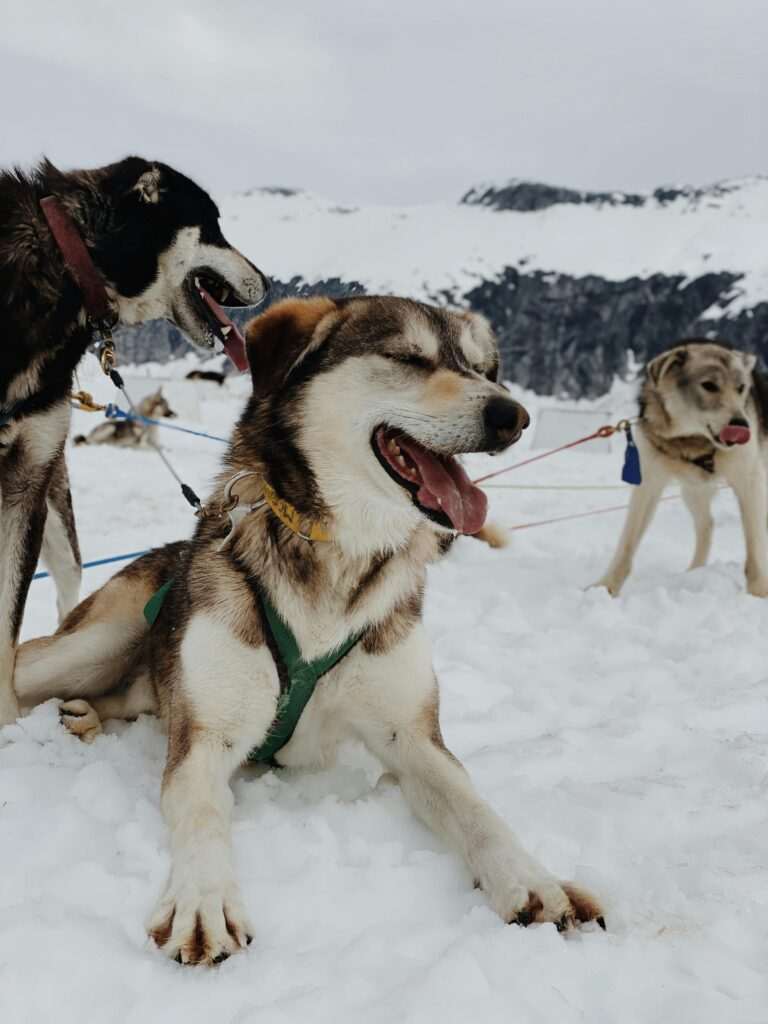
Dog mushing is Alaska’s official state sport, and it’s practiced here with an intensity that reflects how central it was — and still is — to life in the north. For a century before snowmobiles, sled dogs were the primary means of winter transportation across vast roadless terrain. That heritage didn’t disappear when the engines arrived. It transformed into a sport, a culture, and a way of life that thousands of Alaskans are still deeply committed to.
Visitors have options for experiencing dog mushing that go well beyond watching a race start from a sidewalk in downtown Anchorage. Here’s the full picture.
Year-Round Kennel Visits and Tours
One of the most overlooked experiences in Alaska is visiting a working sled dog kennel. Several kennels near Anchorage welcome visitors year-round, and the experience — meeting the dogs, hearing a musher talk about training and racing, watching the controlled chaos of a team being harnessed — is consistently one of the things visitors remember most vividly about their Alaska trip.
What makes kennel visits special isn’t just the dogs (though Alaskan huskies are remarkable animals — lean, athletic, with obvious intelligence and drive). It’s hearing a musher talk about the sport from inside it. The relationship between musher and dog team is the heart of dog mushing, and experienced mushers explain it in ways that shift your understanding of what the sport actually is.
The Iditarod Trail Headquarters in Wasilla, about 45 minutes from Anchorage, offers year-round mushing experiences including summer dog cart rides. The facility functions as a visitor center for the race and for mushing culture broadly — exhibits on race history, championship memorabilia, and regular demonstration runs.
Summer Dog Cart Tours
Mushers don’t stop training when the snow melts. During summer and fall, teams train on wheeled rigs — essentially carts or all-terrain vehicles — on gravel roads and trails. Several operations around Anchorage offer summer dog cart experiences where visitors can ride along or observe a training session.
It looks different than winter — no snow, no sleds — but the dogs’ enthusiasm is identical. Watching a team of huskies lock into working mode, pulling in synchronized effort, is the same in August as it is in January. Some visitors find the summer version more visceral because you can see the dogs’ movements clearly and hear the musher’s communication with the team without the visual disruption of blowing snow.
Winter Dog Sled Experiences
Winter is when dog mushing reaches its full expression. Options from Anchorage range from short rides to multi-day excursions:
Short rides (1–2 hours): Multiple operators offer tourist dog sled experiences in the Anchorage area and nearby communities. These typically involve a guide-driven sled with passengers in the basket, a short trail loop, and often time at the kennel afterward to meet the dogs. They’re accessible for all fitness levels and give a direct sensory experience of what mushing feels like: the runners on the snow, the sound of paws, the musher’s commands.
Half-day to full-day experiences: More substantial trips venture into the backcountry and give passengers more time on trail, more exposure to the dogs as working athletes, and sometimes the opportunity to ride the sled runners themselves under supervision.
Multi-day wilderness trips: A small number of experienced Alaska mushers offer multi-day expeditions where participants travel with a working team through remote terrain, sleeping in cabins or overnight camps. These are genuinely adventure travel experiences and require booking months in advance.
The Iditarod and Fur Rendezvous
The Iditarod Ceremonial Start in Anchorage (typically the first Saturday in March) is free to watch and offers the best single opportunity to see large numbers of dog teams in one place. The ceremonial start is a parade-style run through downtown Anchorage before teams are trucked north to the actual restart. The atmosphere is festive and the scale — dozens of teams, hundreds of dogs, thousands of spectators — is electric.
The Anchorage Fur Rendezvous (Fur Rondy), held in late February, includes World Championship Sled Dog Race sprint events — high-speed urban dog racing over a downtown course. The sprint mushers and their dogs are different from Iditarod long-distance teams: smaller, faster, built for speed rather than endurance. Watching championship sprint mushing is its own distinct experience from the distance races.
The Culture and History
Understanding dog mushing in Alaska means understanding the geography it solved. Before 1925, there was no road to Nome. There was no way to reach remote villages in winter except by dog team. The serum run of 1925 — when diphtheria antitoxin was relayed by dog team more than 600 miles to Nome during an outbreak — entered American legend for a reason. The lead dog on the final leg of that run, Balto, has a statue in Central Park. Alaska knows the full story belongs to Togo and the entire relay, but the point stands: dog teams were the lifeline of the north.
The Iditarod was created in 1973 partly as a revival of that heritage — a recognition that the route and the skill should not simply disappear with modernization. Today’s Iditarod mushers travel over 1,000 miles from Anchorage to Nome in 8–15 days, depending on conditions. The commitment required — months of training, thousands of miles of preparation runs, the mushers’ intimate knowledge of their individual dogs — is staggering.
Practical Information
Summer kennel tours and dog cart experiences typically run May through September. Winter sled dog experiences depend on snow conditions and are generally reliable December through March in the Anchorage area. Book in advance during peak winter tourism season (February–March) when demand is highest. Many operators have online booking; others require a phone call. Dress warmly for any winter mushing experience regardless of the forecast — riding in a sled basket or standing on runners exposes you to wind chill that a ground-level temperature reading doesn’t capture.
Dog mushing remains one of the most distinctly Alaskan experiences available to visitors. It’s not a manufactured tourist attraction — it’s a living tradition that happens to welcome observers.


No comments yet.