
Utqiagvik 2026: Visiting America’s Northernmost City Above the Arctic Circle
Utqiagvik — known for most of its history as Barrow, a name the community voted to change in 2016 to restore the Iñupiaq place name — sits at 71.3 degrees north latitude, 330 miles above the Arctic Circle, on a gravel spit where the Chukchi Sea meets the Beaufort Sea. It is the northernmost city in the United States. From November 18 through January 24, the sun does not rise. From May 11 through August 2, it does not set. The Arctic Ocean is visible from the edge of town. Polar bears walk through in October. This is not a place that requires a reason to visit beyond itself.
Getting There
Utqiagvik is accessible only by air. Alaska Airlines operates daily jet service from Ted Stevens Anchorage International Airport; the flight takes approximately 1.5 hours. There are no roads connecting Utqiagvik to the rest of Alaska. Round-trip fares vary seasonally but typically run $350–$600 from Anchorage; book well in advance for October (polar bear season) and June-July (midnight sun peak). The city has two hotels — the Top of the World Hotel and the Airport Inn — and limited short-term rental availability. Accommodations book quickly for peak travel dates; reserve months ahead.
Polar Night: November Through January
The polar night in Utqiagvik begins when the sun sets for the last time in mid-November and does not rise again until late January — a period of approximately 65 consecutive days of darkness. The sky is not uniformly black during this period; civil twilight produces a low glow on the southern horizon for a few hours around midday, and on clear nights the aurora borealis is visible overhead with frequency and intensity that few other inhabited places on earth can match. The stars are extraordinary.
Visiting during polar night is genuinely disorienting in a way that is its own kind of experience. The cold is real — January temperatures average -14°F, with wind chill values regularly reaching -40°F or colder. Prepare accordingly: extreme-cold base layers, insulated mid-layers, a parka rated to at least -40°F, wind-proof outer shell, face protection, and insulated boots rated for serious cold (Sorel or Baffin, not fashionable winter boots). Exposed skin freezes in minutes at these temperatures. Bring hand warmers, a headlamp with lithium batteries (alkaline batteries fail in extreme cold), and the expectation that outdoor time will be limited.
Midnight Sun: May Through August
The midnight sun in Utqiagvik runs for approximately 82 consecutive days — from May 11 to August 2 — during which the sun circles the sky without setting. The experience is meaningfully different from the midnight sun in Fairbanks or Anchorage, where the sun dips below the horizon for at least a few hours. In Utqiagvik, it does not dip at all. The quality of summer light — low-angle, golden, continuous — produces photographic conditions that last all day and all night. The temperature is moderate (40s to 50s°F in summer), the tundra flowers briefly, and the ocean ice breaks up and retreats, bringing marine mammals to the nearshore waters.
Polar Bears
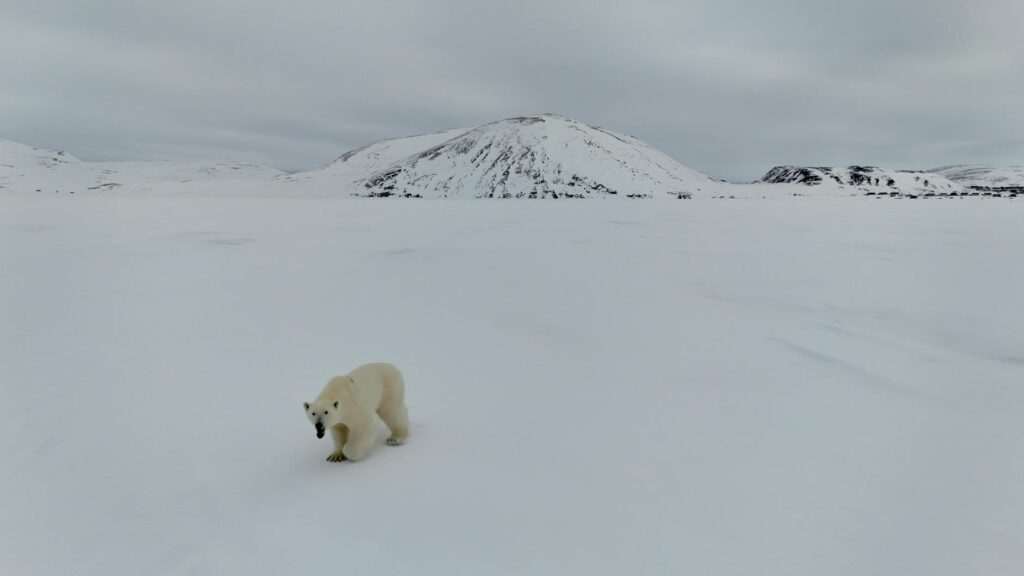
Polar bears move through the Utqiagvik area in October and November as they wait for the sea ice to form along the coast. The bears come close to town — a function of the community’s location directly on the coast — and sightings from roads and from guided vehicles are regular occurrences during this window. The North Slope Borough maintains a Polar Bear Patrol that monitors bear activity and manages conflicts between bears and residents; visitors should follow all local guidance and never approach bears independently. Guided bear-viewing outings in vehicles are available through local operators during the October-November season. These are wild polar bears in their natural habitat, not wildlife park bears — the experience is as authentic as wildlife viewing gets.
The Arctic Ocean
Walking to the edge of the Arctic Ocean is possible at Utqiagvik — a short walk from the center of town brings you to the Chukchi Sea shore, where in summer you can stand at the waterline of an ocean that most people will never see. In late summer, the beach is clear of ice and the water is technically swimmable (advisably not — it is very cold). In winter, the frozen ocean extends to the horizon, a flat white expanse of pressure ridges and drifted snow. The Iñupiat have hunted and fished these waters for thousands of years; the bowhead whale, which migrates along the Arctic coastline twice annually, is central to the community’s subsistence culture and identity.
Iñupiat Culture and the Whaling Tradition
Utqiagvik is an Iñupiat community where approximately 60% of the population is Alaska Native. The subsistence economy — particularly the bowhead whale hunt — remains active and culturally central in a way that is unlike any visitor-facing Native cultural experience elsewhere in Alaska. The spring and fall whale hunts are not tourism events; they are community practices that have sustained this population for millennia and that continue today under provisions of the International Whaling Commission that recognize Alaska Native subsistence rights.
Visitors are welcome in Utqiagvik, but the community context requires genuine cultural respect. The Iñupiat Heritage Center on Arctic Avenue is the primary venue for cultural education — it houses exhibits on Iñupiat history, language, and material culture, and offers programs that provide context for what visitors see in the community. Guided cultural tours, available through local operators, are strongly recommended over independent wandering. The community is not a tourist infrastructure; it is a living city where residents are going about their lives. Engage as a respectful guest rather than an observer.
Wildlife Beyond Polar Bears
The marine environment around Utqiagvik produces significant wildlife beyond polar bears. Beluga whales and bowhead whales are present in the nearshore waters in summer and fall, visible from shore or from small boat excursions. Arctic foxes are resident year-round and frequently visible near town. Snowy owls hunt the tundra south of the city. Hundreds of thousands of seabirds nest on the coastal cliffs during summer — eider ducks, long-tailed ducks, and various alcids among them. The tundra surrounding the city, accessible on foot or by ATV in summer, supports nesting shorebirds and occasional musk oxen sightings to the south.
Practical Planning
Utqiagvik has limited dining options — the Top of the World Hotel restaurant, a few local establishments, and a grocery store. Prices for everything are significantly higher than Anchorage due to the logistics of supplying a road-less Arctic community; budget accordingly. There is no public transit; taxis and hotel shuttles handle most local movement. The airport is 2 miles from town. A 2-to-3-night stay is the minimum for covering the main experiences; 4 to 5 nights allows time to settle into the rhythm of the light and cold. Come with genuine curiosity about one of the most extraordinary inhabited places in the Western Hemisphere.
Utqiagvik is the end of the road — except there is no road. You fly in, and you are standing at the top of the continent with the Arctic Ocean in front of you and darkness above in November or light in June, and almost nothing between you and the North Pole. The place earns every hour of travel it takes to reach it.
Featured photo by Putulik Jaaka on Pexels.




No comments yet.