
Alaska in December 2026: Holiday Events, Winter Magic & Northern Lights
There is a persistent idea that Alaska in winter is something to survive rather than experience. Visitors imagine months of darkness, brutal cold, and a landscape from which all life has retreated. This idea is wrong, and December is where it fails most dramatically.
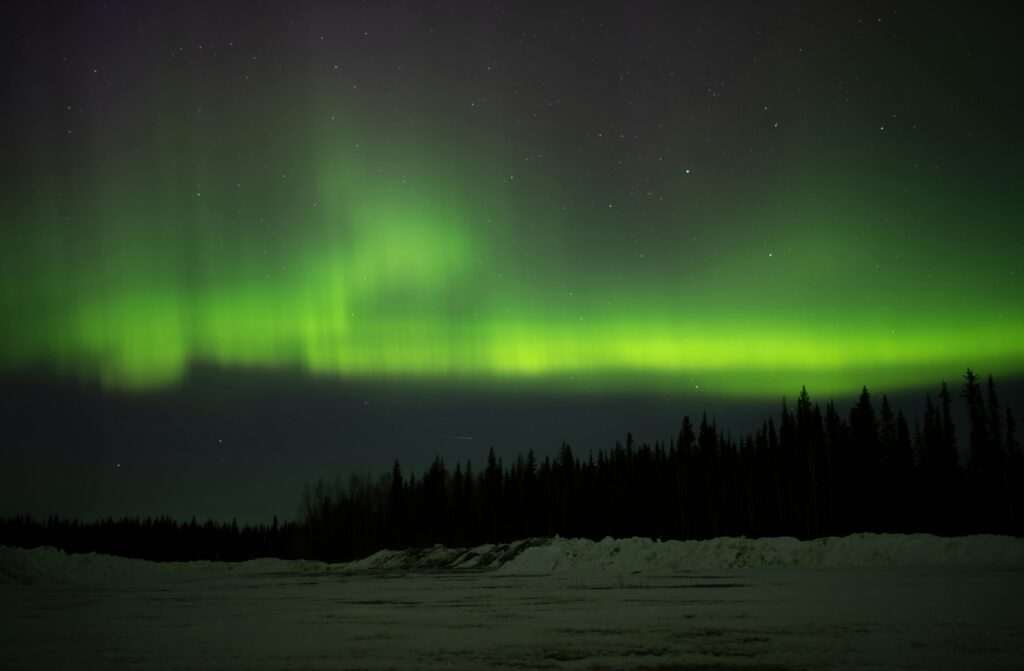
Alaska in December is aurora borealis every clear night over a snow-covered landscape. It is ski season at one of the best ski areas in North America. It is holiday events in a city that embraces the darkness and decorates accordingly. And it is a genuinely empty tourism infrastructure — restaurants with open tables, hotels with available rooms, and the sense that the place belongs to the people who live in it and the small number of visitors who showed up anyway.
Here is how to be one of those visitors.
The Daylight Reality — and Why It Matters Less Than You Think
December is Anchorage’s darkest month. Around the winter solstice (December 21), the city sees approximately five and a half hours of daylight — sunrise after 10 a.m., sunset before 4 p.m. In Fairbanks, further north, daylight shrinks to under four hours.
The honest reframe: those missing hours of daylight are replaced by something that doesn’t exist in summer at all. The aurora borealis requires darkness to be visible, and darkness is something Alaska has in extraordinary abundance in December. The long nights that limit daytime sightseeing multiply your aurora viewing opportunities. Instead of the narrow window visitors get in September or March — a few hours of darkness in an otherwise bright night — December delivers seventeen hours of dark sky, most of it cold and potentially clear.
The other reframe: the limited daylight is soft and beautiful. The low winter sun angles across the landscape horizontally for those five hours, producing the kind of golden light that photographers chase for twenty minutes at golden hour in summer. In December, that light lasts most of the morning.
Northern Lights: Alaska’s Peak Aurora Season
Aurora borealis activity peaks around the equinoxes (September and March), but December is a close second — the nights are simply so long that even moderate geomagnetic activity is visible for extended periods. A clear night in Anchorage in December almost guarantees an aurora sighting if the Kp index is 2 or above. A strong storm (Kp 5+) produces curtains of green and purple visible from inside the city despite light pollution.
Viewing from Anchorage
You don’t need to drive to the wilderness to see aurora from Anchorage. The north-facing hillside neighborhoods (Glen Alps, Hillside) offer good dark sky conditions with minimal driving. Earthquake Park on the coastal trail, facing north across Knik Arm, provides an unobstructed northern horizon without leaving the city. For the best experience, drive 30 minutes south to the Seward Highway corridor or north to the Matanuska Valley where light pollution drops significantly.
Viewing from Fairbanks
Fairbanks sits under the auroral oval — the ring of maximum aurora frequency — and has considerably less cloud cover than Southcentral Alaska in winter. Many dedicated aurora travelers base themselves in Fairbanks specifically for December viewing, combining the aurora with the city’s excellent winter cultural scene and the proximity of Chena Hot Springs (an hour east), where soaking in outdoor hot pools under an active aurora is a singular experience.
Forecasting Tools
Download the SpaceWeatherLive app or check NOAA’s Space Weather Prediction Center (swpc.noaa.gov) for Kp index forecasts. A 3-day forecast is reasonably reliable. Plan to be outdoors in a dark location when forecasts show Kp 3 or higher — and stay out. Aurora often appears, fades, and surges again over a two-hour window.
Holiday Events in Anchorage
Downtown Holiday Lighting
Anchorage’s downtown transforms in December with extensive holiday lighting along Fourth Avenue and the surrounding commercial district. The short days mean the lights are visible during what would be business hours in summer — the decorated storefronts and street lighting create a walkable holiday atmosphere from mid-afternoon onward. The annual Christmas tree lighting in Town Square Park typically draws several hundred people and marks the informal start of the holiday season.
Christmas Markets and Holiday Fairs
Multiple Anchorage venues host holiday craft markets through December, featuring Alaska-made goods: smoked salmon, birch syrup products, furs, Native art, handmade clothing, and the kind of locally specific gifts unavailable anywhere else. The Anchorage Market downtown operates on weekends into December; additional holiday fairs run at the Egan Center and various community venues. Check the Anchorage events calendar closer to your visit date for the current lineup.
Anchorage Symphony Holiday Concerts
The Anchorage Symphony Orchestra presents its annual holiday concert series in December at the Alaska Center for the Performing Arts — one of Anchorage’s premier performance venues. The holiday program typically includes traditional seasonal music with Alaska-specific elements. Tickets are available through the symphony’s website; performances in the main hall sell out in advance during the holiday season.
Hockey at Sullivan Arena
The Alaska Aces (ECHL) and University of Alaska Anchorage Seawolves play home games at Sullivan Arena through December. Hockey is genuinely popular in Anchorage — these are real crowds, not tourist-adjacent events — and an evening game is one of the best ways to experience the city as a local would. Check schedules for December home games; tickets are affordable and readily available at the door.
Winter Activities in December
Alyeska Resort: Ski Season Open
Alyeska Resort in Girdwood — about 45 minutes south of Anchorage — typically opens for the season in late November and is fully operational by December. With 1,610 vertical feet and over 70 trails, Alyeska is the largest ski resort in Alaska and one of the finest in the Pacific Northwest region. December conditions depend on snowpack — some years offer excellent early-season skiing, others require patience for the mountain to build up. Check Alyeska’s snow report before booking. The resort’s Hotel Alyeska offers slope-side accommodation for multi-day ski visits.
Snowmobiling
Snowmobile trails in the Matanuska-Susitna Valley, the Hatcher Pass area, and the Chugach Mountains open when snowpack establishes, typically by late November or December. Multiple Anchorage-area outfitters offer guided snowmobile tours through the winter landscape — no prior experience required for most beginner routes. The Hatcher Pass corridor north of Palmer provides access to open alpine terrain that is extraordinary on clear winter days.
Dog Sled Tours
Commercial dog sled tour operators near Anchorage run tours throughout winter once snow conditions allow, typically from late November onward. Options range from short demonstration tours (30–60 minutes, accessible to families) to extended backcountry mushing experiences. The Iditarod Trail Sled Dog Race’s ceremonial start departs Anchorage in early March, but the kennels that run it operate tours all winter — visiting an active sled dog kennel, where dozens of dogs train daily, is an experience in itself.
The Indoor Scene: Anchorage in Winter
Cold weather and long nights concentrate Anchorage’s restaurant and brewery scene in a way that summer disperses. Tables are available. Staff are unhurried. The neighborhood bars and restaurants that locals favor are fully operational and genuinely welcoming to visitors who show up in December rather than July. Craft breweries — Anchorage has several worth visiting — are warm, comfortable, and locally popular through the winter months. It’s the version of Anchorage that residents experience, and it’s more interesting than the tourist-season version.
New Year’s Eve: First Night Anchorage
First Night Anchorage is a family-friendly, alcohol-free New Year’s Eve celebration in downtown Anchorage, featuring live performances, art installations, and activities across multiple venues through the evening, culminating in a midnight fireworks display over the city. The fireworks launch in complete darkness — the Anchorage night sky in late December is fully dark by 4 p.m. — making for a dramatically visible display. First Night draws several thousand people downtown and is one of the city’s most attended annual events.
Budget Advantage: December Off-Season Pricing
December (excluding the Christmas–New Year’s holiday window) is deep off-season for Alaska tourism. Hotel rates in Anchorage drop significantly from summer peaks; some properties offer rates 40–60% below July pricing. Flight demand is lower, and carriers often offer sale fares to Anchorage in early and mid-December. If your travel dates are flexible and exclude the holiday crunch, December is one of the cheapest months to visit Alaska. The experiences — aurora, skiing, holiday events — are available at a fraction of the cost of the same trip in August.
What to Wear: Dressing for -10°F to 20°F
December temperatures in Anchorage average in the teens to low 20s Fahrenheit, with cold snaps dropping to -10°F or below several times through the month. Fairbanks runs significantly colder — minus 20 to minus 40°F during cold snaps. Dressing for this temperature range requires genuine layering:
- Base layer: Merino wool or synthetic moisture-wicking. No cotton — it retains moisture and loses insulation when wet.
- Mid layer: Fleece or down insulation layer, removable for indoor transitions.
- Outer layer: Windproof and waterproof shell — Alaska winter is often dry, but wind-driven cold is significant.
- Extremities are critical: Insulated waterproof boots rated to -20°F or colder, wool or fleece socks, insulated gloves with liner gloves underneath, and a hat that covers your ears completely. Cold hands and cold feet end outdoor excursions faster than anything else.
- Face protection: A balaclava or neck gaiter for below-zero conditions. Exposed facial skin in wind at -10°F becomes uncomfortable very quickly.
Anchorage has outdoor gear shops that rent and sell cold-weather equipment; you don’t need to ship gear from home if your existing clothing isn’t adequate. REI and several Alaska-specific outfitters carry everything you need.
December in Alaska rewards the visitor who shows up without the crowd. The aurora is running. The ski slopes are open. The city is decorated and quiet and genuinely itself. Come when no one else does.


No comments yet.