
Haines Alaska 2026: Bald Eagles, Lynn Canal & a Town Unlike Any Other
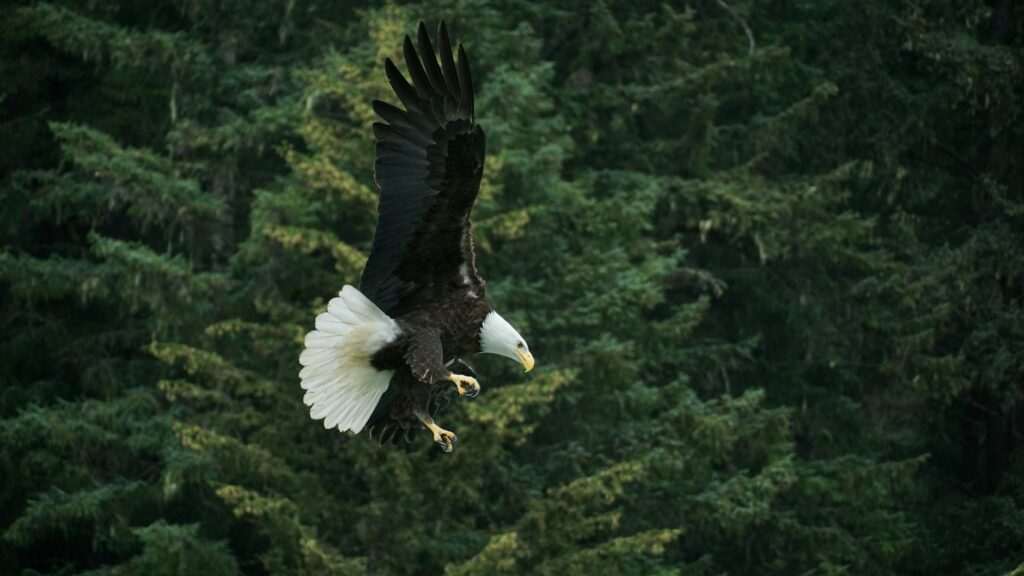
Haines sits at the head of Lynn Canal, the longest and deepest fjord in North America, where the mountains rise almost vertically from the water on both sides and the Chilkat River flats open to the north. It is one of only two road-connected communities in Southeast Alaska — a distinction that shapes everything about the town, from the absence of cruise ship docks to the presence of a functioning working-class economy not built around tourism. In November and December, up to 4,000 bald eagles gather on the Chilkat River flats in one of the largest concentrations of the species anywhere on earth. In summer, the fjord is turquoise and the mountains are green and the ferry from Juneau takes three hours. Haines is not on most Southeast Alaska itineraries, and that is a reason to add it to yours.
Getting There
The Alaska Marine Highway ferry connects Haines to Juneau in approximately 4.5 hours and to Skagway in 1 hour — making Haines a natural stop within a Southeast Alaska ferry itinerary or a day trip from Skagway. The Juneau-Haines-Skagway triangle is one of the most efficient routes in Southeast Alaska: ferry to Haines, spend a day or two, ferry to Skagway, explore, ferry back to Juneau for a flight home.
The overland approach is its own journey. The Haines Highway connects Haines to the Alaska Highway system through northwestern British Columbia and the Yukon, joining the main highway at Haines Junction. The drive from Anchorage — north on the Parks Highway, east on the Alaska Highway, south through Whitehorse and the Yukon, into BC, and down the Haines Highway to the coast — covers approximately 775 miles and is one of the great Alaska road trips, passing through some of the most remote subarctic landscape on the continent. Most visitors arrive by ferry; those who drive arrive understanding why the town feels different from the rest of Southeast Alaska.
The Chilkat Bald Eagle Preserve: November Through January
The Alaska Chilkat Bald Eagle Preserve protects 48,000 acres of the Chilkat River valley specifically because of what happens there each fall. An upwelling of warm groundwater keeps a section of the river from freezing until January, holding late-run chum salmon in open water long after the rest of Alaska’s salmon season has ended. Eagles from throughout the Pacific Northwest follow the salmon, and the concentration that results — 3,000 to 4,000 birds in a river valley in November and December — is the largest gathering of bald eagles in the world.
The viewing area is along the Haines Highway between miles 18 and 24, where pullouts provide direct sight lines to cottonwood trees filled with roosting eagles and the river bars where they feed. At peak concentration, the scene is legitimately surreal: hundreds of eagles visible simultaneously, perched, circling, and fishing in a river valley framed by snow-covered mountains. Peak viewing runs from mid-October through January; November and December are the most intense weeks. Bring a telephoto lens — 300mm minimum, 400-600mm ideal — and plan to spend several hours on the highway as the light changes.
Eagle watching in summer is also productive; Haines has a year-round resident eagle population that is large by any normal standard. The concentration is simply exponentially greater in winter.
Summer: Hiking, Bears, and the Fjord
Mount Ripinsky Trail is the signature summer hike — a demanding full-day route gaining 3,600 feet over 5 miles to the ridge above Haines with panoramic views of Lynn Canal, the Chilkat Mountains, and on clear days, the St. Elias peaks to the northwest. The trailhead is at the north end of Second Avenue in town. Allow 6 to 8 hours roundtrip; bring full layers and bear spray.
Chilkoot Lake State Recreation Site, 10 miles north of town, is the primary summer bear-viewing location. The lake outlet is a sockeye salmon spawning area, and brown bears fish the falls and shallows throughout July and August. The state campground sits adjacent to the viewing area; arriving early morning or evening maximizes bear activity. The lake itself — a clear glacially fed body backed by steep mountains — is worth the drive even when bears are not active.
Sea kayaking on Lynn Canal provides access to the fjord’s scale in a way that a ferry transit does not. The canal’s protected inner waters near Haines are appropriate for intermediate paddlers; the mountain walls rising from the water on both sides create a compositional intensity that makes every paddle stroke feel consequential. Local outfitters in Haines offer guided day paddles and multi-day trips.
Fort Seward and the Historic District
Fort William H. Seward, established in 1903 as the first permanent U.S. Army post in Alaska, occupies a parade ground above the harbor with original officers’ quarters, barracks, and support buildings still standing. After decommissioning in 1947, the fort was purchased by a group of veterans who converted it into an arts and community complex. The officers’ quarters are now private residences, small businesses, and galleries. The Alaska Indian Arts center operates in the former hospital, where master carvers work and totem poles are created using traditional methods. Walking the fort’s perimeter is a free and informative 30 minutes.
Tlingit Heritage: Sheldon Museum and Klukwan
The Sheldon Museum and Cultural Center on Main Street covers Haines and Chilkat Tlingit history through objects, photographs, and documents accumulated over more than a century of community collecting. The collection includes Chilkat blankets — the intricately woven ceremonial garments produced by Chilkat Tlingit weavers that are among the most technically complex textiles in the indigenous Northwest Coast tradition — and materials relating to the Klondike Gold Rush era that brought the first wave of non-Native settlement to the upper Lynn Canal.
Klukwan, a Tlingit village 22 miles north of Haines on the Haines Highway, is the ancestral home of the Jilkaat Kwaan (Chilkat people) and the source of the Chilkat weaving tradition. The Jilkaat Kwaan Cultural Heritage Center in Klukwan is open to visitors and offers guided tours of its collection, which includes ceremonial objects and clan house architecture. Call ahead or check current seasonal hours before making the drive.
Haines Brewing Company and the Local Character
Haines Brewing Company, operating since 1999, is one of the oldest craft breweries in Alaska and a genuine community gathering place. The taproom on Main Street pours small-batch ales brewed with local water; the Black Fang Dark Ale and Spruce Tip Ale are Alaska-specific products worth trying. The broader character of Haines — the mix of fishermen, artists, and longtime Alaska families; the absence of souvenir shops selling cruise-ship merchandise; the working harbor — is accessible simply by walking the main street and the waterfront. This is a town that functions independently of the tourism economy, and it shows in every interaction.
Haines rewards visitors who understand what they are looking for. The eagle gathering is one of the genuinely extraordinary wildlife spectacles in North America. The summer landscape is exceptional. And the town itself — road-connected, self-reliant, uncurated — is a version of Southeast Alaska that most visitors never encounter. Take the ferry from Juneau. Stay two nights. Go in November if you can.
Featured photo by Stephen Meyers on Pexels.


No comments yet.