
Climbing Denali 2026: What You Need to Know About North America’s Highest Peak
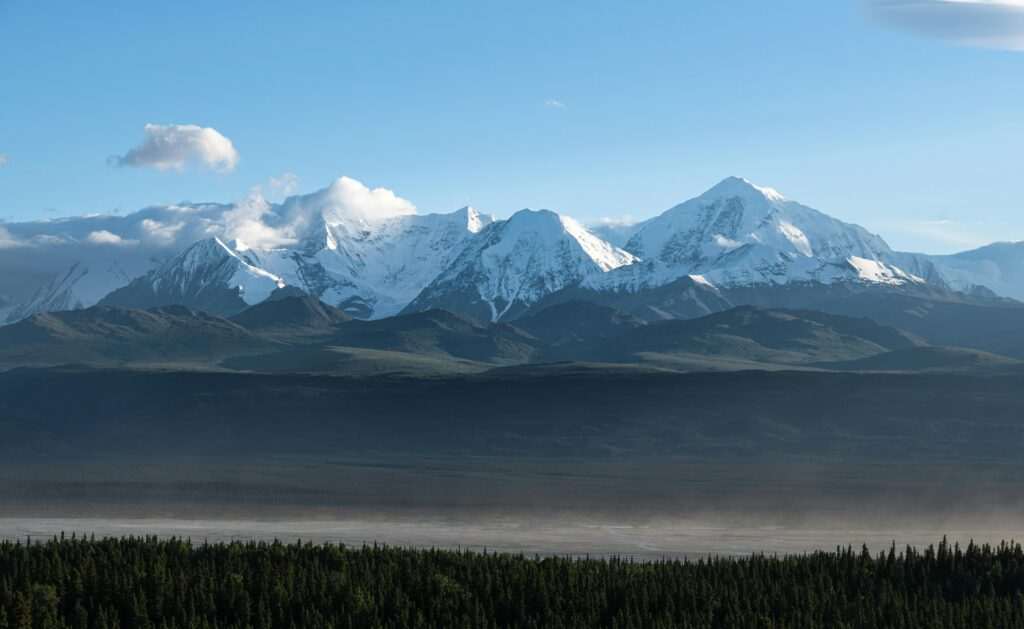
Every year, roughly one thousand people attempt to stand on top of North America. They fly by ski plane from a small Alaska town to a glacier at 7,200 feet elevation, strap on crampons, and begin hauling loads up one of the most demanding mountain routes on the continent. About half of them reach the summit. The rest turn around — stopped by weather, altitude, frostbite, exhaustion, or the honest recognition that the mountain is winning. Denali, at 20,310 feet the highest peak in North America, is a serious objective by any standard, and the communities that have grown up around it — the guides, the pilots, the rangers, the small town of Talkeetna at its base — make for one of the most distinctive mountain cultures anywhere in the climbing world. You do not need to be a climber to find this interesting. A visitor to Southcentral Alaska who spends a few hours in Talkeetna during May or June, when the mountain is in full expedition season, is watching something real and consequential play out in real time.
The Mountain: Scale and Context
Denali’s 20,310-foot elevation understates its actual challenge. The mountain sits at 63 degrees north latitude, near the Arctic Circle, where weather systems are more severe than at equivalent elevations farther south and atmospheric pressure is lower — the effective altitude is often compared to 23,000 feet at lower latitudes. The Alaska Range rises abruptly from lowlands barely above sea level, meaning the vertical relief from the surrounding terrain is greater than any other mountain on earth, including Everest measured from sea level. The summit environment involves temperatures that drop to -40°F and below, winds that have exceeded 100 miles per hour, and weather that can change from clear to whiteout within hours.
The standard route, the West Buttress, was first climbed by Bradford Washburn in 1951 and remains the line taken by nearly all permit holders today. It begins at Kahiltna Base Camp at 7,200 feet, moves through a series of camps established at roughly 11,000, 14,200, and 17,200 feet, and tops out on the summit ridge at 20,310 feet. A complete expedition runs 17 to 21 days in normal conditions, with additional time built in for storm delays that can pin a team at high camp for a week. The total distance climbed is roughly 13,000 vertical feet from base camp, carrying expedition-weight loads between camps on a rotating carry-and-cache system that forms the backbone of high-altitude logistics.
Who Attempts It
The NPS reports approximately 1,000 to 1,200 registered climbers per year, though the number fluctuates with weather windows and permit prices. The climbing community is genuinely international: Americans represent the largest single group, but expeditions from Japan, South Korea, Germany, Spain, the Czech Republic, Russia, and dozens of other nations register each season. About half reach the summit in a typical year, though this varies significantly — the 2012 season saw nearly 60% success, while storm-heavy years drop below 40%.
The mountain does not require technical rock climbing in the traditional sense — the West Buttress is primarily a snow and glacier route. What it requires is expedition experience, high-altitude competency, the physical conditioning for weeks of strenuous work at altitude, and the judgment to manage cold, crevasse hazards, and self-rescue in a remote environment. Most successful teams have members with prior high-altitude experience on peaks of 16,000 feet or above. The NPS estimates that roughly half of all permit holders have Denali-class experience before arriving.
The Permit System
Anyone wishing to climb above 14,000 feet on Denali must obtain a National Park Service permit. The current fee is $400 per person for the standard 60-day permit, applied through the NPS Talkeetna Ranger Station and processed in advance — ideally four to six months before the intended climb date to secure spots in the reservation system. Walk-up permits are occasionally available but cannot be relied upon for an expedition requiring months of preparation and international travel.
The Talkeetna Ranger Station is also the information hub for the mountaineering season. Rangers conduct pre-climb briefings that cover rescue protocols, crevasse safety, waste management requirements (all human waste must be packed out in clean mountain containers, a regulation that has been in place since 1995), and current mountain conditions. Visitors who are not climbing can attend public orientation sessions at the ranger station during peak season — May through July — and learn about current conditions, rescue activity, and the logistics of managing a mountaineering season on a remote glacier.
Getting to Base Camp: The Talkeetna Approach
Talkeetna sits 115 miles north of Anchorage, accessible by road or by the Alaska Railroad, whose Denali Star route stops at the Talkeetna depot before continuing north to Denali National Park and Fairbanks. The Alaska Railroad from Anchorage to Talkeetna takes approximately 3.5 hours and delivers passengers into the center of a town that has changed little since it became the staging ground for Denali expeditions in the mid-twentieth century.
From Talkeetna, the only way onto the mountain is by ski plane. Licensed air taxi operators — Rust’s Flying Service and others operating out of the Talkeetna airport — fly climbers and their gear on specially equipped aircraft fitted with skis that land on the Kahiltna Glacier at base camp. The same operators run the flightseeing tours that allow non-climbers to circle Denali and land on the glacier for day visits. A climber loaded with expedition gear and a tourist carrying only a camera board the same type of aircraft at the same strip. The boundary between participant and observer is thinner here than at almost any other significant mountain on earth.
What the Climb Involves
The West Buttress expedition is primarily a logistics problem executed in extreme cold. The standard approach involves establishing a series of camps, carrying loads to the next camp level, returning to sleep at the lower camp, and then moving the entire operation up once the higher site is stocked. This “carry high, sleep low” system allows acclimatization while distributing the physical load across multiple days. Teams typically carry 50 to 80 pounds per person on load days, pulling a sled and wearing a pack simultaneously on the lower glacier.
The section between 14,200-foot Camp 3 and the 17,200-foot high camp involves the most technical terrain on the standard route — a fixed-line section up the headwall that requires ascending with ascenders in conditions that can include wind and poor visibility. Above high camp, the summit push is typically 10 to 12 hours round-trip in ideal conditions. Guided expeditions with operators like Adventures by True North provide professional leadership through all of this, matching team members to conditions and making the objective genuinely accessible to fit, experienced climbers without prior Denali experience.
Climbing History
The first ascent of Denali was made on June 7, 1913, by Hudson Stuck, Harry Karstens, Walter Harper, and Robert Tatum. Stuck, an Episcopalian archdeacon who had become one of the foremost Alaska bush travelers of his era, insisted that Walter Harper — a young Alaska Native man of Athabascan and Irish descent — be the first to step onto the summit. Harper is accordingly credited as the first person to reach the top, a detail that carries particular weight given the mountain’s central place in Athabascan territory and culture.
The first winter ascent came in February 1967, when a team led by Art Davidson, Dave Johnston, and Ray Genet reached the summit in conditions that remain among the most severe ever encountered on the mountain. Their bivouac at 19,400 feet during a storm with temperatures near -50°F and winds over 100 miles per hour is documented in Davidson’s account, Minus 148°, which remains the most widely read first-person Denali narrative. The mountain has claimed over 100 lives since records were kept, and the NPS conducts rescue operations each season — a reminder, visible to anyone watching from Talkeetna, that the outcome of an expedition is never guaranteed.
What Visitors See from Talkeetna
During expedition season — late April through early July — Talkeetna is transformed. The small downtown fills with climbers sorting gear on the street, guides conducting team briefings in cafes, and ski planes making continuous circuits between the airstrip and the glacier. The Talkeetna Ranger Station’s mountaineering display covers permit history, route maps, rescue statistics, and historic photographs going back to the early twentieth century. The scale of what the mountain demands is legible in every image.
To look at Denali from Talkeetna on a clear day — the summit rising above the foothills at the north — is to understand why people keep trying. It is the largest unobstructed mountain presence in the temperate world, and the answer to why climbers attempt it is the same as it has always been: because it is there, and because the only way to know what you are capable of is to find out.
Photo: John De Leon / Pexels


No comments yet.