
Petersburg Alaska 2026: The Little Norway of Southeast Alaska
Petersburg doesn’t appear on most Alaska itineraries, and the town seems to prefer it that way. Located on the northern tip of Mitkof Island in Southeast Alaska’s Frederick Sound, Petersburg has a population of around 3,000 people, one of the highest per-capita incomes in the state, and a commercial fishing industry that has sustained the community through every fluctuation in Alaska’s broader economy. The Norwegian heritage brought by immigrant fishermen in the late 19th century is still visible in the architecture, the Sons of Norway Hall, and a cultural identity that has remained intact because Petersburg never developed the infrastructure for mass tourism. Cruise ships cannot dock here — the harbor is too shallow. This is a feature, not a bug.
Getting There
Petersburg is accessible by two means: Alaska Airlines jet service via regional connections (typically routing through Juneau or Wrangell on Alaska/Ravn regional aircraft), and the Alaska Marine Highway System ferry, which stops at Petersburg on the Southeast mainline route. The ferry connection makes Petersburg a natural stop within a longer Inside Passage journey — the Marine Highway schedule allows overnight stops that give travelers time to walk the town, visit the harbor, and catch a boat tour before reboarding. Flying in from Anchorage via Juneau takes approximately 2.5 to 3.5 hours with the connection; direct service does not exist. The Petersburg airport (PSG) is a 10-minute walk from the harbor.
The Norwegian Heritage
Peter Buschmann, a Norwegian immigrant fisherman, established a cannery and a sawmill at Petersburg in 1897, and Norwegian fishing families followed. The community that developed carried Scandinavian architecture, Lutheran churches, and traditions that have survived more than a century of Alaska history. The Sons of Norway Hall, built in 1912 and still active, is the most visible symbol of that continuity. Rosemaling — Norwegian decorative painting — appears on buildings throughout town. The annual Little Norway Festival in May brings the Norwegian heritage to the surface in parades, traditional food, and cultural performances, timed to coincide with the herring roe season that was historically one of the community’s most valuable harvests.
The heritage is not performative in the way that tourism sometimes makes cultural identity. Petersburg is a working town; the Norwegian character is present because it was functional — the fishing methods, the boat designs, the community structures that Norwegian immigrants brought were well-suited to Southeast Alaska’s environment. Walking the harbors and the downtown streets, you encounter it incidentally rather than as a display.
LeConte Glacier
LeConte Glacier, approximately 25 miles east of Petersburg in LeConte Bay, is the southernmost active tidewater glacier in North America — a glacier whose terminus calves directly into saltwater, producing icebergs that float into Frederick Sound. Boat tours from Petersburg’s harbor run to LeConte Bay, weaving through the iceberg field in the bay to approach the calving face. The scale of the icebergs — some the size of houses, blue-white and eroding in the salt water — and the possibility of seeing a calving event make the tour among the most accessible tidewater glacier experiences in Alaska.
Tour operators in Petersburg run 6-to-8-hour day trips to LeConte Bay; book in advance for summer visits. The boat ride through Frederick Sound offers additional wildlife opportunities: humpback whales feed in the sound from June through August, harbor seals haul out on the icebergs in the bay, and Steller sea lions are present in the outer passages. Bring rain gear regardless of forecast — the glacier bay microclimate produces its own weather.
Whale Watching in Frederick Sound
Frederick Sound, the body of water separating Mitkof Island from Kuiu Island and the mainland, is one of the most productive humpback whale feeding areas in Alaska. The sound’s nutrient-rich cold water supports large concentrations of krill and herring, and humpbacks aggregate here in numbers that consistently surprise even experienced Alaska wildlife watchers. June, July, and August are the peak months; tour operators in Petersburg run dedicated whale watching trips as well as combination glacier-and-whale tours. Independent sightings from the Petersburg waterfront are also common during peak season — scan Frederick Sound from the Hammer Slough area or the harborfront for surfacing and blowing animals.
Hiking: Ravens Roost and Raven Trail
Ravens Roost Trail climbs 1,600 feet in 4 miles from a trailhead near the airport to a Forest Service cabin and viewpoint above town. The summit view encompasses Petersburg Harbor, Frederick Sound, and the mountains of Kupreanof Island across the water — a panorama that frames the town’s geography clearly and explains why the fishing grounds here have been productive for over a century. The trail is well-maintained and manageable for fit hikers; allow 4 to 5 hours roundtrip. The Forest Service cabin at the top can be reserved in advance for an overnight stay with the view to yourself.
The Sandy Beach Road Trail and Hungry Point Trail offer easier waterfront walking near town, connecting to beach areas with views back toward the harbor and across the sound. The Petersburg Creek-Duncan Salt Chuck Wilderness, accessible by kayak from town, protects the estuary and forest on the western side of Mitkof Island and offers remote paddling in a wilderness designation without the logistics of reaching more distant parks.
Sea Kayaking Around Mitkof Island
Mitkof Island and the surrounding waterways offer sheltered sea kayaking through protected channels, past fishing boats at anchor, and along coastline backed by Sitka spruce and hemlock. The inner passages near Petersburg are calm enough for intermediate paddlers; the outer coast of Mitkof and the crossing to Kupreanof Island involve more exposed conditions. Local outfitters offer guided day trips and multi-day paddle camping itineraries; the Wrangell Narrows, the navigational channel that runs along the eastern shore of Mitkof, is a paddling route with continuous vessel traffic to watch alongside the scenery.
The Fishing Culture
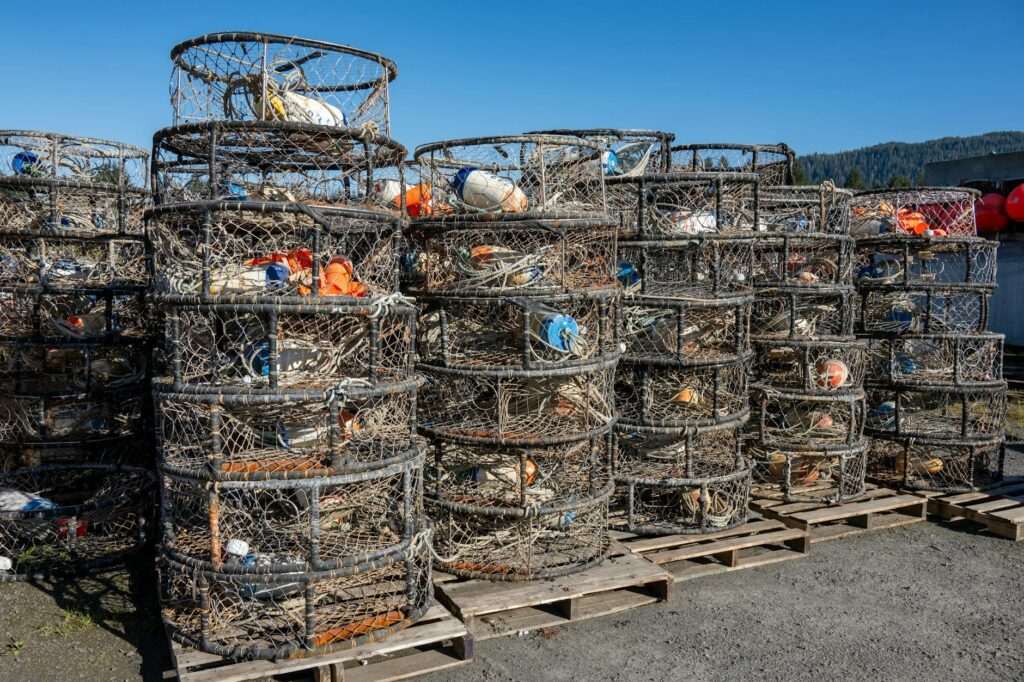
Petersburg’s harbor contains one of the most active commercial fishing fleets in Southeast Alaska — seiners, gill-netters, long-liners, and crabbers that work the waters of Frederick Sound, the Gulf of Alaska, and the Bering Sea. Walking the harbor in the early morning before a fleet departure, or in the evening during offloading, is an immersion in the commercial fishing culture that built the town. Shrimp, halibut, king and Dungeness crab, and five species of salmon are all processed through Petersburg’s seafood plants; the Coastal Cold Storage facility operates year-round and is a visible part of the harborfront. Fresh seafood is available directly from processors and at the local grocery; eating halibut in Petersburg means eating fish that was in the water within the last day or two.
When to Visit and Practical Notes
June through August is the peak season for whale watching and glacier tours; the Little Norway Festival runs in May and draws visitors specifically for the cultural events. Fall is quieter and brings autumn color to the hillsides above town; the fishing fleet is active through October on various species. Petersburg has no large hotels — accommodation runs to a handful of small inns, B&Bs, and the Scandia House Hotel on Nordic Drive, the main commercial street. Book ahead for summer weekends, particularly during festival periods. There is no road connection between Petersburg and the outside world; arriving means flying or ferrying, and the town’s self-sufficiency reflects that geography in every practical detail.
Petersburg works because it was built for fishing, not for visitors. The Norwegian-inflected harbor town that resulted — competent, self-sufficient, unfussy — is one of the most authentic communities in Southeast Alaska. The glacier is an hour by boat, the whales are in the sound, the crab pots are stacked on the dock. Everything here is doing something real.
Featured photo by Beth Fitzpatrick on Pexels.
No comments yet.