
Alaska Marine Highway 2026: The Complete Guide to Ferrying Through Southeast Alaska
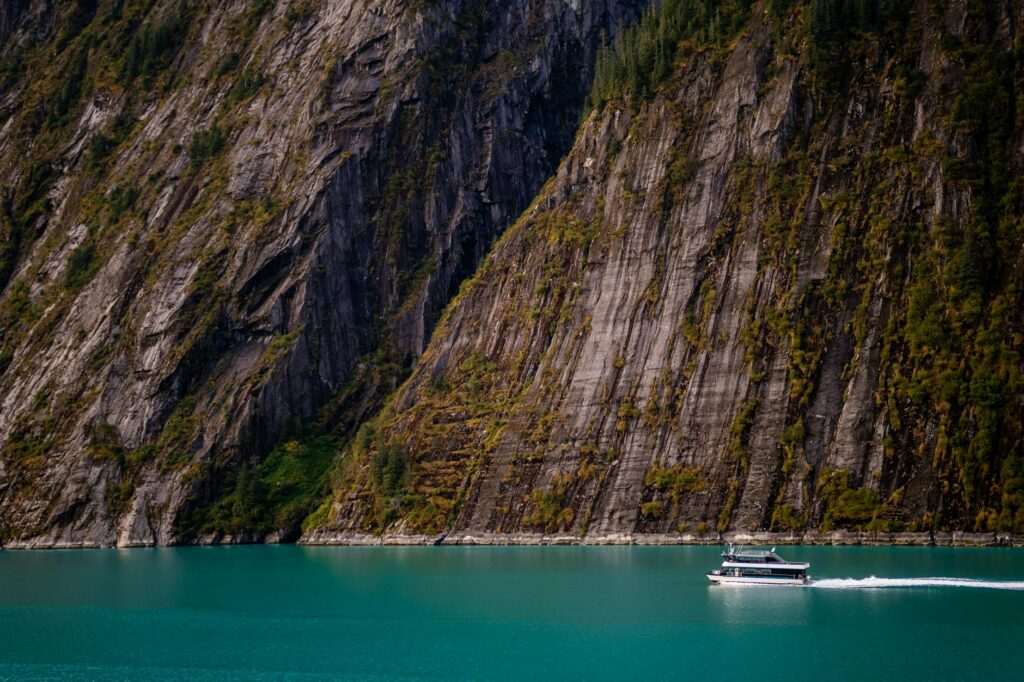
The Alaska Marine Highway System is a state-operated ferry network connecting 33 ports across 3,500 miles of coastline, from Bellingham, Washington in the south to Dutch Harbor in the far west. It is not a cruise ship experience. The vessels are working ferries — some nearly 400 feet long, others smaller inter-island shuttles — that carry passengers, vehicles, mail, and freight to communities that have no road connections and no other practical way to receive them. For travelers, the Marine Highway is one of the last great slow-travel routes in North America: a way to move through the Inside Passage at water level, watching the fjords, the glaciers, and the rain-forest coastline pass at ship speed, for a fraction of what a cruise would cost.
The System: Routes and Fleet
The Alaska Marine Highway operates 11 vessels across two main route systems. The Southeast Alaska mainline is the flagship route, connecting the Inside Passage ports from Bellingham and Prince Rupert, British Columbia north through Ketchikan, Wrangell, Petersburg, Sitka, and Juneau, with extensions to Skagway and smaller communities. The Southcentral and Southwest routes connect Whittier, Homer, Kodiak, Valdez, Cordova, and communities along the Kenai Peninsula and Gulf of Alaska coast.
For visitors based in Anchorage, the Southeast mainline is accessible via Whittier — a 60-mile drive through the Eisenhower Tunnel — where the MV Kennicott or MV Tustumena connects to Gulf Coast communities and eventually links to the Southeast system. The more common approach for a full Inside Passage experience is to fly to Bellingham or Prince Rupert and board the ferry there, making the northbound journey a one-way trip through Southeast Alaska with a return flight from Juneau, Sitka, or Skagway.
Booking: What to Reserve and When
Reservations open approximately one year in advance for the Alaska Marine Highway, and cabins on the most popular summer sailings — Bellingham to Juneau in July, for example — sell out months ahead. Walk-on passenger tickets (no cabin) remain available much later and represent the budget-traveler option: you buy deck passage and either rent a recliner seat or stake out a spot on the solarium deck with a sleeping bag and tent.
Vehicle reservations are essential if you are driving your car aboard. The ferries can carry passenger vehicles, trucks, and RVs, but vehicle space is limited and fills well before walk-on capacity. If your trip involves driving the Alaska Highway and returning via the ferry, book vehicle space as early as possible for summer sailings.
The Alaska Marine Highway website (dot.alaska.gov/amhs) handles all reservations. Fares vary significantly by route and vessel. A walk-on passenger fare from Bellingham to Juneau runs approximately $260–$320; a private cabin adds $200–$400 depending on size. Vehicle transport from Bellingham to Juneau adds $600–$900 for a standard car. Book well ahead and check the schedule carefully — the ferry runs on a fixed schedule that changes seasonally and does not operate daily on all routes.
The Onboard Experience
The larger vessels — MV Columbia, MV Kennicott, MV Matanuska — have cafeterias serving hot meals, cocktail lounges, gift shops, and forward observation decks. The food is utilitarian but reasonable; bring supplementary snacks for long crossings. The solarium is the social center for budget travelers: a covered open-air deck at the stern of the ship where passengers string up tents, unroll sleeping bags in reclining chairs, and spend nights under the Alaska sky. In the Inside Passage, the weather is maritime and damp; a good sleeping bag and waterproof layers make the solarium comfortable even in cooler conditions. This is how Alaskans have traveled the ferry for generations, and it remains the most atmospheric way to make the journey.
Wi-Fi is available on the larger vessels but is slow and intermittent. Cell service vanishes in the more remote stretches of the passage. The crossing from Bellingham to Juneau takes approximately 2.5 to 3.5 days with port stops depending on the sailing. This is not dead time — the scenery makes every hour productive.
The Inside Passage: What You See
The Inside Passage between Bellingham and Juneau is one of the most dramatic maritime routes in the world: a sheltered channel threading between the British Columbia and Southeast Alaska mainland and the outer island chains, walled by mountains that rise directly from the water and draped in the temperate rainforest that makes Southeast Alaska’s landscape distinct from anything in the Southcentral or Interior. Glaciers descend toward the water on the Alaska side. Waterfalls drop directly into salt water. The passage narrows in places to a few hundred meters of navigable channel.
Wildlife from the ferry deck is consistent and at times spectacular. Humpback whales feed in the nutrient-rich passages and surface close to the ship’s track. Orcas are regularly spotted. Steller sea lions haul out on rocky outcroppings in the outer passages. Bald eagles are so common in Southeast Alaska as to be unremarkable — they are visible from the ferry deck every day of the journey. Bring binoculars. Station yourself on the forward observation deck in good weather and give the passage the attention it deserves.
Port Stops Along the Route
The scheduled stops on the mainline provide the opportunity to step off and explore — duration varies from 30 minutes (enough to walk the dock) to overnight stops on some sailings.
Ketchikan is typically the first Alaska port northbound. The historic Creek Street boardwalk, the totem pole collections at Totem Bight and Saxman, and the chance to watch salmon running in Ketchikan Creek can fill a full day stop easily.
Wrangell and Petersburg are smaller communities worth brief exploration — Wrangell for its Tlingit heritage and Chief Shakes Island, Petersburg for the Norwegian fishing community character and some of the best halibut charters in Southeast Alaska.
Juneau, the state capital, warrants at minimum two days: Mendenhall Glacier (accessible by city bus), the Mount Roberts Tramway, and the historic downtown. Most travelers flying home from Southeast Alaska depart from Juneau’s airport, making it the natural terminus for a northbound ferry trip.
A Sample 7-Day Itinerary: Bellingham to Juneau
- Day 1: Board in Bellingham in the afternoon. Secure solarium or cabin space. First night on the water as the ferry moves through the San Juan Islands and north.
- Days 2–3: Inside Passage passage through British Columbia. Prince Rupert stop — either board here if flying into YPR — then the border crossing into Alaska. Watch for whales in Chatham Sound and Dixon Entrance.
- Day 4: Ketchikan stop. Several hours ashore — Creek Street, totems, or a quick floatplane flightseeing over Misty Fjords.
- Day 5: Wrangell and Petersburg stops. Rain is likely; use the forward observation deck when weather permits.
- Day 6: Arrive Juneau. Check into lodging, decompress.
- Day 7: Mendenhall Glacier, downtown Juneau, and a flight home from JNU.
The Alaska Marine Highway is the ferry before ferries became a tourist product. The communities it serves depend on it; the people who ride it are going somewhere real. For a visitor, that is the point — not the amenity level or the entertainment programming, but the fact that the ship is doing actual work and the passage it makes through the Inside Passage is one of the great slow journeys left in North America. Book early, bring a sleeping bag, and find a spot on the solarium rail before dark.
Featured photo by Eugenio Felix on Pexels.

No comments yet.