
Alaska’s Forgotten War: Discovering WWII History in the Aleutian Islands (2026)
Most Americans think of World War II battles as being fought far from home — in the Pacific, in Europe, across distant oceans. But one front of the war unfolded on American soil: the rugged, fog-shrouded Aleutian Islands of Alaska. For nearly fifteen months, Japanese forces occupied two U.S. territories, and American troops fought some of the war’s most brutal close-quarters combat in terrain unlike anything soldiers had trained for. Today, this campaign — long overshadowed by Midway and Normandy — is remembered as the Forgotten War, and Alaska offers travelers a powerful, immersive window into it.
The Japanese Invasion: Attu and Kiska, 1942
On June 3, 1942 — just one day before the pivotal Battle of Midway — Japan launched a diversionary strike on Dutch Harbor in the Aleutians. Four days later, Japanese forces landed unopposed on the islands of Attu and Kiska, occupying them for the next twelve months. It was the first time since the War of 1812 that foreign troops had seized American territory.
The strategic logic was sound: the Aleutians form a natural island chain stretching 1,200 miles toward Japan, making them valuable as both a defensive buffer and a potential stepping stone for invasion. Japan hoped the seizure would draw the U.S. Pacific Fleet north while the main assault on Midway unfolded. The diversionary plan failed, but the occupation of Attu and Kiska was real — and the U.S. could not allow it to stand.
The Battle of Attu: Nineteen Days of Hell, May 1943
On May 11, 1943, American forces landed on Attu to retake the island from approximately 2,900 Japanese defenders. What followed was nineteen days of ferocious fighting in terrain that confounded military planners. Fog so thick soldiers couldn’t see five feet. Freezing tundra that swallowed boots and sapped body heat. No trees for cover — just open hillsides swept by machine-gun fire.
The Battle of Attu was one of the costliest island battles of the entire Pacific War on a per-capita basis. Of the roughly 15,000 U.S. troops committed, more than 3,800 became casualties — approximately 549 killed in action, with thousands more suffering frostbite, trench foot, and disease. The Japanese garrison fought nearly to the last man. On May 29, 1943, about 800 surviving Japanese soldiers launched a desperate banzai charge through American lines, reaching as far as the medical tents before being stopped. Fewer than 30 Japanese soldiers were captured alive.
The battle shocked the American military into reforming cold-weather combat training and logistics. It also gave commanders a grim preview of the ferocity they would face across the Pacific — while simultaneously cementing Alaska’s strategic importance to the Allied war effort.
The Ghost Invasion of Kiska, August 1943
After Attu, the Aleutian campaign’s strangest chapter unfolded on Kiska. The U.S. assembled a massive force — 34,000 American and Canadian troops — and bombarded the island for weeks before landing on August 15, 1943. The invaders advanced cautiously into the fog, prepared for fierce resistance. They found an empty island.
Under cover of thick fog on July 28–29, the Japanese had evacuated all 5,183 of their troops by destroyer without a single American ship or plane detecting them. The Kiska evacuation remains one of the most audacious naval feats of World War II. Despite the anti-climax, the campaign had succeeded: Japan never again threatened North American territory.
Alaska’s Strategic Role: The Alaska-Siberia Air Route (ALSIB)
Beyond the Aleutians, Alaska served as a critical lifeline for the Allied war effort through the Alaska-Siberia Lend-Lease route, known as ALSIB. Between 1942 and 1945, American pilots flew nearly 8,000 aircraft — primarily P-39 Airacobras, P-63 Kingcobras, A-20 Havocs, and B-25 Mitchells — from Great Falls, Montana, through Edmonton and Fairbanks, to Ladd Field (now Eielson Air Force Base), where Soviet pilots took delivery and flew them west into combat against Nazi Germany.
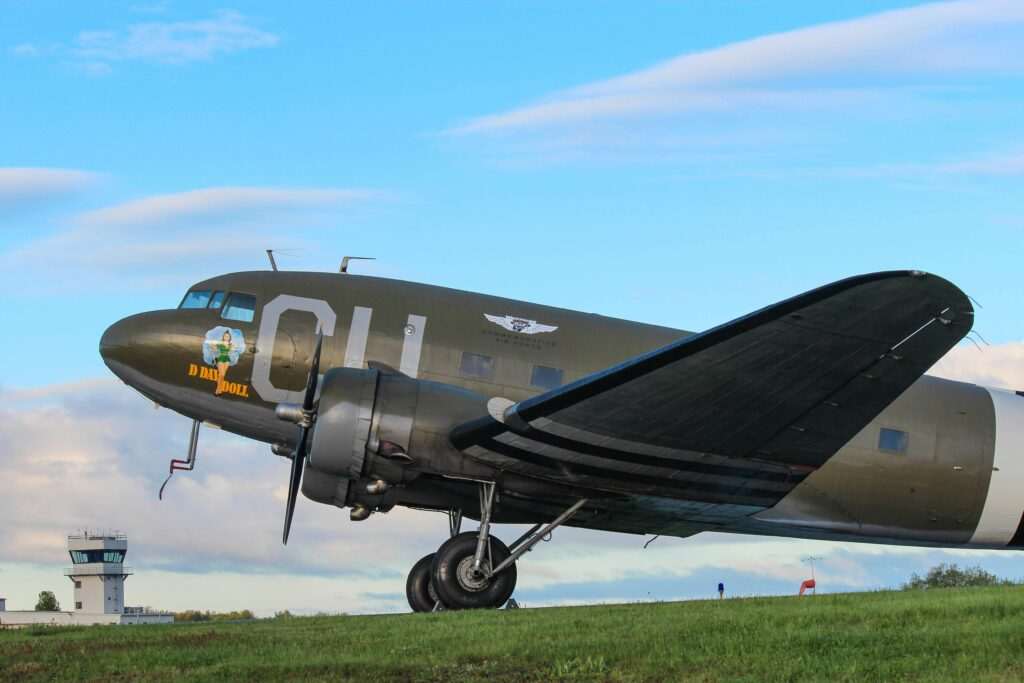
Fairbanks and Nome were key transfer points; Anchorage’s Elmendorf Field served as the regional hub for staging and logistics. The C-47 Skytrain transport aircraft — the workhorse of the entire Allied airlift effort — flew relentlessly across Alaska’s mountains and river valleys to keep the pipeline moving. Without ALSIB, the Soviet air forces would have faced the Wehrmacht with far fewer aircraft. The route delivered approximately 14,800 aircraft to the USSR over three years.
WWII Historic Sites to Visit from Anchorage
Unalaska / Dutch Harbor — The Museum of the Aleutians
The town of Unalaska on Unalaska Island, accessible by Alaska Airlines from Anchorage (about two hours), is the heart of Aleutian WWII tourism. The Museum of the Aleutians in Dutch Harbor holds one of the best collections of Aleutian WWII artifacts in the world — Japanese and American military equipment, personal effects, photographs, and the story of the Unangan (Aleut) people who were evacuated from the islands during the war and interned in deteriorating camps in Southeast Alaska. The museum contextualizes the campaign not just militarily but humanly.
Dutch Harbor itself still shows visible wartime infrastructure: gun emplacements, ammunition bunkers, and Quonset hut foundations dot the landscape. The area was designated the Aleutian World War II National Historic Area in 1996, recognizing its unique significance as American soil where the war was actually fought.
Fort Abercrombie State Historical Park — Kodiak Island
Just north of Kodiak city (a 45-minute flight from Anchorage), Fort Abercrombie preserves some of the most intact WWII coastal defense fortifications in Alaska. Built in 1941 to guard Kodiak’s critical naval base, the park features massive concrete bunkers, gun batteries, and ready-ammunition rooms, many open for exploration. The site sits on dramatic coastal bluffs above Monashka Bay — bring rain gear and a good flashlight for the bunker interiors. The park’s Kodiak Military History Museum (open summers) interprets the base’s role in the broader Pacific defense.
Fort Richardson / JBER — Anchorage
Joint Base Elmendorf-Richardson, located at the northeast edge of Anchorage, traces its origins directly to the wartime buildup. Fort Richardson was established in 1940, and Elmendorf Field became one of the busiest military airfields in North America by 1943. While full base access requires military affiliation or escort, veterans’ groups and historical societies occasionally arrange tours. The adjacent Alaska Aviation Museum at Lake Hood (open to the public) interprets Alaska’s wartime aviation history and has examples of period aircraft.
Sitka National Cemetery
Alaska’s only national cemetery, located in Sitka, honors veterans from the Civil War through the present. WWII veterans — including Aleutian campaign soldiers — are interred here in a setting of quiet dignity surrounded by temperate rainforest. The cemetery is open daily to visitors and is a meaningful stop for those tracing family military history in Alaska.
Combining History with Tourism: Unalaska / Dutch Harbor
Unalaska is known worldwide from the reality TV series Deadliest Catch — and the crab boats are real. A trip to Dutch Harbor can combine Aleutian WWII history with some of Alaska’s most dramatic and remote scenery, excellent birdwatching (the islands host millions of seabirds), and the chance to experience a community at the far edge of the American road system. There are no roads connecting Unalaska to the mainland; you fly or take the state ferry. That isolation, paradoxically, is what makes the wartime history so immediate: you feel exactly how far from help those soldiers were.
Summer (June–August) offers the most accessible weather, though fog is a near-constant companion. Book flights early — Unalaska is a popular destination, and capacity is limited. The Museum of the Aleutians recommends at least two to three days to do the site justice.
Planning Your 2026 Alaska WWII History Trip
For visitors staying in Anchorage, the Alaska Aviation Museum and Fort Richardson’s public perimeter areas are day-trip accessible. Fort Abercrombie on Kodiak is an excellent 2–3 day side trip combining history with outstanding wildlife viewing (brown bears, sea otters, puffins). Unalaska warrants a dedicated 3–4 day journey.
The Aleutian WWII National Historic Area visitor center in Dutch Harbor provides maps and ranger-led interpretation. The Alaska State Historical Society and the National Park Service’s Alaska Region office in Anchorage can connect travelers with additional resources, living history events, and veteran oral history programs.
Alaska’s WWII history isn’t just a footnote to the Pacific War — it’s a story of American territory invaded, of soldiers fighting in conditions that broke equipment and men alike, and of a strategic landscape that shaped the entire Pacific theater. In 2026, it’s history you can walk through, literally, in bunkers still standing on the edge of the Bering Sea.


No comments yet.