
Alaska Spring Break 2026: The Best Time You’ve Never Considered for Alaska
Every year, hundreds of thousands of travelers plan Alaska trips for July and August — and every year, they share the state’s most popular trails, viewpoints, and glacier boats with thousands of other people who had the same idea. The shoulder season counterargument has been made for years. But spring break specifically — March and April, coinciding with school and college break windows — offers something even the early-June crowd doesn’t get: Alaska’s greatest annual events, peak ski conditions, the last weeks of aurora season, and prices that genuinely reflect the off-peak reality. If you’ve been waiting for the right moment to visit Alaska on a budget, without planning twelve months in advance, spring break may be it.
March in Anchorage: Events, Snow, and Northern Lights
March is arguably the single richest month in Anchorage’s cultural calendar, packed with events that have nothing to do with summer and everything to do with the city’s winter identity.
Iditarod Ceremonial Start. The Iditarod Trail Sled Dog Race’s ceremonial start runs through downtown Anchorage each year on the first Saturday of March, transforming 4th Avenue into a race course for about an hour as mushers and their teams parade through the city before the official restart in Willow the following day. The ceremonial start is free to watch, extremely photogenic, and one of the few major American sporting events where the athletes literally run past the spectators at arm’s length. For visitors arriving mid-March, Iditarod Trail Headquarters in Wasilla maintains year-round exhibits about the race, the trail, and the dogs — including video archives of historic finishes and a gift shop with genuinely good gear.
Fur Rendezvous (Fur Rondy). Anchorage’s oldest and largest winter festival runs for about ten days in late February and early March, overlapping with most spring break windows. Fur Rondy includes the World Championship Sled Dog Race through downtown streets, the Running of the Reindeer (a genuinely absurd event where participants sprint alongside reindeer), the Rondy Grand Prix snowmachine race, carnival rides on the frozen Delaney Park Strip, and an outdoor fur auction that has operated continuously since 1935. Most Fur Rondy events are free or low-cost, and the festival atmosphere in downtown Anchorage — crowds in parkas, snow on the ground, reindeer galloping past — is as distinctly Alaskan as anything the state produces.
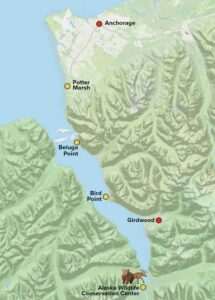
Peak Ski Season at Alyeska. March is statistically the best month to ski at Alyeska Resort in Girdwood, about 40 miles south of Anchorage on the Seward Highway. March brings the combination the mountain is known for: consolidated, stable snowpack from months of accumulation, clear high-pressure weather windows that the January-February storm cycles tend to miss, and daylight expanding rapidly toward the solstice. Average March snowpack at Alyeska often exceeds mid-winter base depths by a foot or more, and the mountain typically holds spring skiing conditions well into April. Spring break week at Alyeska is legitimately less crowded than winter holiday weekends — lift tickets cost the same, but the lines are shorter.
Aurora Season Still Running. Aurora viewing in southcentral Alaska runs roughly from late August through mid-April, tracking with the dark nights needed for visibility. March is one of the best aurora months because the nights are still long enough for good viewing windows (8-9 hours of darkness), geomagnetic activity often peaks near the equinoxes, and snowpack on the ground provides reflective foreground for photography. Clear nights in March routinely produce strong aurora displays viewable from Anchorage’s edge areas — Eklutna Lake Road, Hatcher Pass, and the hillside above the city are accessible and rewarding aurora destinations without requiring a full expedition into the bush.
April: The Transition Season
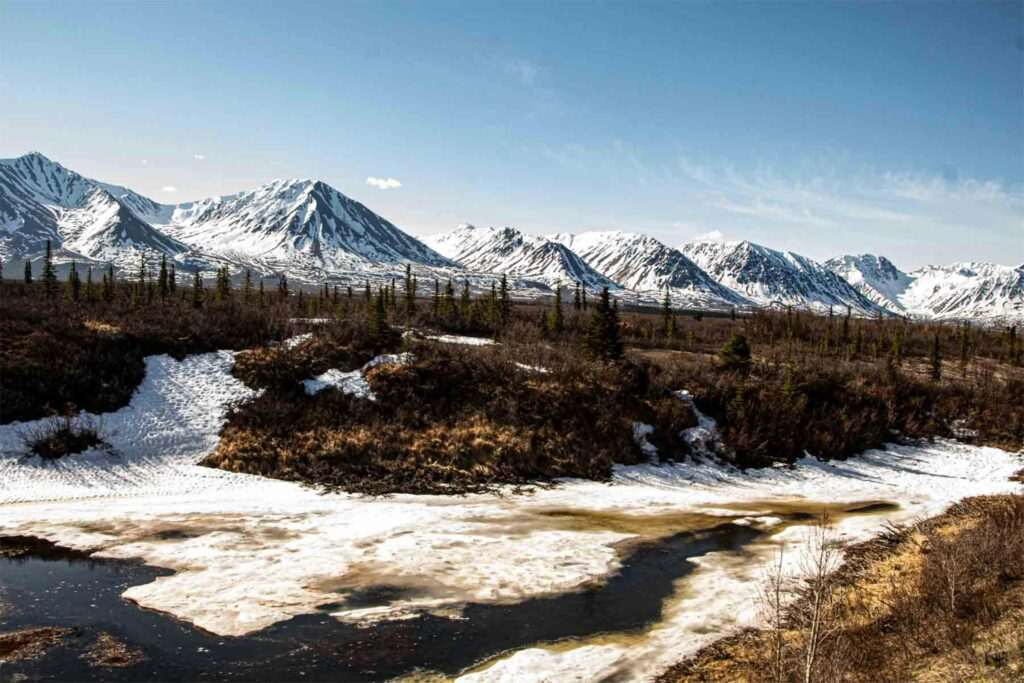
April is breakup season — the Alaskan term for the period when winter’s grip loosens, the snowpack deteriorates, and the landscape transforms from white to muddy brown. It is not a glamorous month visually. But it has a specific energy that repeat Alaska visitors learn to appreciate: the feeling of a place waking up, of seasonal rhythms accelerating after months of cold stillness.
Spring wildlife activity picks up noticeably in April. Bears begin emerging from dens in the Chugach foothills — typically from mid-April onward — and moose, which spent winter in lowland willow thickets, become more visible as they move toward higher elevation browse. Potter Marsh, at the south end of Anchorage on the Seward Highway, sees its first migrating waterfowl arrivals in April: trumpeter swans, various duck species, and sandhill cranes moving north through the Pacific Flyway. By late April, the Potter Marsh Bird Sanctuary boardwalk is reliably productive for birders and wildlife photographers even before the main migration surge of May.
Farther north, the Chilkat Valley near Haines (accessible by ferry or small plane from Anchorage) hosts a late-winter bald eagle concentration in March and early April — one of the largest accessible congregations of eagles in the world, though not as famous as the November peak.
The Price and Crowd Advantage
The practical case for spring break is straightforward. Anchorage hotel rack rates in March and April average 30-50% below peak summer pricing. Rental cars, which can be genuinely difficult to find in July-August due to supply constraints, are readily available. Flight prices are consistently lower on routes from major Lower 48 hubs. The popular summer tour operators — glacier boat cruises, wildlife watching charters, flightseeing packages — often run early-season pricing for March and April, with discounts of 15-25% on available products.
Crowds are minimal by any standard. Popular trails that see hundreds of daily users in summer are quiet. The Seward Highway drive — one of North America’s most scenic coastal roads — is essentially traffic-free outside of weekends. Downtown Anchorage is navigable at any hour without the foot traffic of cruise season.
What’s Open in Spring
Spring break travelers should plan around what’s genuinely running rather than assuming summer-season availability:
- Alyeska Resort: Full operations through late April, weather and snowpack permitting. Spring conditions typically hold well into the month.
- Snowmobiling: Hatcher Pass and the Matanuska-Susitna Valley snowmobile trails remain accessible and well-traveled through March, tapering in April as breakup advances at lower elevations.
- Dog sled tours: Multiple operators near Anchorage and in the Talkeetna area run dog sled tours through March; some extend into early April depending on conditions.
- Aurora tours: Guided aurora tours run through mid-April, combining transportation to dark-sky locations with photography guidance and hot drinks.
- Museums and cultural sites: The Anchorage Museum, Alaska Native Heritage Center, and the Iditarod Trail Headquarters are all fully operational year-round.
- Restaurants and local businesses: Anchorage’s restaurant and shopping scene operates on year-round hours; this is not a tourist-dependent town that closes in the off-season.
What’s Not Yet Open
Managing expectations around spring closures is as important as knowing what’s available. Summer tour products that depend on ice-free water — glacier cruise boats in Prince William Sound, sea kayaking tours in Resurrection Bay, fishing charters targeting peak salmon runs — are generally not operating until May or June at earliest. Denali National Park’s road into the backcountry doesn’t open to visitor vehicles until late May. Most Chugach State Park campgrounds remain closed through at least late April. Park roads and primitive routes that are passable in summer become muddy, rutted, and sometimes impassable during breakup — Hatcher Pass Road is a notable example, with the upper section closing to vehicles for breakup and reopening only after conditions stabilize.
What to Pack for Spring Break Conditions
Spring in Anchorage spans a wide temperature range. March temperatures average in the teens to low 30s Fahrenheit, with occasional cold snaps below zero on clear nights. April warms to the 30s and 40s during the day but drops back to freezing at night. Underfoot conditions change daily during breakup — a trail that is firm packed snow in the morning may be shin-deep slush by early afternoon as temperatures rise and snowpack deteriorates.
The practical packing list for spring break Alaska prioritizes layering over specific garments: a moisture-wicking base layer, insulating mid-layer (down or synthetic), and a waterproof, windproof outer shell handles the full range of conditions encountered. Waterproof boots with good ankle support are non-negotiable — trail runners are inadequate for breakup slush, and hiking boots without waterproofing will be soaked within an hour on any trail accessed during April. Microspikes or traction devices for boots are useful for the icy sidewalk and parking lot conditions that persist in Anchorage through March.
The payoff for packing correctly is access to an Alaska that most visitors never see — the state at the moment of its annual reawakening, with events, conditions, and prices that justify the extra layer planning.
Photo: Gary Hillery / Pexels
No comments yet.