
Matanuska Glacier Day Trip from Anchorage 2026: Tour Guide
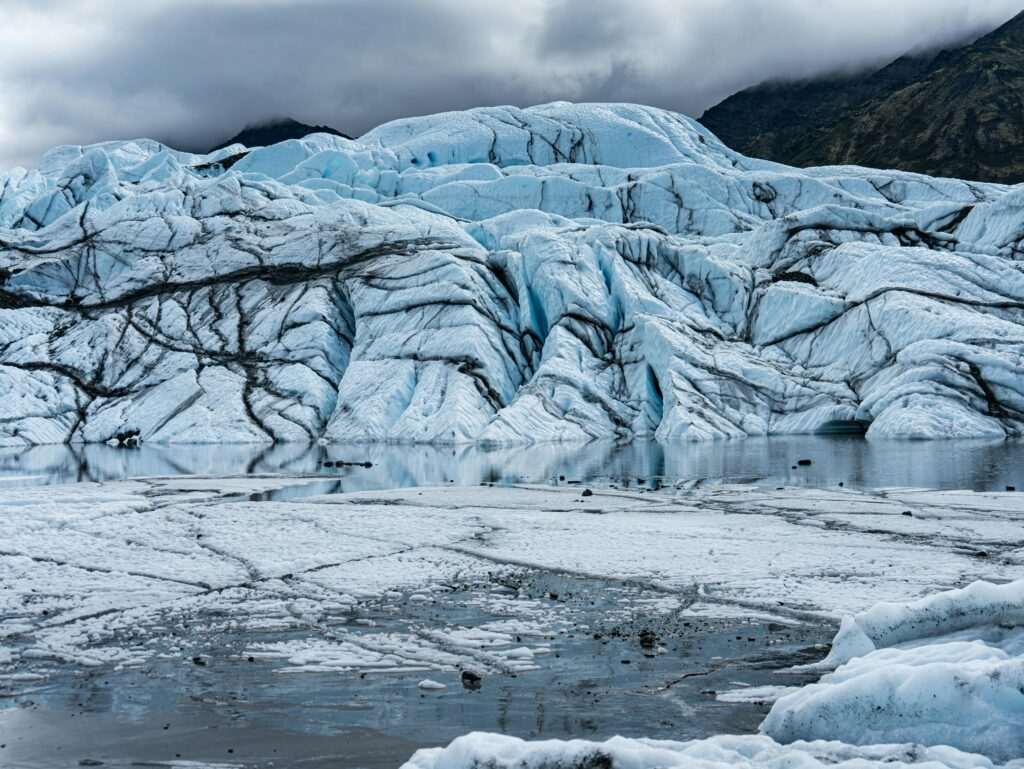
The Matanuska Glacier is the largest glacier accessible by car in the United States — a 27-mile-long river of ice that ends within walking distance of the Glenn Highway, about 100 miles northeast of Anchorage. You don’t need a helicopter or a multi-day expedition to stand on a glacier in Alaska. You just need a day, a full tank of gas, and the right preparation. Here’s how to make the most of the drive in 2026.
The Drive: Glenn Highway to the Glacier
The route from Anchorage is straightforward: take the Glenn Highway (AK-1) northeast through Palmer and Wasilla, continuing past the Matanuska River valley as the landscape opens into increasingly dramatic mountain terrain. The drive takes approximately 1.5 to 2 hours depending on traffic and how often you pull over — and you will pull over. The Glenn Highway through the upper valley is one of the most scenic drives in Alaska, with the Chugach and Talkeetna ranges rising on both sides and the gray-green Matanuska River braiding across the valley floor below.
The glacier viewpoint and access area is near the small community of Glacier View. Watch for signs for Matanuska Glacier State Recreation Site on your left as you approach mile 100–101 of the Glenn Highway. The state site offers free viewing of the glacier terminus from a distance. To access the glacier surface itself, you’ll need to go through one of the private landholders who manage the approach — MICA Guides and Glacier View Tours are the two primary operators.
Tour Operators and Access
MICA Guides is the longest-established glacier access operator at Matanuska. They offer guided hikes onto the ice ranging from a basic 2-hour glacier walk to full-day ice climbing experiences with technical gear. Their guided glacier walk is the right option for most day-trippers — you get proper crampons or microspikes, a safety briefing, and a guide who knows the ice well enough to take you to the most interesting formations safely. Solo access without a guide is available through their day-use fee program for experienced glacier travelers.
Glacier View Tours operates from a different access point and offers similar guided options. Pricing between the two operators is comparable; the difference is primarily in the specific section of glacier you access and group size limits. Both require reservations during peak season (July–August) — walk-in access is possible on weekdays but not guaranteed on summer weekends.
Expect to budget $30–$60 per person for basic guided glacier access in 2026, depending on the operator and tour type. Ice climbing experiences with technical gear run higher. Check operator websites for current pricing as you plan, since rates adjust seasonally.
What You Can Do on the Ice
Walking on a glacier is genuinely unlike anything most visitors have experienced. The ice surface is deeply textured — striated blue-gray channels, meltwater streams cutting through crevice networks, occasional ice caves and seracs visible from safe vantage points. Even a basic guided walk covers terrain that looks and feels otherworldly.
- Glacier hiking: The standard experience. Crampons or microspikes strapped over your boots, and you walk the ice surface for 1–3 hours with a guide. Most physically capable adults can handle this without special fitness.
- Ice climbing: For those wanting a technical experience, both operators offer introductory ice climbing with proper gear and instruction. No prior climbing experience required, but reasonable upper body strength helps. Full-day programs include multiple pitches.
- Photography: The Matanuska is exceptional for photography at almost any time of day. The blue ice is most vivid in overcast light; dramatic clouds and storm light over the Alaska Range make for striking landscape shots. Bring a wide-angle lens if you shoot with interchangeable lenses.
- Simply standing on a glacier: For many visitors, the act itself is the point. Drinking glacial meltwater from a stream on the ice surface is a rite of passage. The guides will show you where it’s safe.
What to Bring
- Waterproof boots with ankle support — you’ll be walking on wet, uneven ice and the microspikes need a solid sole to grip properly
- Waterproof outer layer (jacket and pants) — glacier meltwater is everywhere and the ice surface is wet even on sunny days
- Warm mid-layer — temperatures on the glacier run 10–15°F colder than the valley floor, even in midsummer
- Gloves — thin liner gloves at minimum; warmer if you’re doing ice climbing
- Sunglasses — ice reflects UV intensely; polarized lenses help with glare and visibility
- Snacks and water — the operators have no food service on-site
- Camera or phone in a waterproof case
Microspikes and crampons are typically provided by the operators — don’t bring your own unless you’ve confirmed compatibility with the operator beforehand.
Best Time of Year
The Matanuska Glacier is accessible to visitors from approximately May through September, with July and August being peak season. Late May through mid-June offers the advantage of snow coverage on the approach trails, which can make walking slightly easier but reduces visibility of the blue ice formations beneath. By July the ice is fully exposed, meltwater features are active, and the visual drama is at its peak. September sees fewer visitors, shoulder-season pricing in some cases, and fall color beginning in the valley — a compelling combination.
Winter access exists but is a different experience entirely, requiring snowshoes or skis on the approach and specialized cold-weather gear. Not a day-trip for the unprepared.
Combining the Trip: Palmer and Wasilla Stops
The return drive from the glacier passes back through the Mat-Su Valley, and both Palmer and Wasilla are worth a stop. Palmer’s downtown has good dining options and the Colony House Museum (the story of the New Deal agricultural colonists who settled the valley in 1935). Wasilla has more commercial options if you need fuel, food, or a coffee for the final stretch back to Anchorage.
If you want to pair glacier access with a guided outdoor activity in Anchorage itself, Chugach Adventures offers tours on the Anchorage side of the mountains that pair naturally with a glacier day. For context on Alaska’s glacial history and the Indigenous communities that have lived alongside these ice fields for millennia, the Alaska Native Heritage Center in Anchorage provides that background before or after your trip. The Anchorage Museum also has permanent exhibits on Alaska’s natural history including the glacial processes shaping the landscape you just drove through.
Frequently Asked Questions
How long is the drive from Anchorage to Matanuska Glacier?
The drive is approximately 100 miles via the Glenn Highway and takes 1.5 to 2 hours each way. Allow a full day for a comfortable visit — travel time plus 2–4 hours on or near the glacier, with stops in Palmer or Wasilla on the return.
Do I need a guide to walk on Matanuska Glacier?
Access to the glacier surface requires going through one of the private operators (MICA Guides or Glacier View Tours). Guided hikes are the standard option for most visitors; experienced glacier travelers can arrange self-guided day-use access through the operators as well.
What is the best time of year to visit Matanuska Glacier?
July and August offer peak conditions — fully exposed blue ice, active meltwater features, and long daylight hours. Late May through June works well with snow still present on approach trails. September provides fewer crowds and the start of fall color in the valley.
Is Matanuska Glacier safe to walk on?
With a qualified guide and proper footwear, walking on Matanuska Glacier is safe for most physically capable adults and older children. The operators know which sections of ice are stable and which to avoid. Going onto the glacier without a guide or without microspikes/crampons is hazardous and not recommended.
Matanuska Glacier is the kind of Alaska experience that resets your sense of scale. The drive alone is worth it — the ice is a bonus that most visitors describe as the single most memorable hour of their trip. It’s 100 miles from downtown Anchorage and feels like another planet.
Featured photo by Tyler Vaughn on Pexels.
No comments yet.