Wildlife Viewing Guide: Where to See Bears, Moose, and Eagles Near Anchorage
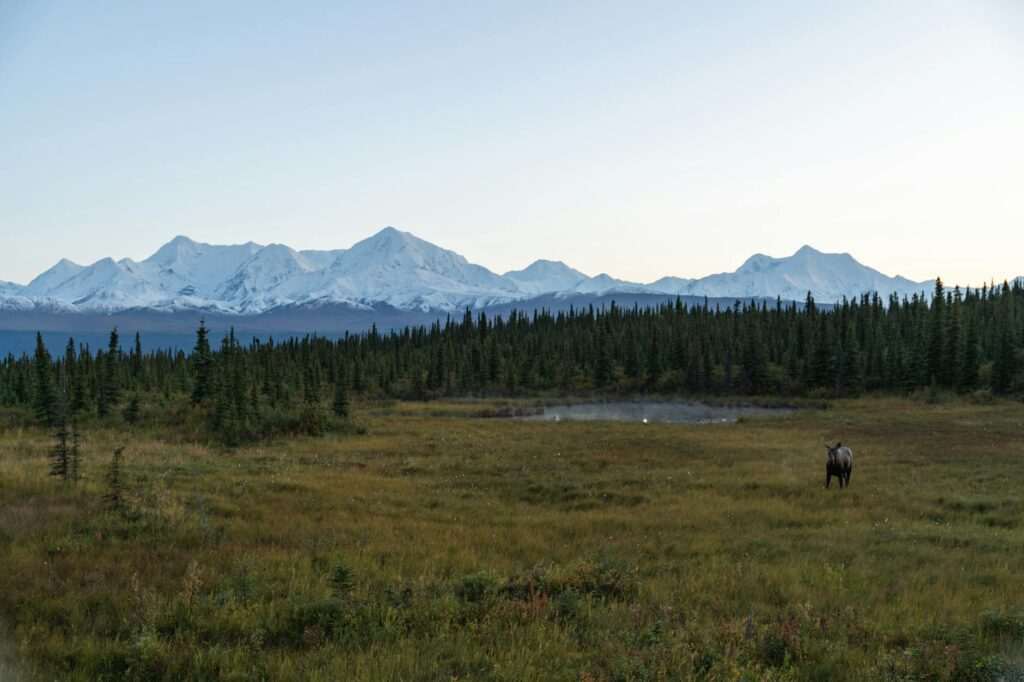
One of the best things about summer in Anchorage is that you do not have to drive very far to feel like you are in the middle of Alaska. Wildlife is part of daily life here. Moose show up in neighborhoods, eagles patrol the coastline, and if you spend enough time on the right trail at the right hour, even a bear sighting is not out of the question. The trick is knowing where to go without turning wildlife watching into a long, complicated expedition.
If you are looking for the best wildlife viewing near Anchorage in summer 2026, start with places that are both reliable and realistic: Potter Marsh Bird Sanctuary for moose and eagles, Ship Creek for salmon activity and late-summer birdlife, and Chugach State Park for the full “wild edge of the city” experience. Here is how we would plan it locally.
Potter Marsh is still the easiest first stop
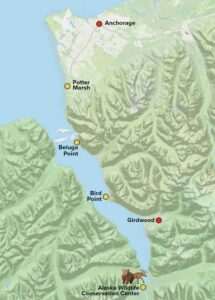
If someone has one free morning and wants the highest odds of seeing wildlife without a hard hike, I almost always send them to Potter Marsh first. Alaska Department of Fish and Game calls it one of Anchorage’s most accessible and scenic wildlife viewing areas, and that tracks with local experience. It is only about fifteen minutes south of downtown, it has a boardwalk, and in summer it gives you a lot of payoff for very little effort.
ADF&G notes that from late April through September the marsh is active with geese, ducks, grebes, shorebirds, gulls, Arctic terns, and northern harriers, and it specifically points wildlife viewers to eagle nests in the cottonwoods near the bluff. Moose also use the marsh year-round, with May and June highlighted as especially good for watching them forage on fresh growth. In other words, Potter Marsh is one of the rare places near Anchorage where “bring binoculars and just slow down” is actually a solid game plan.
It is also one of the better photography spots because the viewing is structured. You are on a boardwalk instead of crashing through brush, which means better sight lines, easier ethics, and less chance of pushing wildlife around just because you want a closer angle.
Ship Creek is best once the salmon show up
For eagles and other opportunistic wildlife, timing matters, and that is where Ship Creek comes in. ADF&G’s Ship Creek viewing page points visitors to early July through September for salmon visibility near the hatchery corridor, with king salmon showing up from late May through July and coho from August into mid-September. Their fish-viewing guide also lists Potter Marsh and Ship Creek as Anchorage salmon-viewing locations, which matters because where salmon gather, birds usually are not far behind.
What I like about Ship Creek is that it gives you a totally different wildlife feel from Potter Marsh. It is urban, industrial, and very Anchorage in its own way. You have the skyline, the rail corridor, mudflats, tides, and fish movement all stacked into one compact area. ADF&G emphasizes shorebird viewing at high tide and salmon viewing by the hatchery stretch in midsummer and early fall, so this is the place I would keep on the list if you are coming in late July, August, or early September.
If you go, take the safety note seriously: never walk on the mudflats. ADF&G warns that tides move fast and the mud can trap people very quickly. This is one of those Anchorage reminders that sounds dramatic until you live here long enough to know it is not exaggerated.
Chugach is where the “real Alaska” wildlife feeling starts
For moose, bear awareness, and the general sense that wild country starts right at the edge of town, Chugach State Park is still the headline option. Alaska State Parks describes the Chugach as a half-million acres of accessible hiking and wildlife viewing right above Anchorage, which is exactly why it belongs in any serious wildlife guide.
This is also where your expectations need to be honest. Moose are common in and around the park and on Anchorage hillside trailheads. Bears are possible, but they are not something you should count on as a sightseeing checklist item. If you do see one, treat that as a lucky, serious wildlife encounter rather than a photo opportunity you earned by getting closer.
The Chugach brochure makes two things clear. First, wildlife is everywhere in the park. Second, safety is not optional. The park specifically tells visitors to make noise, travel in groups, avoid headphones, carry bear spray where you can reach it, and move cautiously along creeks, blind corners, and brushy areas. It also notes that moose cause more injuries in Alaska than bears, which surprises visitors every single summer.
If you want a lower-commitment way to start, pair Chugach wildlife watching with a guided day from Go Hike Alaska or Alaska Adventure Guides. Guides will not magically produce a bear on demand, but they do help with route choice, pacing, and reading the conditions that make wildlife sightings more likely.
When to go for the best odds
Summer wildlife viewing near Anchorage is not just about location. It is about timing inside the day and inside the season. Early morning and late evening are still the best windows for most self-guided outings, especially if your target is moose. Midday can still be productive at Potter Marsh because the boardwalk viewing is so open, but in general the edges of the day are kinder for both animals and photographers.
Seasonally, June is excellent for moose and marsh activity. July is when salmon viewing starts to become more reliable in the Anchorage bowl. August is especially useful if you want to combine salmon, eagles, and easier urban-access wildlife stops. If you are here in early summer and mostly care about birds, Potter Marsh should be near the top of your list. If you are here later in summer and want a more dynamic mix, combine Potter Marsh and Ship Creek on the same day.
Wildlife safety rules that actually matter
The single best wildlife rule in Alaska is simple: if your presence changes the animal’s behavior, you are too close. The National Park Service uses that exact standard, and it is the one I trust most because it works whether you are looking at a moose in town or a bear on a trail.
NPS says to stay at least 25 yards from moose and more if a cow has calves. If a moose lays its ears back or raises the hair on its hump, back off immediately. Unlike with bears, you can run from a moose if it charges and use a tree, car, or other solid object as cover if one is available.
For bears, the rules are different. Do not run. Make noise in brushy or noisy areas, stay grouped up, keep bear spray accessible, and avoid surprising anything around creeks or berry patches. The Chugach brochure and NPS both stress the same basic pattern: be alert, be noisy, and do not let yourself drift through bear country like you are alone out there.
What to bring if wildlife photography is the goal
You do not need a giant lens to enjoy wildlife viewing near Anchorage, but you do need some patience. A compact binocular, a camera or phone with decent zoom, windproof layers, and shoes you do not mind getting muddy are enough for most casual outings. For Potter Marsh especially, a small spotting scope or binoculars helps because the best eagle and waterfowl views are often out past the first glance range.
And if you are traveling with kids or you simply want a guaranteed animal-heavy stop after a slow wildlife morning, Alaska Zoo is a perfectly reasonable backup. It is not wild viewing, obviously, but it is a smart fallback when the goal is still to spend the day thinking about Alaska animals without pretending you can schedule a moose beside the boardwalk at 11:15 a.m.
Our local wildlife-viewing game plan
If I were planning one summer wildlife day near Anchorage for a visitor, I would keep it simple. Start early at Potter Marsh Bird Sanctuary. If the timing lines up with salmon, add Ship Creek later in the day. If the weather is good and everyone in the group is comfortable with trail etiquette and wildlife safety, finish with a Chugach trailhead or guided outing rather than squeezing in one more roadside stop just for the sake of it.
That is the best version of wildlife viewing near Anchorage: not frantic, not reckless, and not built around chasing guaranteed sightings that nature does not owe you. Go where the habitat makes sense, respect the animals, and let the day unfold a little. Around Anchorage, that approach usually pays off.
Featured photo by John De Leon on Pexels.