
The Ultimate Guide to Viewing the Northern Lights in Anchorage
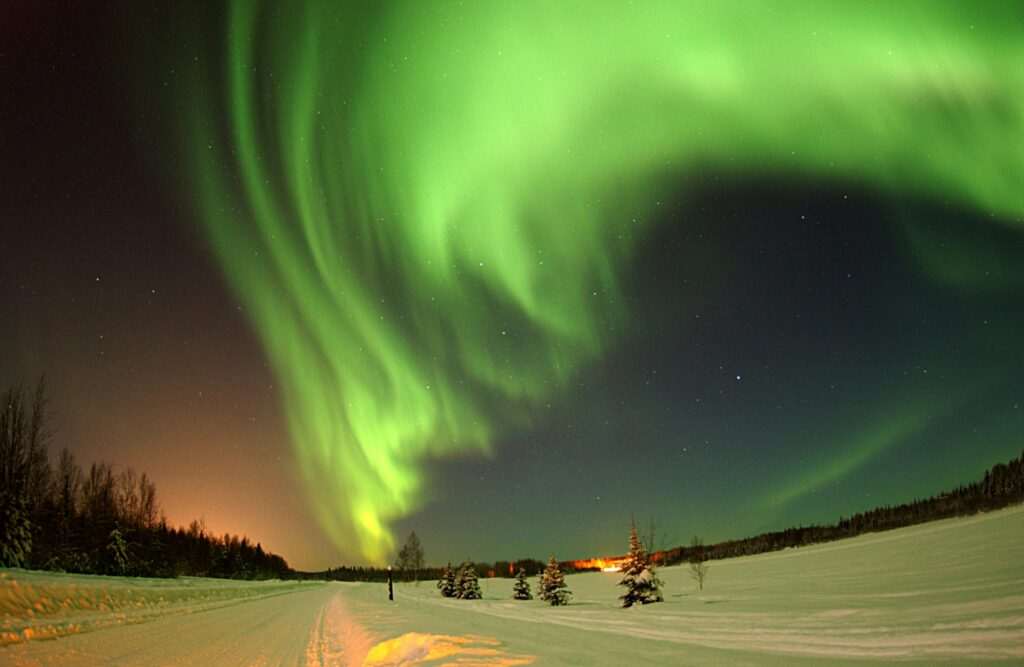
When friends ask me if they can really see the northern lights without leaving Anchorage, the answer is yes, with one big local caveat: you need darkness, clear skies, and realistic expectations. The aurora is not a nightly stage show, and Anchorage is still a city with streetlights, weather, and clouds that like to ruin plans at the last minute. But when conditions line up, our skyline and mountain edges can put on a show that feels almost unfair.
If you are planning an aurora night in Anchorage, think like a local. Build flexibility into your trip, watch the forecast tools instead of chasing social media hype, and pick a viewing spot that gets you away from downtown glow without making the night more complicated than it needs to be. Here is how we do it.
Best Time to See the Northern Lights in Anchorage
The most reliable aurora season in Anchorage runs from September through April, with the sweet spot landing in the darker stretch of late fall through early spring. Visit Anchorage notes that mid-August through April is the practical viewing window, and NOAA says the most active displays are usually within an hour or two of midnight. In real Anchorage terms, that means you should usually keep your warm layers on and your schedule loose from about 10 p.m. to 2 a.m.
That does not mean you can only see the lights at midnight, but it does mean many first-time visitors give up too early. If the sky is clear and the forecast is promising, stay patient. We regularly get nights where nothing happens at 9:30 p.m. and then the sky wakes up later.
Equinox season can also be especially rewarding. The University of Alaska Fairbanks Geophysical Institute notes that auroral activity often peaks around the spring and fall equinoxes, so March and September are worth circling if you want a shoulder-season trip with solid odds and a little less deep-winter intensity.
Where to Watch Near Anchorage
Your goal is simple: darker sky, broader horizon, and less city glow. If you want the shortest drive with a strong payoff, Glen Alps is one of the best local starting points. Visit Anchorage specifically calls out the Glen Alps trailhead as a high-elevation vantage point above the city, and that tracks with local experience. You gain elevation quickly, the horizon opens up, and you are not driving an hour just to find out the clouds moved in.
The nearby hills around Flattop Mountain Trail can work well too, especially if you scout the area in daylight first and want a familiar Hillside launch point. You are not hiking Flattop in the dark for this to count. Many locals simply use the broader Glen Alps and Flattop access area as a higher, darker viewing zone than what you get downtown.
On the west side, Point Woronzof is another strong option when you want an open northern view over Cook Inlet without committing to a mountain road. If conditions are right early in the evening, some locals also check the Kincaid side of town for darker western edges, but I would treat that as a convenience option and verify current park access rules before you head out late.
If you would rather skip the guesswork, book with a guide. Companies like Alaska Adventure Guides and Alaska Tours can make more sense than white-knuckling icy roads and trying to interpret aurora maps on your phone in a cold parking lot.
How to Check the Forecast Like a Local
There are three things I check before I even fill a thermos: aurora activity, cloud cover, and darkness. If one of those is missing, the night usually turns into a long cold drive with no payoff.
1. NOAA Space Weather Prediction Center
NOAA’s aurora tools are the fastest way to see whether the oval is dropping far enough south and how active conditions look in the next 30 minutes. Their viewing guidance also reminds people not to obsess over a single Kp number. In Southcentral Alaska, a moderate forecast with clear skies can beat a bigger geomagnetic night that is buried under clouds.
2. UAF Geophysical Institute Aurora Forecast
The Geophysical Institute is especially useful for Alaska travelers because it explains what the forecast actually means and adds more local context. Their guidance also stresses that clear sky and darkness matter just as much as solar activity, which is exactly right for Anchorage. A strong aurora hidden behind an overcast deck is still invisible.
3. Cloud Cover and Local Weather
Before I leave the house, I check the Anchorage weather forecast and cloud cover one more time. If Hillside is socked in but the west side looks clearer, I pivot. If everything is cloudy, I stay home and try again the next night. That flexibility is the difference between an aurora trip and an aurora story about what almost happened.
What to Bring for an Aurora Night
A successful aurora outing in Anchorage is usually more about comfort than heroics. Bring insulated boots, warm gloves you can actually use with your phone, a hat that covers your ears, and more layers than you think you need. A headlamp helps if you are walking around a trailhead parking area, and traction cleats are smart when packed snow turns glossy.
Also bring snacks and something hot to drink. The northern lights reward patience, and patience is easier when you are not cold and miserable.
Beginner Camera Settings That Actually Work
If you are photographing the aurora for the first time, keep it simple. Start with a wide lens, stabilize your camera or phone, and turn off the flash. For a dedicated camera, a good beginner range is an aperture as wide as your lens allows, ISO 800 to 3200, and a shutter speed around 5 to 15 seconds depending on how bright and fast the aurora is moving. If the lights are dancing quickly, shorten the exposure. If the display is faint and slow, lengthen it a bit.
For phones, use night mode if your device supports it and brace the phone against something solid or use a small tripod. Anchorage’s cold can drain batteries fast, so keep a spare battery pack inside your coat where it stays warmer.
Make the Night Feel Like Anchorage
One of my favorite ways to plan an aurora night is to build a full Anchorage evening around it. Have an early dinner, keep an eye on the sky, then decide whether it is worth heading up to the Hillside. If you need a warm place to regroup before or after your watch, grab a late bite or a beer at 49th State Brewing Company. If you are visiting during the dark heart of winter, pairing your trip with the Anchorage Winter Solstice Festival 2026 is a fun way to lean fully into the season instead of treating the cold like a problem to survive.
That is really the local mindset: do not wait for perfect conditions to enjoy Anchorage. Build a good night first, then let the aurora be the bonus if the sky decides to cooperate.
Final Tips Before You Go
Give yourself at least two or three nights if the northern lights are a priority. The University of Alaska Fairbanks makes this point clearly, and it is the best planning advice I can give anyone coming to Anchorage for aurora season. More nights means better odds, more flexibility with weather, and less pressure to force a bad forecast into a good memory.
If the skies clear, head for darker ground, face north, and stay out a little longer than feels reasonable. That is usually when Anchorage starts showing off.
