
How to Photograph Anchorage Like a Pro: 9 Spots and Settings
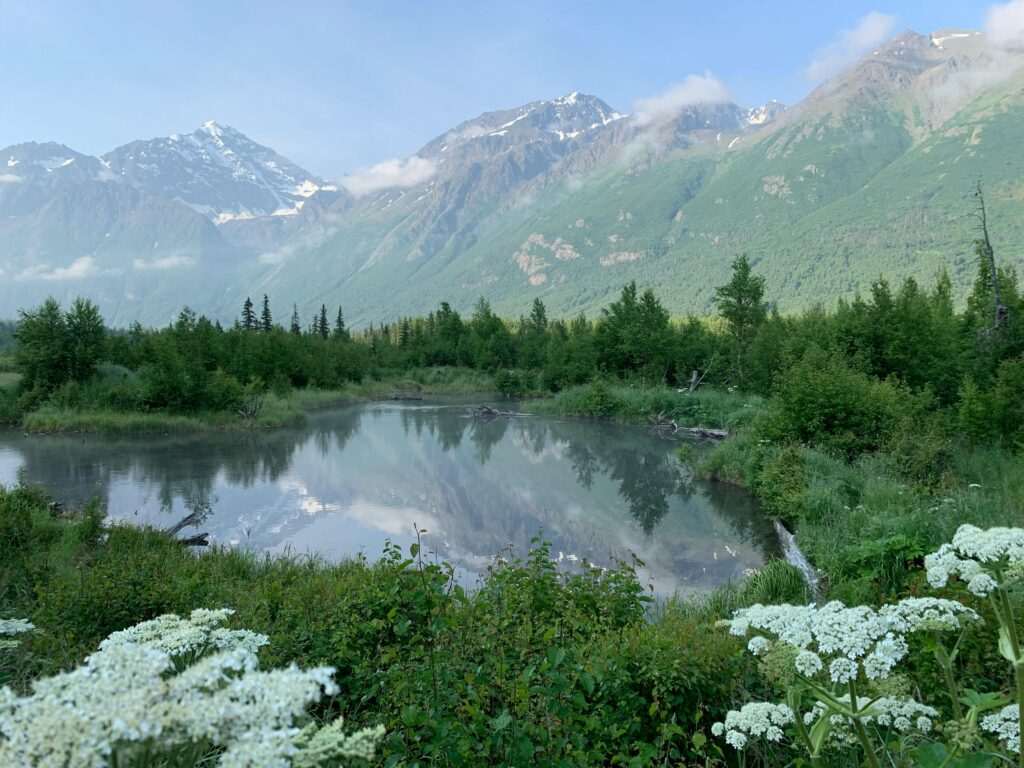
If you want photos that instantly read as Anchorage, shoot the city the way we actually live it: mountains at the edge of town, salmon water downtown, floatplanes on the lake, and long evening light that hangs around forever. Great Anchorage images come more from timing and framing than fancy gear.
These nine spots mix obvious classics with a few angles visitors miss, plus settings and composition ideas that work.
1. Glen Alps and Flattop Mountain Trail for the classic Anchorage overview
If you only have one sunrise or one clear evening in town, start here. Glen Alps gives you the classic Anchorage frame: skyline, Cook Inlet, and the Chugach foothills in one sweep. You do not need to summit Flattop for a good photo either. The overlook and lower trail sections give you plenty to work with.
Best light: Sunrise for crisp mountain definition, or golden hour before sunset for warmer color on the city and inlet.
Settings to try: Start around f/8 to f/11 for landscapes, ISO 100-200, and let shutter speed fall where it needs to. If wind is moving the grasses, keep it above 1/125. A 24-70mm range covers most scenes; a longer lens helps isolate downtown against the mountains.
Composition tip: Use the curve of the trail, stairs, or alpine brush as foreground structure instead of centering the skyline. Anchorage looks stronger when the city is one element in a bigger wild frame.
2. Tony Knowles Coastal Trail for wide Cook Inlet drama
The Coastal Trail is one of the easiest wins in town because it gives you movement and scenery at the same time. The route runs from downtown toward Kincaid Park along Cook Inlet, and it works especially well when you want cyclists, runners, or walkers in the frame. The sections near Earthquake Park and Point Woronzof are especially reliable.
Best light: Late evening for sunset color over the inlet, or bright overcast conditions when you want softer portraits with the water behind you.
Settings to try: For moving bikes, start around 1/500 if you want them sharp. For wheel motion, try 1/60 to 1/125 and pan. For static landscapes, f/8 at base ISO works well.
Composition tip: Put the trail itself in the frame. The line of pavement gives the eye somewhere to travel, and it instantly tells the viewer this is Anchorage rather than just another mountain overlook.
3. Earthquake Park for texture, history, and mood
Earthquake Park is worth more than a quick pull-off. The interpretive area sits right on the Coastal Trail, and the uneven ground, tree lines, and bluff views make the whole place feel atmospheric. This is a strong stop when the weather turns moody and you want more than a standard panorama.
Best light: Cloudy evenings, foggy mornings, and shoulder-season days.
Settings to try: If you are in the forested loop, open up to f/4 or f/5.6 and keep ISO flexible so your shutter does not drag too low. A polarizer helps control glare on wet leaves and bright skies.
Composition tip: Shoot both wide and tight. The big bluff view tells the story, but bark textures and tilted trunks can give you a stronger set than nine versions of the same overlook.
4. Point Woronzof for sunset silhouettes and skyline layers
When friends ask where to go for an easy Anchorage sunset, Point Woronzof is usually the answer. You get west-facing light, bluff-top views, and a city perspective that feels separate from downtown without being far away.
Best light: The final 45 minutes before sunset.
Settings to try: Expose for the highlights to preserve color in the sky, especially if the foreground drops into shadow. If you are photographing people, a small LED or gentle fill flash can keep them from turning into pure silhouette.
Composition tip: Leave room in the frame. The best Point Woronzof images usually let the sky dominate and use people, driftwood, or the bluff edge as visual anchors.
5. Lake Hood for action shots that feel unmistakably Alaskan
Anchorage has plenty of scenic viewpoints, but Lake Hood gives you motion, water spray, and floatplanes. If you want a set that does not look like every other Alaska landscape gallery, spend an hour here.
Best light: Early evening, when aircraft activity is still lively and the light softens off the water.
Settings to try: For takeoffs and landings, start at 1/1000. If you want prop blur, work down to 1/125 or slower and shoot in bursts. Continuous autofocus helps.
Composition tip: Include the shoreline or dock in the foreground so the frame feels grounded. If you want a related museum stop nearby, pair this with the Alaska Aviation Museum.
6. Ship Creek for urban salmon scenes
Ship Creek is one of the most Anchorage subjects you can photograph because it puts salmon, anglers, railroad infrastructure, and downtown edges in one frame. The trail near the fish ladder and railroad depot is easy to work, and during the runs the creek gets lively fast.
Best light: Early morning for cleaner backgrounds and softer contrast, or bright evening light during salmon season when the creek edges get lively.
Settings to try: For anglers mid-cast, use 1/1000. For environmental portraits, step back to 35mm or 50mm, stop down to around f/5.6, and keep enough depth to show the creek and city context.
Composition tip: Do not just shoot the water. Look for rods bending, boots in the mud, gulls circling, and the industrial lines of the rail corridor. That mix of wild and working city is what makes Ship Creek special.
7. Anchorage Museum for clean indoor compositions
Not every strong Anchorage image needs a mountain. The Anchorage Museum is one of the best places in town to work on graphic composition, reflected light, and quieter storytelling, and the museum currently allows personal photography in most spaces as long as you keep the flash off where required.
Best light: Midday if you are escaping bad weather, or First Friday if you want extra downtown energy before and after your museum stop.
Settings to try: Indoors, start around f/2.8 to f/4, auto ISO capped at something you trust, and a minimum shutter of 1/125 for handheld work. Switch to single-point autofocus for exhibits and details.
Composition tip: Watch for repetition, negative space, and reflected shapes in glass and polished surfaces. The strongest museum images usually come from slowing down and simplifying the frame.
8. Alaska Botanical Garden for close-up color and quieter nature work
When visitors think Anchorage photography, they usually jump straight to epic scale. The Botanical Garden is your reminder to shoot small too. It is ideal for flower detail, dew, textures, and tidy compositions that feel calmer than the bigger trail system.
Best light: Soft morning light or any evenly overcast afternoon.
Settings to try: For close-up work, use aperture priority around f/4 to f/5.6 and watch your focus plane carefully. If wind is moving petals or leaves, raise shutter speed faster than you think you need.
Composition tip: Get low and simplify the background. Even a phone camera can make strong images here if you isolate one subject and avoid busy distractions behind it.
9. Potter Marsh and Westchester Lagoon for birds, reflections, and everyday Anchorage life
If you want one more stop that balances wildlife and city texture, split your time between Potter Marsh and Westchester Lagoon. Potter Marsh gives you boardwalk lines, waterfowl, mountain backdrops, and broad reflections. Westchester is better when you want people, birds, salmon, and a more neighborhood feel.
Best light: Morning for cleaner reflections and calmer wind. Summer evenings can also be excellent when the light stretches out and people stay active in the park.
Settings to try: Bring two modes: a wildlife setup around 1/1600 with a longer lens, and a landscape setup around f/8 at base ISO. If you are shooting reflections, underexpose slightly to protect the bright sky.
Composition tip: At Potter Marsh, use the boardwalk as a leading line. At Westchester, include cyclists, walkers, or birds to keep the frame from turning into a static pond shot.
Quick local tips before you head out
Anchorage light changes fast once it gets good, so scout a little earlier than you think you need to. Keep a microfiber cloth handy near salt spray or mist, carry bear spray for trailhead outings, and dress in layers even on blue-sky days. If you only have half a day, a strong sequence is Glen Alps, downtown, Anchorage Museum, Ship Creek, then sunset on the Tony Knowles Coastal Trail.
Final frame
The best Anchorage photos usually come from contrast: wild mountains next to city streets, floatplanes next to coffee stops, salmon water next to rail lines, and polished indoor spaces after a windy trail session. Shoot the big views, but leave room for the smaller details too. That is usually where Anchorage starts to look less like a destination and more like a real place.
Featured photo by Sara Loeffler on Pexels.


No comments yet.