
Origami Classes and Workshops in Anchorage: Paper Folding Art for All Levels
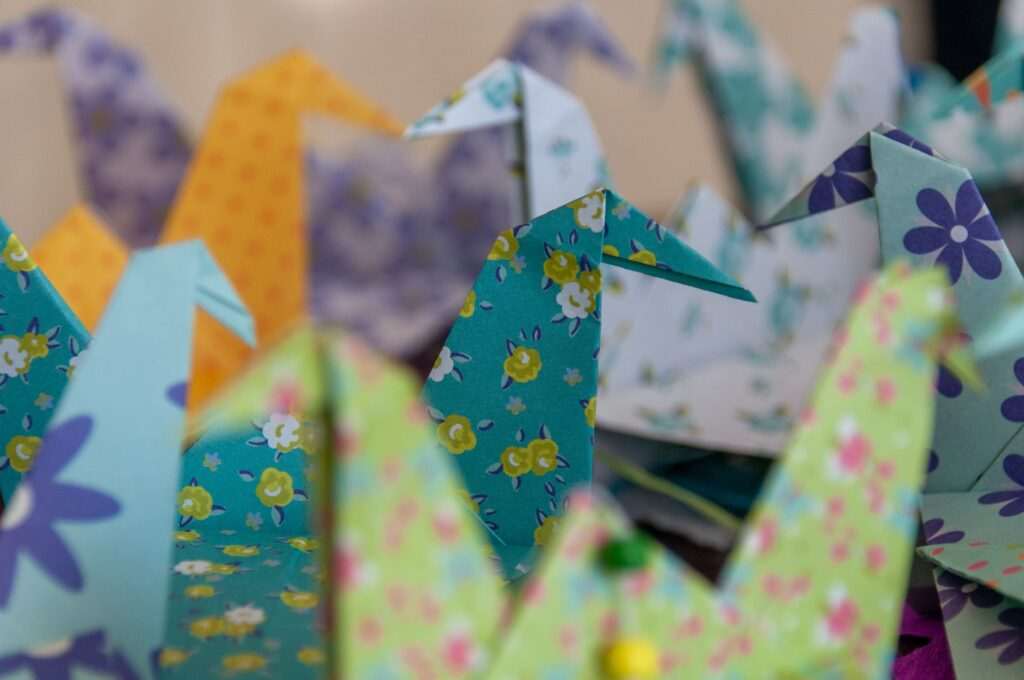
Origami — the Japanese art of paper folding — transforms a flat sheet of paper into a three-dimensional form through a sequence of precise folds, without cutting or gluing. The practice combines geometry, spatial reasoning, and manual dexterity in a way that rewards both analytical and intuitive approaches, and the range of what’s achievable spans from a child’s first paper crane to multi-hour complex masterworks that challenge experienced practitioners. Origami’s appeal has grown significantly as the mathematical connections between paper folding and computational geometry, robotics, and space engineering have attracted scientific attention — crease patterns that origamists developed for aesthetic reasons have found applications in solar panel deployment and medical stent design. In Anchorage, origami workshops have found a consistent audience across age groups, and the craft’s connection to natural forms — animals, flowers, geometric structures — makes it a natural fit for Alaska’s wildlife and landscape imagery. This guide covers origami’s traditions, techniques, paper types, classic models, and the mathematical dimension of the craft in 2026.
Origins and Traditions
Paper folding traditions exist across multiple cultures — senbazuru (folding 1,000 cranes) is among the most recognized Japanese origami traditions, associated with wishes for healing and peace — but the formalization of origami as a systematic art form with defined bases and techniques developed primarily in 20th-century Japan. Akira Yoshizawa is credited with establishing origami notation (the arrow-and-fold-line diagrams used in every origami instruction book) and demonstrating that wet-folding enabled organic, sculptural work far beyond the geometric constructions most people associate with traditional origami. The international origami community that developed from Yoshizawa’s influence now produces models of extraordinary complexity — lifelike insects with precise anatomical detail, complex tessellations, and modular constructions assembled from dozens of individual folded units.
Dry Folding vs. Wet Folding
The two main origami techniques produce very different results and use different paper types:
Dry Folding
Dry folding is the standard origami approach: paper is folded without moisture, relying on the paper’s stiffness to hold creases. Precise, angular forms — the geometric shapes of traditional origami, modular constructions, and complex representational models — use dry folding. The paper needs to be crisp enough to hold creases cleanly but thin enough to fold without excessive bulk accumulation at thick points. Most beginner instruction uses dry folding.
Wet Folding
Wet folding, developed by Yoshizawa, uses dampened paper (with a small amount of moisture applied by misting or dampening the hands) to create curves and organic shapes that dry folding can’t produce. A wet-folded elephant has rounded, organic contours; the same model dry-folded from standard kami paper looks angular and flat. Wet folding requires paper with enough body to hold its shape while damp and then maintain the form as it dries — typically a heavier, sized paper. The results have a sculptural quality that distinguishes wet-folded work from all other origami styles.
Paper Types
Paper selection affects what’s achievable in origami more than most practitioners initially realize:
- Kami: The standard, inexpensive origami paper sold in square sheets in a wide range of colors. Thin, crisp, and well-suited to most traditional models and beginner instruction. The color is typically solid on one side, white on the other — which becomes a design element in models that show both surfaces. Kami’s thinness limits it for complex models with many layers, where bulk accumulation at folded points becomes problematic.
- Washi: Traditional Japanese paper made from mulberry bark, with long fibers that make it strong and resistant to tearing even when thin. Washi takes wet folding well and produces results with a texture and quality that kami can’t match. More expensive than kami, and not necessary for learning, but the preferred paper for serious representational work.
- Tissue foil (foil-backed tissue paper): Tissue paper laminated to metal foil with a thin glue layer. The foil gives it the ability to hold any position it’s folded into (it doesn’t spring back), making it essential for complex models with many folds and for any model where maintaining precise crease positions matters. Standard for complex insects and animals where precise anatomical positioning is part of the design.
- Lokta and other specialty papers: Various handmade and specialty papers with specific properties — unusual textures, unusual strength, unusual thinness — serve specific applications. Modular origami (assembled from many units) often uses standard copier paper or kami for economy, since the model uses many sheets.
Classic Models
A few traditional models appear in virtually every beginner origami curriculum because they teach core techniques and are deeply satisfying to produce:
- The crane (tsuru): The iconic origami model — a stylized bird folded from a single square sheet. It teaches the bird base (one of origami’s foundational intermediate structures from which many other models begin), reverse folds, and petal folds. The crane’s clean geometric quality and deep cultural resonance make it the model most practitioners learn first.
- The lotus flower: A multi-petal flower folded from a single square, with repeated pleating and petal-opening steps that produce a layered, organic-looking bloom. Teaches repetitive folding precision and the way simple repeated steps accumulate into complex visual results.
- Modular kusudama: A spherical decorative form assembled from multiple identical folded units. Each unit is simple; the assembled sphere is visually complex. Modular origami teaches the connector geometry that allows units to interlock without adhesive — each unit’s flaps tuck into another unit’s pockets. Kusudama balls appear in many Anchorage origami workshops as satisfying group projects.
- The frog: A jumping frog that actually leaps when pressed on its back — the mechanical surprise of action origami introduces young practitioners to origami’s kinetic possibilities beyond static decorative models.
Mathematical Connections
Origami’s intersection with mathematics is more profound than the term “paper folding” suggests. Huzita-Hatori axioms formalize what operations are possible in origami, and those operations turn out to be more powerful than straightedge-and-compass construction — origami can trisect an angle and double a cube, classical problems that are impossible with compass and straightedge alone. Origami crease patterns (the map of all fold lines in a finished model) are studied as planar graph theory. Robert Lang’s TreeMaker software uses computational algorithms to design crease patterns for arbitrary animal silhouettes — you can specify a stick figure and the software produces a foldable crease pattern that produces a model with exactly that proportional structure.
This mathematical depth isn’t necessary to appreciate origami as a craft, but it explains why origami has attracted serious mathematical and engineering research — and why the fold patterns developed by origamists for aesthetic reasons have found applications in airbag deployment, telescope mirror design, and foldable medical devices.
Origami Workshops in Anchorage
Anchorage origami workshops range from drop-in beginner sessions (producing a crane and one or two other models in an hour) to multi-session courses covering modular structures and complex single-sheet models. The craft’s low material cost (a pack of kami and a flat surface) makes it one of the most accessible art forms in Anchorage’s workshop landscape. The Anchorage Museum occasionally features origami instruction in its family programming and community workshop calendar. Alaska wildlife subjects — crane-inspired birds, fish forms, mountain peak geometric abstraction — appear in Anchorage origami curricula alongside traditional Japanese models. Anchorage Audubon Society guided bird walks offer close-up views of the shorebirds, raptors, and songbirds that inspire bird-form origami — a useful reference outing for practitioners developing Alaska-specific models.
Workshop prices run $20–$45, with paper provided. A starter origami paper collection costs $10–$20 and provides hundreds of sheets for practice. The most important beginner advice: slow down. Crisp, precisely placed folds matter in origami more than speed, and the precision of early steps determines whether later steps will work at all. Our free things to do in Anchorage guide covers community events and family programming where origami instruction appears. Our Anchorage hiking guide covers the natural forms — including the birch-lined trails of Kincaid Park, whose bird life, coastal views, and seasonal wildflowers provide a living reference for Alaska-specific origami subjects.
Photo by Daigoro Folz on Pexels.



No comments yet.