
Ship Creek Salmon Fishing in Downtown Anchorage: The 2026 Guide
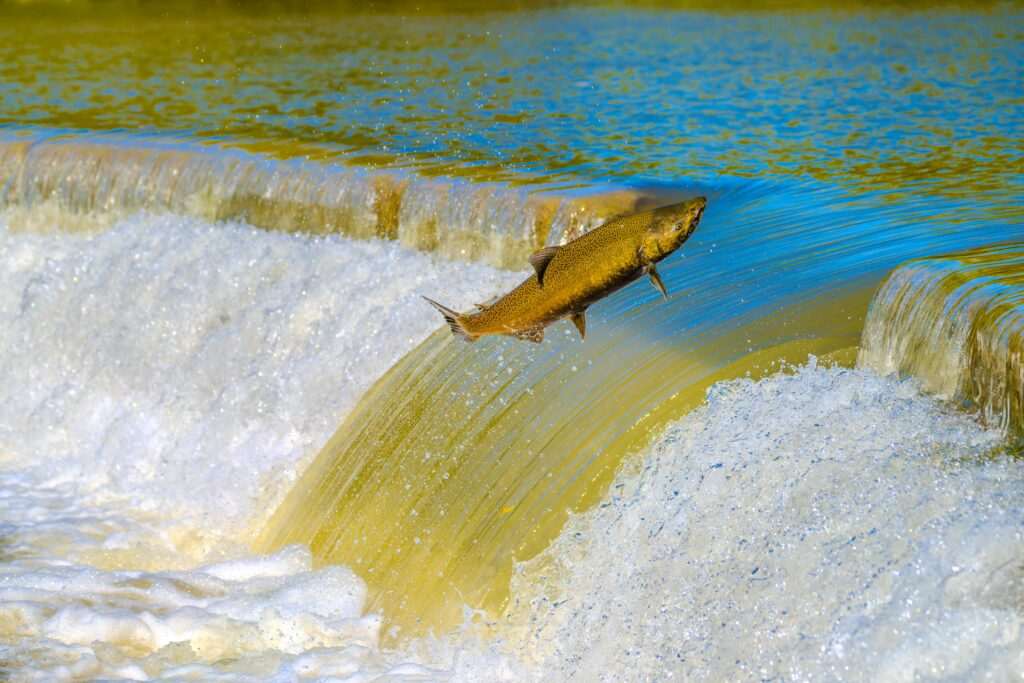
There is a moment in summer when you can stand in the middle of a major American city and watch a king salmon — a fish that has crossed hundreds of miles of open Pacific Ocean — push its way upstream beneath your feet. That moment happens at Ship Creek in downtown Anchorage. The creek runs through the industrial heart of the city, past rail yards and port infrastructure, under bridges and past parking lots, and every summer it fills with some of the largest salmon in Alaska. The fishing is real, the crowds are real, and the experience of catching a 40-pound king salmon within view of office buildings is one of those things about Anchorage that visitors find genuinely hard to believe until they see it.
The Fish: King Salmon and Silver Salmon
Ship Creek supports two major salmon runs each year. King salmon, also called Chinook, arrive from late May through July. These are the big fish — adults averaging 20 to 40 pounds, with occasional fish exceeding 50 pounds in good years. The king run peaks in June and draws the largest crowds. Fishing regulations, daily limits, and specific open dates change annually, so check the Alaska Department of Fish and Game regulations before heading out.
Silver salmon, or coho, follow later in the season. The silver run typically kicks off in mid-August and runs through September. Silvers average 8 to 15 pounds — smaller than kings but aggressive fighters that hit lures with authority and make strong runs. Many anglers consider silvers the more exciting catch pound-for-pound. The silver run also draws serious crowds but is slightly less overwhelming than the peak June king fishery.
Where to Fish
The productive fishing water on Ship Creek is concentrated below the dam at the Ship Creek Fish Viewing Area, in the lower reaches near the Port of Anchorage. This stretch of creek is accessible from a paved trail along the bank, with clearly defined fishing areas and a fish viewing window in the dam structure itself where non-anglers can watch salmon stacking in the pool and attempting to pass upstream. Parking is available near the viewing area off Whitney Road.
The fishing zone can get extremely crowded during peak runs, particularly on summer weekends and whenever a run surge is reported. Elbow-to-elbow fishing is standard — anglers line the bank shoulder to shoulder working the holding water. Weekday morning visits, especially before 8:00 AM, offer significantly lower pressure and better access to productive spots along the bank.
Gear and Technique
For silver salmon, a medium-heavy spinning rod with 10 to 15-pound monofilament or 20-pound braided line handles the task. Common lures include small spoons (½ to ¾ oz), spinners, and cured salmon eggs fished under a float. Silvers respond well to chartreuse, pink, and orange colors. Cast across the current and retrieve slowly through the holding water.
King salmon require heavier gear — a stout rod with 20 to 30-pound line and stronger terminal tackle to handle the weight and power of a large Chinook in a tight urban stream. Spinners, large spoons, and salmon roe are the standard presentations. Landing a large king in the confined quarters of Ship Creek takes time and patience; the fish will use every bend in the creek to its advantage.
Both species require an Alaska Sport Fishing License, available online or at many local sporting goods stores. King salmon fishing requires an additional king salmon stamp. Regulations specify open and closed dates, retention limits, and specific area boundaries — read them carefully before fishing, as Ship Creek rules are more detailed than a typical stream due to the managed nature of the fishery.
The Fish Viewing Area: Salmon Without a Rod
Ship Creek is worth visiting even if you have no interest in fishing. The Ship Creek Fish Viewing Area includes a window into the holding pool below the dam where salmon can be observed at close range during the runs. In peak season, dozens or hundreds of fish stack in the pool, visible through the underwater window in a way that makes the scale of the run immediately tangible. Children find it captivating. The viewing area is free, accessible, and one of the more unusual urban wildlife experiences in any American city.
Historical Context
Ship Creek has a particular place in Anchorage history. The current city traces its origins to 1915, when a tent city of workers and speculators sprang up at the mouth of Ship Creek following the announcement that the Alaska Railroad would use the site as its headquarters. Within weeks, thousands of people had arrived, and the future Anchorage was born from that encampment on the creek’s flat delta. The Alaska Railroad depot still stands nearby, and the railroad’s tracks run parallel to the lower creek — a physical connection to that founding moment.
Combining Ship Creek with Downtown Anchorage
Ship Creek sits at the northern edge of downtown, making it easy to combine a morning fishing session with other downtown activities. The Tony Knowles Coastal Trail begins near the railroad depot and runs south along Cook Inlet for eleven miles — a natural extension of a morning at Ship Creek for walkers and cyclists. The Anchorage Museum is a short walk into downtown and provides deep context on the history, ecology, and culture that connects salmon, the railroad, and the city’s founding — a good afternoon stop after a morning on the water.
Frequently Asked Questions
Do I need a guide to fish Ship Creek? No — Ship Creek is a walk-up, bank-access fishery that anyone with a license can fish independently. Local guides and charter services do offer Ship Creek trips with equipment and instruction, which is worth considering for first-timers unfamiliar with salmon fishing technique. But it is not required, and many visitors fish successfully on their own.
When is the absolute best time to go? For king salmon, the second and third weeks of June typically see peak numbers and the best fishing conditions. For silvers, late August into early September is prime. Arrive early in the morning (before 7 AM) on any visit to secure a good spot before crowds build.
Is it really that crowded? During peak runs, yes. Ship Creek is one of the most fished urban streams in North America during June. Expect to share the bank closely with other anglers. The experience is part of what makes it memorable — it looks nothing like what most people picture when they imagine Alaska fishing, and that contrast is part of the appeal.


No comments yet.