
Kenai Fjords Glacier Cruise from Seward: The Complete 2026 Guide
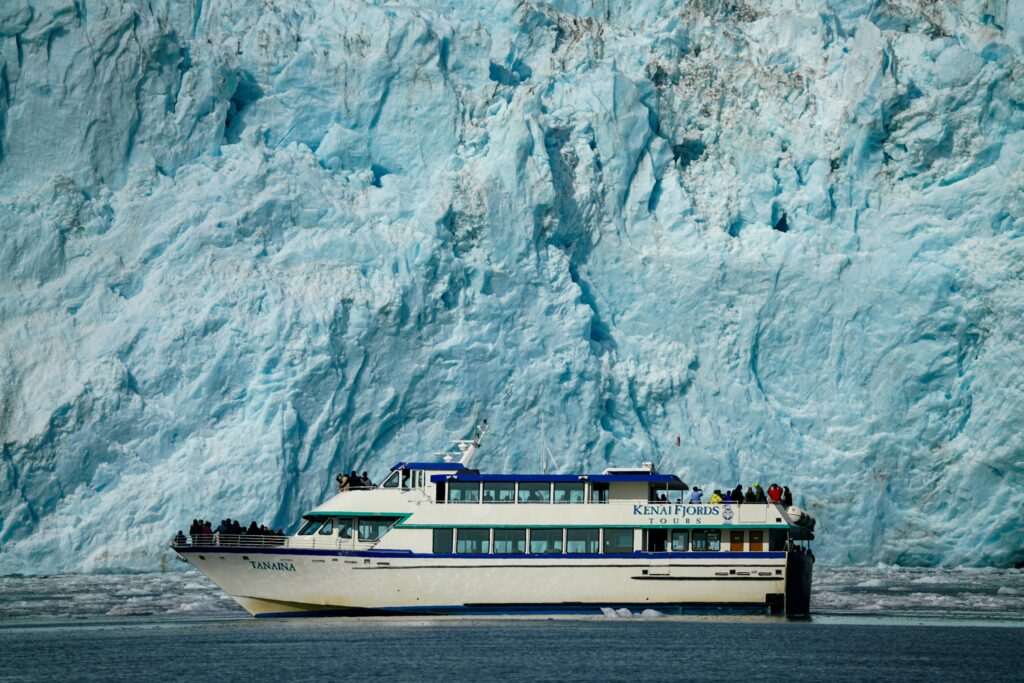
The drive from Anchorage to Seward takes about two and a half hours, mostly through the kind of scenery that stops conversations mid-sentence. But the destination is worth the trip. From the Seward Small Boat Harbor, day-cruise operators run boats directly into Kenai Fjords National Park — one of the most glacially active and wildlife-rich coastal environments on the planet. By mid-morning you are surrounded by thousand-foot rock walls, tidewater glaciers that calve chunks of ice the size of buildings, and seabird colonies so dense they darken the sky. It is the kind of day that makes every other Alaska activity feel like a warm-up.
Half-Day vs. Full-Day: Which Cruise Is Right for You?
Most operators offer two main formats. The half-day cruise runs four to five hours and stays within Resurrection Bay — the deep-water fjord on which Seward sits. You will see sea otters, Steller sea lions, seabirds, and possibly whales, with dramatic mountain scenery throughout. It is a legitimate wildlife experience, but it does not reach the tidewater glaciers that define Kenai Fjords.
The full-day cruise is the one worth planning your trip around. Running eight to nine hours, these tours round the southern tip of the Kenai Peninsula and enter the outer fjords — Northwestern Fjord or the area around Holgate Glacier — where the landscape becomes genuinely otherworldly. The combination of calving glaciers, sea life, and seabird rookeries on this route puts it among the best single-day wildlife experiences available anywhere in Alaska. If your schedule allows only one approach, book the full-day.
Wildlife You Will See
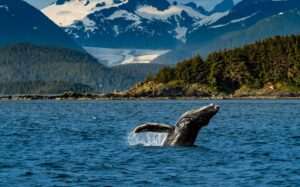
The marine wildlife in Kenai Fjords is exceptional by any measure. Humpback whales are regularly sighted on full-day cruises, often feeding in groups near the mouths of the outer fjords. Orca sightings are less frequent but not uncommon, particularly in late summer when salmon runs bring them close to shore. Steller sea lions haul out on rocky islands in large, noisy colonies that are visible from the boat; the smell precedes the sighting. Sea otters float in kelp beds throughout the bay, and Dall’s porpoise frequently ride bow waves.
The seabird colonies are a highlight in their own right. Tufted and horned puffins nest on cliff faces throughout the outer islands, and the spectacle of thousands of murres, kittiwakes, and cormorants on a single rock formation is hard to process at first glance. Black bears occasionally appear on shorelines in the inner bay. Wildlife density in Kenai Fjords is high enough that the operators guarantee sightings or offer partial refunds — a standard they are rarely called to honor.
The Glaciers
Kenai Fjords National Park contains more than 40 glaciers, many of them visible from the water. The tidewater glaciers — the ones that reach the sea — are the main draw. As the boat approaches, the ice shifts from white to a deep compressed blue, and the sound changes: a low grinding and occasional crack as ice breaks free and drops into the water. Calving events range from small shelf collapses sending spray across the water to full-wall collapses that generate waves felt by the boat. The captain will hold position at safe distance while passengers photograph and absorb what is happening in front of them.
Exit Glacier, accessible by road north of Seward, is the only part of the Harding Icefield that can be reached on foot — worth adding to the day if time allows before or after the cruise. The Alaska Railroad also runs a scenic train route from Anchorage to Seward, which many visitors use as an alternative to the highway drive; the train arrives in time for afternoon departures and the views from the rail car through the Chugach are exceptional.
Booking and Logistics
Kenai Fjords Tours and Major Marine Tours are the two primary operators running out of Seward Small Boat Harbor. Both offer similar full-day and half-day routes, with slight variations in vessel size and itinerary. Book as far in advance as possible for July and August departures — popular tours sell out weeks ahead, especially the full-day routes. Morning departures are generally preferred; seas tend to be calmer in the morning and wildlife activity is typically higher.
From Anchorage, leave by 6:00 or 6:30 AM for a morning cruise. The Seward Highway is one of the most scenic roads in the state — passing through Turnagain Arm and the Kenai Mountains — but the drive takes focused driving time. Gas up in Anchorage before leaving; options thin out south of Girdwood. The Alaska Wildlife Conservation Center sits at the Portage junction roughly an hour from Anchorage and makes a reasonable stop on the return leg, particularly for families with children.
What to Bring
Cold and wind are the constants on the water, even in summer. The temperature on the outer fjords in July can feel twenty degrees colder than Anchorage, and wind chill at cruising speed amplifies that further. Layer aggressively: a base layer, fleece mid-layer, and a wind- and waterproof shell are the minimum. Rain pants are not excessive. Bring binoculars — the boat gets close to wildlife but not always close enough for naked-eye detail. A camera with at least 200mm of reach handles most wildlife at cruise distance.
Seasickness is worth planning for. The inner bay is calm, but the outer fjords can have ocean swell that affects sensitive passengers. Over-the-counter motion sickness medication taken the night before and morning of the cruise is more effective than reactive treatment. The Anchorage Museum is worth a stop before or after your trip to Seward for context on the glacial history you will witness firsthand on the water.
Frequently Asked Questions
What is the best month for a Kenai Fjords cruise? June through August offers the best combination of wildlife diversity and stable weather. June is excellent for puffins and whale activity. July and August see peak visitor numbers but also the highest wildlife concentrations. May can be outstanding with fewer crowds but variable conditions.
Can I do this as a day trip from Anchorage? Yes, though it is a long day. Leave by 6:00 AM for a morning full-day cruise, and plan to return to Anchorage by 9:00 or 10:00 PM. Most visitors find it manageable and worth the effort.
Are children welcome on the cruises? Yes. Most operators accommodate children of all ages. The full-day route is long for very young children, but the constant wildlife activity tends to keep older kids engaged throughout. Life jackets are provided on board.


No comments yet.