
Gold Panning Near Anchorage 2026: Where to Strike It Rich
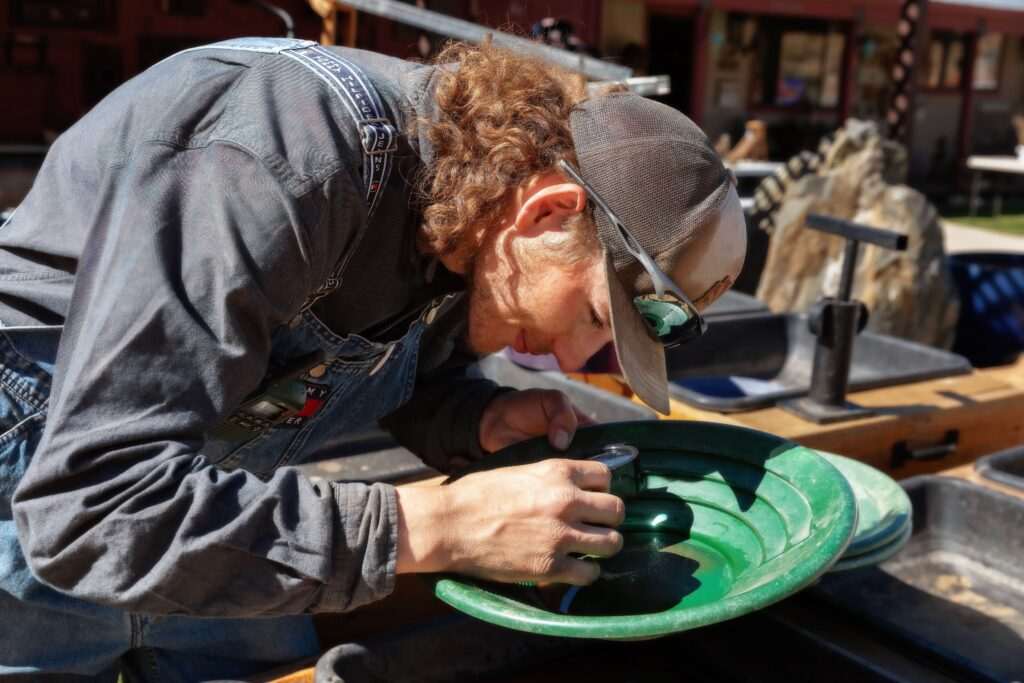
Alaska is the only state where gold is still actively discovered — not in museums, not in gift shops, but in the gravel of real creeks and rivers accessible on a day trip from Anchorage. The Klondike Gold Rush of 1898 passed through Southcentral Alaska, leaving behind worked claims, ghost towns, and a landscape that still yields color to anyone willing to spend a few hours with a pan and a creek. Recreational gold panning near Anchorage is a legitimate activity in 2026, not a tourist gimmick — Crow Creek Mine in Girdwood and the Hatcher Pass area both offer working access to Alaska’s gold-bearing geology, with history thick enough to make the experience worthwhile even when the pan comes up empty.
Crow Creek Mine: The Closest Working Mine to Anchorage
Crow Creek Mine sits in the mountains above Girdwood, about 45 minutes south of Anchorage on the Seward Highway. This is not a heritage reconstruction — it is an operating mine on 147 acres that has been continuously producing gold since it was staked in 1896. The property includes eight original mine buildings from the gold rush era, now on the National Register of Historic Places, and an active placer mining operation that welcomes recreational panners daily from mid-May through mid-September.
Admission ($10–$20 for adults, reduced for children) includes bucket-and-pan equipment, a scoop of concentrate-enriched gravel, and access to the creek. The concentrate is salted to ensure that most visitors find at least a few flakes — enough to understand the process and take home a small vial of Alaska gold as a souvenir. More serious panners can purchase additional pans of raw creek gravel from the active mining area, where finds are real but less guaranteed. The creek is cold and the work is methodical: fill the pan, submerge it, agitate the gravel in circular motions, tilt the pan to let lighter material wash away, repeat. Gold, roughly eight times heavier than the surrounding gravel, settles to the bottom.
The mine is family-friendly at its core. Children take to it immediately — the prospect of finding gold is a genuine motivator, the equipment is simple enough for a seven-year-old to operate, and the historic buildings and equipment scattered across the property give the visit a frontier-era texture that holds attention beyond just the panning. Plan 2–3 hours for a full experience. The Girdwood area offers additional options for the drive: Alaska Wildlife Conservation Center sits on the Seward Highway about 15 miles from the mine turnoff and makes a natural pair with a Crow Creek visit.
Hatcher Pass and Independence Mine State Historical Park
Hatcher Pass, accessed via Palmer roughly 75 miles north of Anchorage up the Glenn Highway, offers a different kind of gold experience — the scale of industrial gold mining during the 1930s and 1940s, and the landscape that made Alaska’s interior worth crossing a continent to reach. Independence Mine State Historical Park preserves the remnants of a major hard-rock gold mine that operated from 1938 to 1951, pulling more than 39,000 ounces of gold from the surrounding mountains before the government-mandated shutdown of non-essential mining during World War II.
Independence Mine is not a recreational panning site — the hard-rock gold here is locked in quartz veins rather than stream gravel. But it is one of the best places in Southcentral Alaska to understand the scale of Alaska’s mining history: the bunkhouse ruins, assay office, mess hall, and processing facilities are partially restored, and guided tours explain the engineering challenges of operating a major mining operation at 3,500 feet elevation in subarctic conditions. The Hatcher Pass valley itself is accessible for recreational gold panning in the stream gravel along the creek below the mine — pan-and-prospect activity that requires no permit on state land. Bring your own equipment and patience.
The drive to Hatcher Pass along the Little Susitna River corridor is one of the more scenic routes in the Matanuska-Susitna Valley, and the pass itself offers hiking, wildflower meadows, and views of the Talkeetna Mountains. For visitors who want to combine a history stop with outdoor recreation, pairing Hatcher Pass with Eagle River Nature Center (20 miles from Anchorage on the Glenn Highway) into a single day is a natural fit — particularly in late summer when the valley color is at its peak.
Self-Guided Panning on Public Land
Beyond commercial operations, recreational gold panning is legal on most public land in Alaska without a permit — Bureau of Land Management (BLM) land and state public land is open to hobby panning using non-motorized methods. The Hatcher Pass Management Area, Chugach National Forest, and state-managed lands throughout the Kenai Peninsula all contain streams with gold-bearing gravel. The key legal distinctions:
- Public land is open for non-motorized recreational panning (hand pan, sluice box up to certain sizes) without a permit.
- Existing mining claims are closed — it is illegal to pan on an active mining claim without the claim holder’s permission, and many productive streams have been staked. The Alaska Division of Mining website maintains a searchable claim database to check whether a specific drainage is claimed.
- National Park land is restricted — panning is prohibited in most national park units including Kenai Fjords and Wrangell-St. Elias.
- Motorized equipment requires a permit — suction dredges and mechanized equipment require permits even on public land.
For newcomers, starting with a commercial operation like Crow Creek Mine provides the technique foundation before venturing onto public streams. The basic swirl-and-sort method takes about 30 minutes to learn; efficient separation of fine gold from black sand magnetic concentrate takes considerably longer. Panning clubs based in Anchorage offer guided outings to productive public streams — a practical option for anyone who wants real finds without the commercial mine price.
What to Bring and What to Expect
Gold panning is a wet activity at creek temperatures that typically run 45–55°F in summer. Dress accordingly:
- Waterproof footwear: Rubber boots or waterproof hiking boots. Creek gravel is unstable and you will step in water.
- Layering: Alaska summer temperatures at creek level can be 55–70°F; overcast days with wind feel cooler. Bring a mid-layer even on sunny starts.
- Sun protection: Clear days on open gravel bars reflect significant UV. Sunscreen and a hat.
- Vials or a small container: Commercial mines provide small vials for finds. On public land, bring your own small plastic container or zip-lock bag for gold collection.
- Black sand magnet: A small rare-earth magnet speeds up the final separation of gold from magnetite black sand — available at mining supply stores in Anchorage.
Realistic expectations: at Crow Creek Mine with enriched concentrate, most panners find a few small flakes (sub-millimeter) and occasionally a picker (a piece visible to the naked eye without squinting). Recreational panning on public streams yields fine flour gold in most drainages — accumulating enough to be worth anything requires significant time and technique. The experience is the value: the history, the setting, and the genuine possibility of finding gold that has been moving through that creek since glaciers receded 10,000 years ago.
Best Season and Getting There
The commercial season at Crow Creek Mine runs mid-May through mid-September. Public stream panning is best from late May through August when water levels are manageable and weather cooperative. Early summer (late May–June) brings longer daylight and lower snowmelt flood risk; late summer (August) offers warm, stable conditions and the added scenery of fireweed and early fall color.
From Anchorage, Crow Creek Mine is reached via the Seward Highway to Alyeska Highway, then Crow Creek Road — approximately 45 minutes. Hatcher Pass Independence Mine is reached via the Glenn Highway to the Palmer-Wasilla Highway, then Hatcher Pass Road — approximately 1.5 hours. Neither destination requires a 4WD vehicle under normal summer conditions, though Crow Creek Road is unpaved for the final miles.

No comments yet.