Bear Watching Near Anchorage 2026 — Best Locations, Tours & Safety Guide
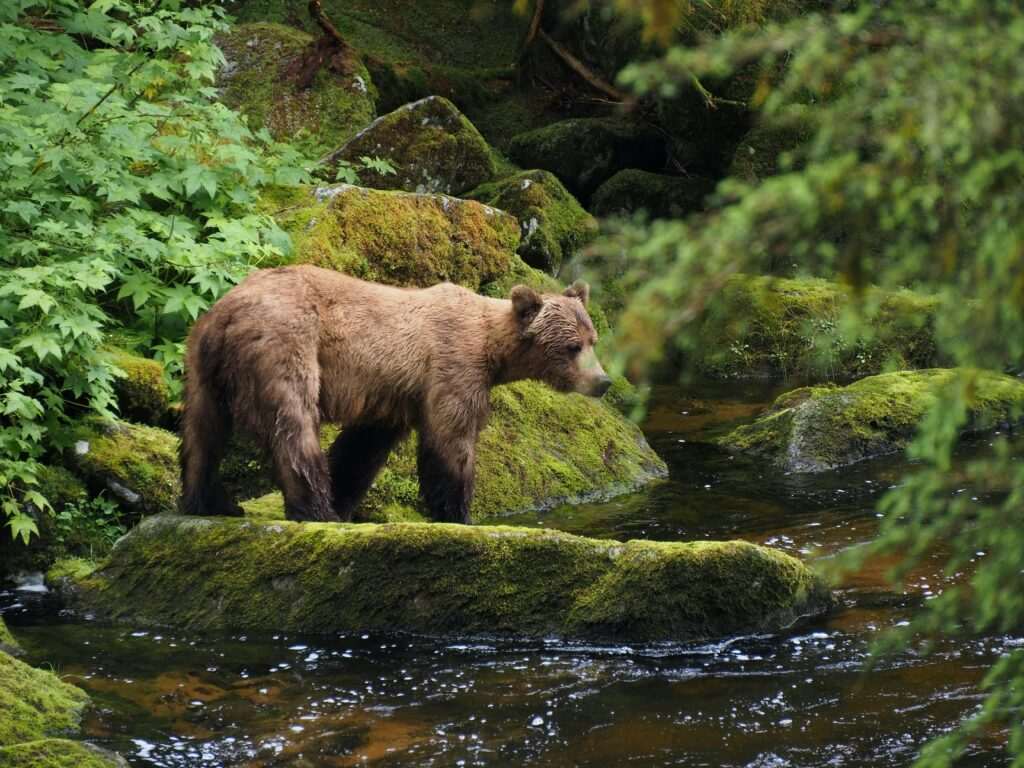
Alaska has two bear species that visitors to Anchorage can realistically encounter: black bears and brown bears (grizzlies). The city itself is bear country — black bears move through the Chugach greenbelts, and brown bears have been documented in the foothills east of the city. But the premier bear watching experiences near Anchorage involve dedicated sanctuaries and refuges where you can observe bears in their element — hunting salmon, feeding on berries, or moving through riparian zones — at safe, managed distances. This guide covers where to go, when to go, and how to do it responsibly.
Brown Bears vs. Black Bears: What You’ll Actually See
Both species are present in Southcentral Alaska, but they inhabit different terrain and behave differently. Black bears are Anchorage’s urban neighbors: smaller, more adaptable, and regularly spotted on the trails of Chugach State Park and in the greenbelts of East Anchorage. They are generally less aggressive than brown bears and more likely to flee than confront. Brown bears (grizzlies) dominate the coastal zones and river corridors — McNeil River, Katmai Coast, and the Kenai Peninsula — and are the species most associated with the iconic Alaska bear watching imagery of bears standing in rushing water, snatching salmon mid-leap.
The size difference is significant: an adult male brown bear weighs 400–800 lbs and stands 3.5 feet at the shoulder. Adult black bears typically weigh 150–350 lbs. In the field, look for the shoulder hump (prominent on brown bears, absent on black bears), the facial profile (dished face = brown bear, straight = black bear), and claw length (brown bears have long, slightly curved digging claws; black bears have shorter curved claws). Color is unreliable — black bears in Alaska are frequently brown or cinnamon, and confusing the species by color alone is a consistent mistake.
Top Bear Viewing Locations Near Anchorage
McNeil River State Game Sanctuary
McNeil River, 200 miles southwest of Anchorage, is the single best brown bear viewing site in the world. The sanctuary is managed by Alaska Department of Fish & Game with a strict permit lottery — 10 people per day, 4 days maximum, with June 7 to August 25 as the permit window. The density of bears at the falls during the chum salmon run (peak late July through early August) is extraordinary — 40+ bears have been counted at the falls simultaneously. From the designated viewing platform 50 yards from the primary falls, bears fish at close range without the human pressure that would cause displacement in an unmanaged setting. Permit applications open in December for the following summer. Demand far exceeds supply; apply multiple years consecutively to improve odds. Access is by floatplane from Homer or King Salmon, roughly 1–1.5 hours each way.
Pack Creek (Admiralty Island)
Pack Creek on Admiralty Island, reached by floatplane from Juneau, is comparable to McNeil River in bear density during the salmon run but managed with more viewer capacity. Admiralty Island has one of the highest concentrations of brown bears anywhere in the world — roughly one bear per square mile of island. Pack Creek permits are required June 1 through September 10; the July 10 to August 25 window is the peak salmon run period with the highest bear activity. This is a more logistically complex trip from Anchorage (requires flying to Juneau first), but remains one of the definitive Alaska bear watching experiences.
Kenai National Wildlife Refuge
The Kenai National Wildlife Refuge, 2.5–3 hours south of Anchorage on the Kenai Peninsula, supports both black and brown bear populations across 2 million acres of wilderness. Bear activity near the road-accessible areas peaks during the salmon runs in July and August, when bears concentrate along the Kenai River tributaries and the interconnected lake systems. The Swan Lake Road corridor in the canoe trail area sees bear activity throughout summer. Unlike McNeil River, the Kenai Refuge doesn’t require specialized permits for general access — it is managed public land with trail and road access — though any backcountry camping requires bear canisters and standard LNT practices.
Potter Marsh and Ship Creek
Bear sightings in Anchorage proper are rare but documented. The coastal wetlands at Potter Marsh Bird Sanctuary and the Ship Creek drainage occasionally produce black bear sightings during summer months, particularly when salmon are running in September. These are opportunistic encounters rather than reliable bear watching — the wildlife value of these areas for most visitors is the birdlife and salmon viewing, with bears as a possible bonus. Moose encounters are far more reliable than bears at either location.
Chugach State Park Front Range
The Chugach State Park front range — the mountains immediately east and north of Anchorage — has a resident black bear population that uses the trail corridors throughout summer. Encounters are most common on trails with dense alder and berry patches: the Ship Creek valley, the Rendezvous Ridge area, and the South Fork of Eagle River. Brown bears are occasionally documented in the back-range portions of the park, particularly in late summer when bears are hyperphagia-feeding (eating intensively before denning). Hiking with noise, carrying bear spray, and staying on maintained trails are the standard practices; bear encounters on the front range typically involve the bear leaving the area once it detects humans.
Guided Bear Viewing Tours from Anchorage
The most reliable way to see brown bears from Anchorage is via guided flightseeing and bear viewing tours to Katmai National Park or Lake Clark National Park — both accessible by small floatplane or wheel-plane, 2–3 hours from Anchorage. Multiple operators run day tours to bear viewing areas at Katmai (Hallo Bay, Geographic Harbor) and Lake Clark (Silver Salmon Creek), including Bear Viewing Lodge packages that combine overnight stays with multiple viewing sessions. The Eagle River Nature Center, 30 minutes from downtown, runs wildlife education programs that include black bear ecology; naturalist staff can orient you to current local bear activity patterns before you head into the field independently.
When to Go: Salmon Run Timing
Bear activity near viewing sites correlates directly with salmon run timing. The calendar roughly breaks down:
- June: Pre-salmon season; bears in coastal meadows eating sedge grass and early berries. McNeil River permit window opens June 7. Bears are present but caloric behavior is less concentrated.
- July: Sockeye and chum salmon runs begin in many river systems. Bear activity at key viewing sites increases rapidly from mid-July onward. McNeil River reaches peak bear density late July.
- August: Peak bear watching month at most coastal sites. McNeil River, Katmai Brooks Falls, and Pack Creek all reach maximum concentration. Bears are highly motivated by salmon and relatively tolerant of observers in managed settings.
- September: Pink and silver salmon runs on the Kenai Peninsula and urban creek systems. Bears in hyperphagia — eating as much as 20,000 calories per day before denning. Ship Creek and Kenai tributaries see bear activity through late September.
Bear Safety Fundamentals
Bear spray is the most effective deterrent for close-range bear encounters — more effective than firearms in study after study. Carry it in a hip holster accessible without removing your pack, know how to operate it before you need it (practice the safety-tab motion), and understand the effective range (20–30 feet for most sprays). Bear spray is available at REI Anchorage, Sportsman’s Warehouse, and Bass Pro Shops in Anchorage.
On trails: make noise consistently through dense vegetation and on blind corners — voice, bear bells, or clapping. Travel in groups of three or more when possible; bear encounters with groups are rare compared to solo or two-person encounters. Never approach a bear regardless of apparent calm behavior. Never position yourself between a bear and its cubs. If a bear charges and makes contact, play dead with brown bears (face down, hands protecting neck); fight back actively with black bears.
In camp: store all food, trash, and scented items in bear canisters or hang them 10 feet off the ground and 4 feet from any trunk. Cook at least 200 feet from your tent. Never sleep in clothes worn while cooking. These practices apply even at established campgrounds with bear lockers — always use the provided infrastructure.
Photography Tips
Bear photography requires a minimum of 200mm focal length for safe shooting distance; 300–500mm is the practical working range for frame-filling wildlife shots at bears. A telephoto zoom (100-400mm or 150-600mm) mounted on a lightweight tripod or monopod is the most versatile kit for Alaska bear viewing. At McNeil River’s viewing platform, 300mm is workable for large framing during active fishing sequences; at less controlled locations, 400–600mm gives you safety margin and better frame fill.
Shoot in bursts during active fishing sequences — the peak of a salmon catch happens in under a second, and a burst of 5–10 frames per second gives you the best chance of capturing the decisive moment. For brown bears at dawn and dusk (the most active feeding periods), use ISO 800–3200 and prioritize shutter speed over depth of field to freeze motion. Overcast days produce even, shadow-free light that’s often superior to harsh midday sun for wildlife portraits.
Ethical Wildlife Watching
The bears at established viewing sites like McNeil River remain habituated to human presence only because consistent, non-threatening behavior from all viewers has been maintained over decades. A single negative interaction — too-close approach, food left accessible, sudden movement that spooks a bear from a salmon — changes an individual bear’s behavior in ways that affect every future viewer. Ethical bear watching is not optional at managed sites; it is the mechanism by which the viewing continues to be possible.
Practical rules: never alter your position to get a better photo if it means moving closer to the bear. Never make sounds designed to attract a bear’s attention. Never leave trash or food of any kind at viewing sites. Follow guide instructions immediately and without discussion — they have context you may not. Viewing bears at close range in natural conditions is a rare privilege globally; treat it as one.
Featured photo by Jennifer Kardiak on Pexels.
No comments yet.