
Valdez, Alaska 2026: Glaciers, Skiing & the Pipeline
Valdez sits at the end of a fjord in Prince William Sound, surrounded on three sides by mountains that rise nearly vertical from the water and receive more annual snowfall than almost any inhabited place in the United States. The average winter brings more than 300 inches of snow. The city of about 4,000 people exists in a landscape that most Alaskans, who are not easily impressed by their own terrain, describe as genuinely extreme — a place where tidewater glaciers calve icebergs into the harbor, where heli-ski guides lead expert skiers down couloirs that photographs struggle to make believable, and where the southern terminus of the Trans-Alaska Pipeline loads supertankers with crude oil against a backdrop of snowfields and sea. Valdez is 305 miles northeast of Anchorage via the Richardson Highway, and the 5.5-hour drive is reason enough to spend at least two nights rather than attempting it as a day trip. What you find at the end of that drive is one of the most concentrated adventure destinations in the state.
Getting to Valdez
The primary route from Anchorage follows the Glenn Highway east to Glennallen, then the Richardson Highway south through the Chugach Mountains to Valdez — a total of roughly 305 miles and five to five-and-a-half hours in normal summer traffic. The Richardson Highway from Glennallen to Valdez is one of Alaska’s great drives: the road climbs through Thompson Pass at 2,678 feet, where snowfields persist into July and winter avalanche closures regularly make national news, before descending into Keystone Canyon — a narrow gorge with waterfalls falling from both walls — and emerging at the head of the fjord with Valdez visible across the water. Plan the drive for daylight and allow stopping time.
The Alaska Marine Highway ferry from Whittier offers an alternative that eliminates most of the driving and adds genuine scenery. The Whittier-to-Valdez crossing runs approximately six hours through Prince William Sound — passing glaciers, island passages, and wildlife that the highway cannot match. Whittier is accessible from Anchorage via the Portage Valley corridor and the Anton Anderson Memorial Tunnel, about 60 miles southeast of the city. Combining the ferry one way with the Richardson Highway return creates a logical loop. Ravn Alaska has operated seasonal flights between Anchorage and Valdez; verify current schedules before building flight connections into an itinerary.
Columbia Glacier
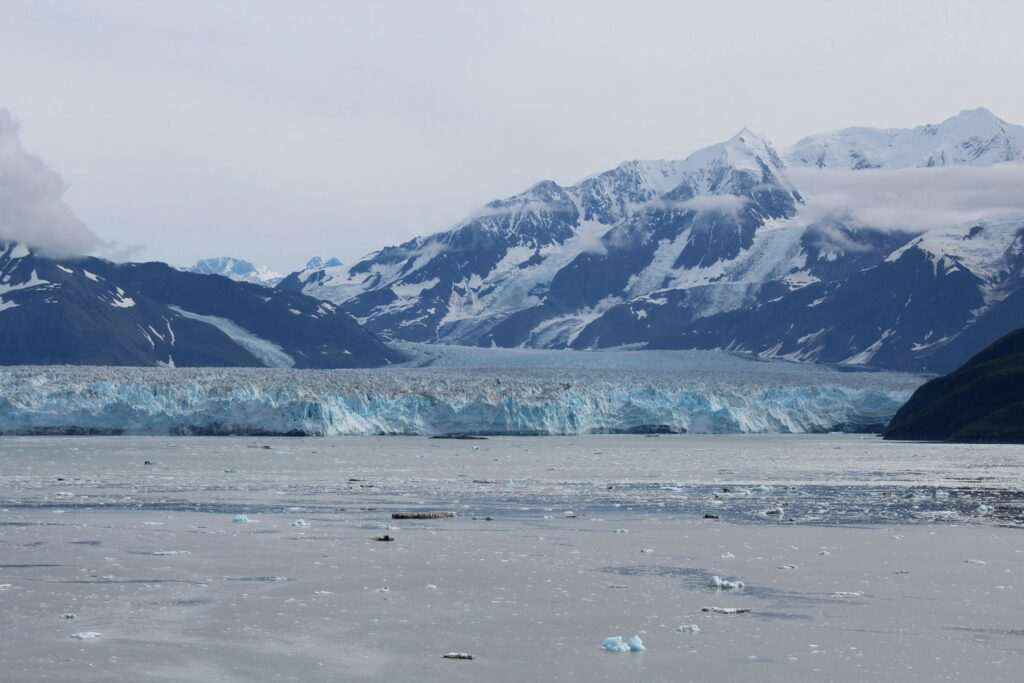
The Columbia Glacier is Valdez’s defining natural attraction — a massive tidewater glacier flowing from the Chugach Mountains into Columbia Bay in Prince William Sound, approximately 25 miles west of the city by water. It is one of the fastest-retreating glaciers in the world, and the retreat has been dramatic enough to be scientifically significant: the glacier has lost roughly half its length since the 1980s, and the calving face that boat tours visit today sits miles from where it stood when the Exxon Valdez ran aground in 1989.
Boat tours from the Valdez Small Boat Harbor run six to eight hours round-trip and pass through iceberg-choked waters as they approach the glacier face. The floating ice — translucent blue, sculpted by wave action and sun — creates a visual environment unlike anything accessible by land in Alaska. Harbor seals haul out on the larger floes; sea otters float in the quieter ice fields; orca and humpback whales are sighted in the sound on active days. The glacier face itself — a wall of ice rising more than 200 feet above the waterline and extending deep below — calves with unpredictable frequency, dropping ice towers into the water with enough force to produce waves that the tour boats must respect. Stan Stephens Glacier & Wildlife Cruises is the established operator for Columbia Glacier tours from Valdez; confirm current pricing and departure times directly before booking.
Keystone Canyon and the Waterfalls Approach
Visitors arriving by road from the north encounter Valdez’s most dramatic scenery before reaching the city. Keystone Canyon, a narrow gorge carved by the Lowe River about eight miles from Valdez on the Richardson Highway, channels the road between walls that rise 2,000 feet with near-vertical faces. Two major waterfalls are visible from the road: Bridal Veil Falls drops several hundred feet from a hanging valley on the canyon’s east wall, and Horsetail Falls cascades from a notch to the west. Both can be viewed from roadside pullouts, and a short trail from the highway leads to the base of Bridal Veil Falls through old-growth cottonwood forest.
The canyon walls were the site of an early 20th-century conflict between competing railroad interests — two rival lines both attempted to blast a route through the canyon simultaneously, leading to a standoff that ended the competing project. Interpretive signage at the trailhead explains the history. Allow 30 to 45 minutes for the canyon stop on arrival or departure — the waterfall viewing is finest in June and July when snowmelt runoff is at peak volume.
Heli-Ski and Extreme Skiing
Valdez’s international reputation among skiers rests on the Chugach Mountains — specifically the faces and couloirs immediately surrounding the city, which combine extreme pitch, consistent deep powder, and helicopter access into what many elite skiers consider the best untracked terrain on the planet. The heli-ski season runs roughly March through May, when the snowpack is at its deepest and the days are long enough for full-mountain operations. A typical day involves multiple runs on faces that would qualify as expert terrain in any resort context; many of the couloirs accessed from Valdez are more accurately described as extreme mountaineering terrain that happens to be skiable.
This is emphatically not beginner or intermediate terrain. Operators require demonstrated expert skiing ability, and the consequences of a fall on the steeper lines are severe. Daily rates run roughly $1,000 to $1,200 per person depending on the operator and the number of runs completed; the expense reflects helicopter time and the guide-to-client ratios required for safe operations. Valdez Heli-Ski Guides and H2O Guides are established operators; book well in advance for the March–April peak window. For visitors who appreciate the culture without the skiing, the annual Valdez Extreme Skiing Competition — when held — brings the world’s best skiers to the city’s faces for a spectator event worth building an itinerary around.
The Trans-Alaska Pipeline Terminal
Valdez is the southern terminus of the Trans-Alaska Pipeline System — the 800-mile pipeline that crosses Alaska from Prudhoe Bay on the North Slope, delivering crude oil to tankers that carry it south to refineries in the continental United States. The terminal, operated by Alyeska Pipeline Service Company, is the largest privately owned terminal in North America and can store 9 million barrels of crude in its tank farm. It opened in 1977, coinciding with the completion of the pipeline’s construction, and transformed Valdez from a quiet fishing and port community into an industrial hub.
The terminal is a working industrial facility with limited public access, but a public overlook provides views of the tank farm and the tanker loading facilities. The pipeline’s significance to Alaska’s economy — oil revenues have funded state government operations for decades, and the Permanent Fund Dividend paid annually to Alaska residents derives directly from pipeline-era revenues — makes Valdez the right place to understand what the pipeline actually is and where it ends. The Valdez Museum in downtown provides the most complete account of both the pipeline’s construction and the 1989 Exxon Valdez oil spill, which occurred 25 miles southwest of the city and remains the most significant environmental disaster in Alaska’s recorded history.
Solomon Gulch Hatchery and Wildlife Viewing
The Solomon Gulch Fish Hatchery, operated by the Prince William Sound Aquaculture Corporation, sits at the base of a canyon east of downtown Valdez and releases millions of pink and sockeye salmon annually into the sound. The returning adults — following their hatchery-imprinted scent back to the release point — create a dense salmon run in late summer that draws brown bears from the surrounding hillsides. The hatchery viewing area allows close observation of salmon congregating below the weir, and bears working the creek edges are a realistic wildlife sighting in late July and August. The location is accessible by car and requires no permits for viewing. It is one of the more reliable bear-viewing spots in Southcentral Alaska that doesn’t require a floatplane or guided tour to reach.
Prince William Sound: Kayaking and Fishing
The protected waters of Prince William Sound make Valdez a practical base for sea kayaking — the inner harbor and nearby bays offer calm conditions compared to the exposed coastlines of the Gulf of Alaska, and the scenery of fjord walls, glaciers, and island passages is accessible from the water in a way that motorized tour boats cannot replicate. Guided kayak tours from Valdez range from half-day harbor paddles to multi-day expeditions into the backcountry of the sound. Pacific halibut charter fishing operates from the Small Boat Harbor throughout the summer season; halibut averaging 20 to 40 pounds are the primary target in the sound’s productive grounds, with silver and pink salmon adding to the summer charter calendar. Sea otters, Steller sea lions, and seabirds frequently appear alongside fishing boats, making the sound’s wildlife density as much a draw as the fish themselves.
Planning Your Visit
Summer — June through August — is the primary visitor season for glacier tours, kayaking, fishing, and general sightseeing. July offers the highest probability of clear weather for Columbia Glacier views and is the peak month for bear viewing at Solomon Gulch. March through May is the heli-ski season; visitors arriving in late April sit at the overlap between ski season and the opening of summer boat tours. Valdez weather is notoriously variable — the same mountains that produce 300 inches of annual snow generate significant precipitation in summer — and packing full waterproof layers regardless of the forecast is standard practice.
Valdez is not a practical day trip from Anchorage. The 5.5-hour drive each way requires an overnight stay to do anything meaningful beyond Keystone Canyon, and most significant experiences — glacier tours, heli-skiing, bear viewing — benefit from two to three nights on the ground. The Best Western Valdez Harbor Inn is the largest hotel property; various smaller lodges, B&Bs, and vacation rentals cover other price points. Book accommodations in advance for July and August — Valdez is small enough that last-minute rooms are not reliably available during peak season.
The Richardson Highway from Anchorage to Valdez pairs naturally with the Seward Highway as the two classic Anchorage-based road trips — one running northeast into the Chugach interior, the other south toward the Kenai Peninsula — covering genuinely different landscapes from a single city base. For guided adventure itineraries that incorporate Valdez as part of a broader Prince William Sound experience, operators like Adventures by True North offer multi-day packages that consolidate the logistics of a glacier-and-sound visit into a single booking.




No comments yet.