
Mendenhall Glacier Ice Caves 2026: Juneau’s Most Extraordinary Experience
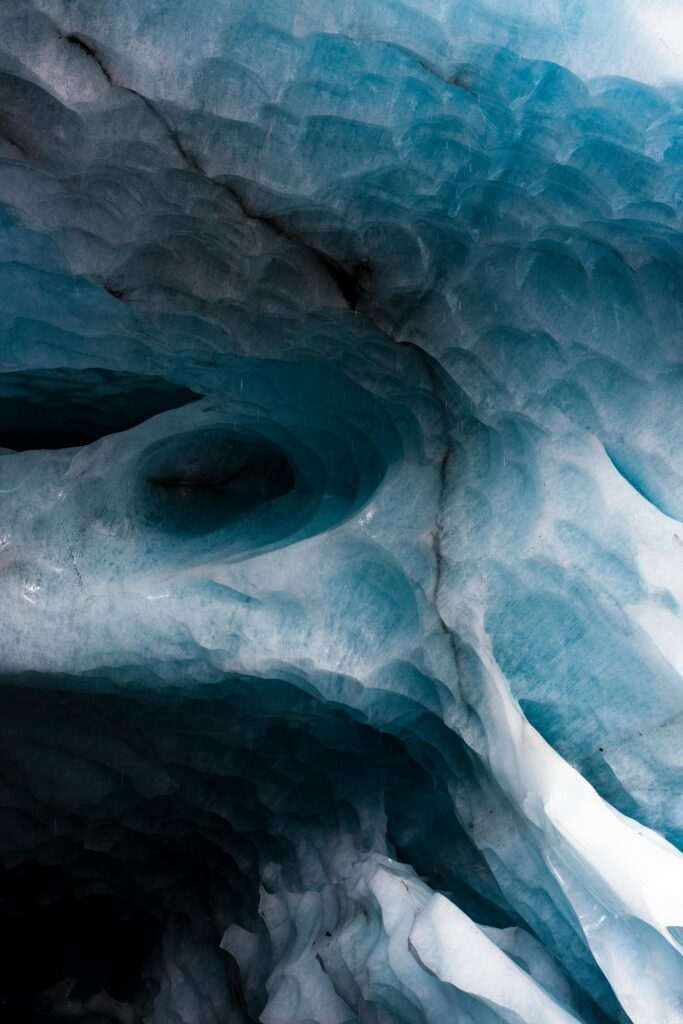
The photographs look impossible. A chamber of ice glowing electric blue, walls sculpted into curves and arches by flowing water, the ceiling pressing down to create passages that open into cathedral spaces — it looks like something generated by a computer or built for a film set. It is not. It is the inside of Mendenhall Glacier, nine miles from downtown Juneau, accessible to anyone fit enough and organized enough to get there.
The Mendenhall Glacier ice caves are one of the most visually overwhelming experiences Alaska offers — which, given the competition, means something. Here is how to see them in 2026.
What the Ice Caves Actually Are
Glaciers are not solid. As surface meltwater finds its way into cracks and crevasses, it carves channels, tunnels, and chambers within the ice itself — flowing through the glacier’s interior as it seeks the outlet at the terminus. In some glaciers, these meltwater channels grow large enough for people to enter: passages several feet across, opening into rooms ten or twenty feet high, floored with flowing water or gravel carried by the melt stream.
The blue color — that extraordinary, almost supernatural blue — is the result of physics. Glacial ice is ancient, compressed over hundreds or thousands of years into a crystalline structure that absorbs the red end of the light spectrum and transmits the blue. The deeper and more compressed the ice, the more saturated the blue. Inside a meltwater chamber with diffused light coming through the ice overhead, the glow is consistent in all directions — there are no shadows in the conventional sense, just different intensities of blue. It’s unlike natural light anywhere else.
At Mendenhall, the meltwater system that creates the caves is fed by surface runoff and internal drainage from the glacier’s upper reaches. The specific caves and passages accessible in any given season depend on how the melt has progressed — the chambers are not permanent. What existed in 2024 may be altered or inaccessible in 2026; what will be accessible in 2026 is something only current-season guides know.
Critical Point: The Caves Are Not on the Visitor Center Trail
This cannot be stated clearly enough. The Mendenhall Glacier Visitor Center — run by the US Forest Service, free to enter, easily reached from Juneau — provides outstanding views of the glacier face and access to several hiking trails, including the popular Nugget Falls trail. It does not provide access to the ice caves. The caves are on the glacier itself, not on the visitor center grounds.
To reach the ice caves, you must cross Mendenhall Lake — typically by kayak, packraft, or guided water crossing — and then hike or climb onto the glacier’s surface. This requires technical glacier travel equipment (crampons, ice axe, rope) and the knowledge to use it safely. Independent travel to the caves by unequipped visitors is prohibited by the Forest Service and genuinely dangerous. The caves are accessed by guided tour. Period.
Every year, visitors arrive at the Mendenhall Visitor Center expecting to walk to the ice caves and are disappointed to find they cannot. Book your guided tour before arriving in Juneau, not after.
Guided Tour Options: What to Expect
Multiple Juneau-based tour operators offer ice cave access, typically structured as:
- Kayak or packraft approach: Paddle across Mendenhall Lake (30–60 minutes depending on conditions), land at the glacier terminus, gear up with crampons and helmet, and hike/climb to the cave entrances. Most operators use stable recreational kayaks suitable for paddlers without prior kayaking experience. Total tour duration is typically 4–6 hours.
- Guided glacier trek with cave access: Approach by water, then conduct a more extensive glacier surface hike with roped travel over crevassed terrain, reaching the cave system as part of a broader glacier exploration. Longer duration (5–7 hours), higher fitness requirement, more comprehensive glacier experience.
All tours include crampons, helmet, and safety instruction. Most provide drysuits or waterproof gear for the water crossing portion; confirm with your specific operator what is and isn’t included. Physical fitness requirements are described as moderate to strenuous — you will be paddling, hiking on uneven glacier ice, and potentially ducking through low passages. The experience is not wheelchair accessible and is not appropriate for young children or guests with significant mobility limitations.
Tour prices range from approximately $200–$350 per person depending on operator, duration, and group size. Private tours are available at premium pricing.
Seasonal Availability: When the Caves Are Accessible
The ice caves at Mendenhall are not accessible year-round. The meltwater channels that form the cave system are fed by summer surface melt — meaning the caves are typically flooded and inaccessible during peak melt (late June and July). As melt slows in late summer, the water drains from the lower chambers, opening cave access.
The general accessibility window runs from approximately late July through early October, with the most reliable access typically in August and September. October access depends on early freeze conditions and varies by year.
This seasonal pattern matters for trip planning: visitors arriving in Juneau in early July may find ice cave tours unavailable. Those arriving in August or September have the best probability of access. Always confirm current cave accessibility directly with your chosen tour operator before booking, as conditions change with each season and sometimes week by week.
The longer-term context: Mendenhall Glacier is retreating. It has lost approximately 3 miles in length and significant mass since the 1950s. The ice cave system exists because the glacier is melting — the same process that creates the caves will eventually eliminate them. The window to experience them is finite, and every year of continued warming shortens it.
Inside the Caves: What You Will See
Visitors consistently describe the experience as unlike anything else they have done. The specific elements:
- The blue light: Described in almost every account. Pervasive, even, and deeply saturated in the most compressed sections of ice. It intensifies deeper in the cave where external light is filtered through more ice.
- Sculpted ice walls: Meltwater carves curves and channels into the ice as it flows, leaving a surface that looks worked rather than natural. The walls are smooth in high-flow areas, textured and crystalline in slower zones.
- Meltwater features: Flowing water on the cave floor — sometimes ankle-deep, sometimes in channels alongside walkable ledges. The sound of water moving through ice in every direction.
- Crevasse views: From certain positions inside the glacier, crevasses open upward to blue sky — shafts of compressed blue ice lit from above, dropping away below. The vertical scale is disorienting.
- Silence and cold: Glacier caves are cold even in August — expect temperatures near freezing inside regardless of surface conditions. The sounds of the outside world disappear quickly. Some visitors describe it as the most genuinely quiet place they’ve experienced.
Photography Inside Ice Caves
Ice cave photography is technically demanding but rewards preparation:
- Wide angle is essential: The cave interiors are large enough to be impressive but the confined spaces mean a wide-angle lens (16–24mm full-frame equivalent) captures the full chamber volume. A standard 50mm will miss significant portions of the environment you’re standing in.
- Low light settings: Caves are dim. Bump your ISO (1600–3200 is appropriate on most modern cameras) and open your aperture. A tripod is useful but caves are often wet; bring a waterproof bag for your camera when moving between spaces.
- Embrace the blue cast: Auto white balance will try to neutralize the blue and fail. Shoot in RAW and process in post, or manually set white balance to preserve the blue that makes these images distinctive. The blue is the point — don’t correct it away.
- Smartphone photography: Modern phone cameras handle low light better than any point-and-shoot. Night mode or Pro mode with manual ISO adjustment works well. The main limitation is wet conditions — use a waterproof case or bag.
How to Book: Don’t Wait
Ice cave tours sell out weeks — sometimes months — in advance during peak season (August–September). This is not hyperbole. Tour operators have limited capacity due to group size restrictions, and Mendenhall is Juneau’s most sought-after tour experience. If you are planning a Juneau visit in August 2026, book your ice cave tour at the same time you book flights and accommodation — not after you arrive.
Search for “Mendenhall Glacier ice cave tour Juneau” to find current licensed operators. Check reviews carefully; cave access conditions change quickly and reputable operators are transparent about current access status. If an operator is offering ice cave tours in July without qualification, that’s worth a follow-up question about actual cave accessibility versus glacier surface tours.
The Free Mendenhall Experience: Visitor Center and Trails
Even without an ice cave tour, the Mendenhall Glacier complex is one of Juneau’s finest free experiences. The USFS Visitor Center ($5 per adult) offers glacier face views, interpretive exhibits on glacier science and retreat history, and access to several trails:
- Nugget Falls Trail (1.8 miles round-trip): Flat, paved, leading to a large waterfall at the base of the glacier moraine with direct glacier views. Accessible for all fitness levels.
- East Glacier Trail (3.5 miles): Forested trail with views of the glacier from above and access to the lateral moraine left by the glacier’s retreat.
- West Glacier Trail (3.4 miles): Climbs to viewpoints on the glacier’s west flank with outstanding aerial perspectives of the ice field.
Combining a morning ice cave tour with an afternoon free exploration of the visitor center and Nugget Falls trail is a natural Juneau day — it covers the glacier from both angles and provides the context (the retreat, the science, the scale) that makes the cave experience more meaningful.
Getting to Juneau from Anchorage
Juneau is not accessible by road — it sits between the Coast Mountains and the Pacific, connected to the rest of Alaska only by air and sea. Alaska Airlines flies Anchorage to Juneau in approximately 1.5 hours, with multiple daily departures during summer. The Alaska Marine Highway ferry serves Juneau from multiple Southeast Alaska ports, with connections from Bellingham, Washington making it possible to combine a Juneau visit with a broader Southeast Alaska itinerary.
Most visitors combining Juneau and Mendenhall with an Anchorage-based Alaska trip fly in and out, spending two to three nights. That allows time for the ice cave tour, the free glacier complex, downtown Juneau exploration, and one additional Southeast Alaska activity — whale watching in Stephens Passage is an excellent complement to a glacier day.
The caves won’t be there forever. The glacier is telling you so, slowly, in the only language it has. Go while the ice still glows.
No comments yet.