
Qiviut 2026: Alaska’s Rarest Fiber & the Oomingmak Musk Ox Co-operative
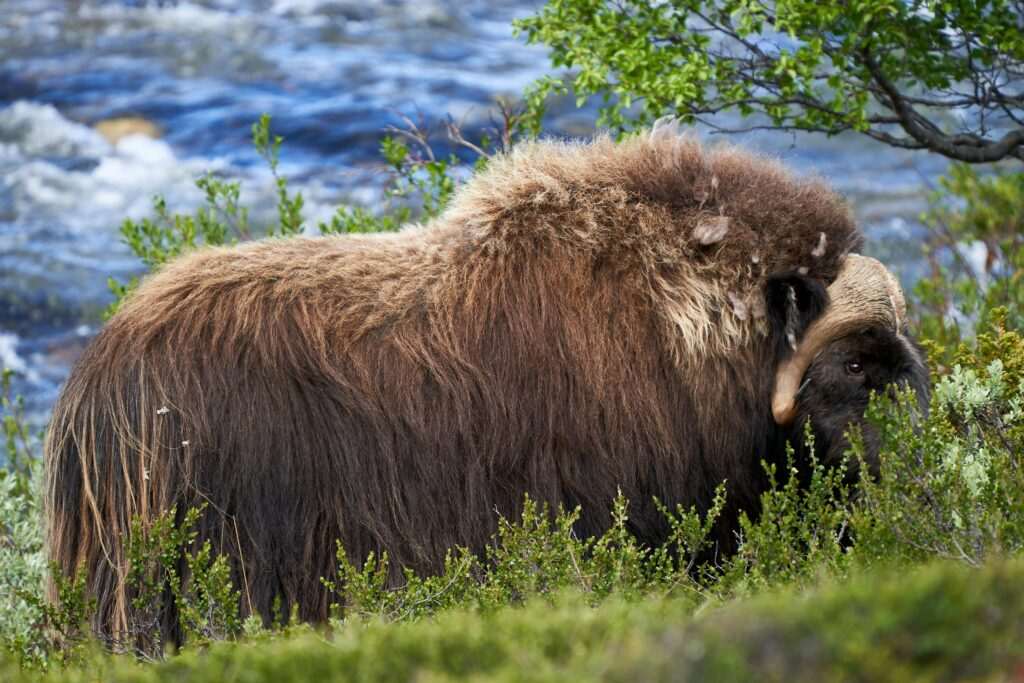
There is a small shop on 6th Avenue in downtown Anchorage where you can spend $200 on a scarf and feel, for the first time in your life, that you genuinely got the better end of the transaction. The Oomingmak Musk Ox Producers Co-operative sells handknitted garments made from qiviut — the inner underwool of the musk ox — and the experience of handling a qiviut neck ring or lace-weight hat is unlike anything else in the fiber world. The material is so fine, so light, and so warm that it short-circuits the normal calculation of whether something is worth its price. You put it on and the question answers itself. Understanding what qiviut is, where it comes from, and why the Oomingmak Co-operative represents something genuinely rare in the world of luxury textiles requires a bit of background — and the background makes the garment more interesting, not less.
What Qiviut Is
Qiviut (pronounced KIV-ee-ut) is the soft inner fleece that musk oxen grow beneath their coarse outer guard hair as insulation against Arctic winters. Each spring, musk oxen shed this undercoat naturally, and it can be combed out or collected from fences and brush where the animals have shed. The fiber is extraordinarily fine — typically 16 to 19 microns in diameter, comparable to the finest cashmere and significantly finer than standard wool. For context, the diameter of a human hair averages around 70 microns. Qiviut registers as genuinely soft against skin that would find ordinary wool scratchy.
The warmth-to-weight ratio is qiviut’s most celebrated property. By weight, qiviut is approximately eight times warmer than sheep’s wool. A qiviut scarf that weighs almost nothing will keep your neck warm at temperatures that would require a thick wool wrap. This is not marketing language — it is the documented insulation capacity of the fiber, the product of millions of years of evolution in one of the coldest environments on earth. Musk oxen survived the Pleistocene, lived alongside woolly mammoths, and are still here partly because their fiber is very, very good at trapping heat.
The Musk Ox: Alaska’s Living Ice Age Animal
Musk oxen were hunted to extirpation in Alaska in the nineteenth century. The animals that exist in the state today are descended from a reintroduction program that brought a small herd from Greenland to Nunivak Island in the 1930s and expanded from there. The population now numbers in the thousands across the state, with herds on the Seward Peninsula, in Arctic Alaska, and at the Musk Ox Farm in Palmer — the only domestic musk ox farm on earth, operated as a nonprofit research and conservation facility since 1964. The Palmer farm supplies fiber to the Oomingmak Co-operative and to individual spinners; it is also open for public tours that let visitors see the animals and learn about the combing process firsthand.
The name “musk ox” is technically a misnomer — the animals are not closely related to oxen and do not produce musk as a scent gland secretion. They are more closely related to goats and sheep. In Inuktitut, the Inuit word for the animal is umingmak, meaning “the bearded one” — the word from which Oomingmak takes its name.
The Oomingmak Musk Ox Producers Co-operative
The Oomingmak Musk Ox Producers Co-operative was founded in 1969 by anthropologist Musk Ox Farm founder John J. Teal and a group of Alaska Native women from remote Yupik and Inupiaq communities who wanted a way to generate income from traditional knitting skills without leaving their villages. The structure is unusual: village knitters across the state receive raw qiviut fiber, knit garments using patterns specific to their home community, and sell the finished pieces through the co-operative’s Anchorage shop and catalog. Each village has its own distinctive pattern — a visual language developed for the co-op that references design traditions from that community. A scarf from Mekoryuk carries a different pattern than one from Bethel or Shishmaref, and the label identifies the village and, in some cases, the knitter.
The 6th Avenue shop in downtown Anchorage is the co-op’s primary retail point and, for most visitors, the place where qiviut becomes real rather than theoretical. The shop carries neck rings, scarves, hats, smoke rings, and stoles in qiviut and qiviut blends, along with information about the co-operative’s structure, the villages involved, and the patterns. Staff are knowledgeable and accustomed to fielding first-time questions about what qiviut is and why a neck ring costs $175. The answer — that you are holding the finest cold-weather fiber in the world, handknitted by an Alaska Native woman in a remote village using a pattern that belongs to that community — is both accurate and, if you are the kind of person who cares about such things, genuinely persuasive.
Identifying Authentic Qiviut
Pure qiviut garments are rare and expensive. Qiviut blends — fiber mixed with merino wool, silk, or nylon — are more common and significantly less costly. The blends are not fraudulent; most are clearly labeled, and they produce excellent garments. But pure qiviut has a distinctly different hand feel from any blend: lighter, with a slight halo that pure qiviut develops when worn, and a warmth-to-weight ratio that blends cannot fully replicate.
When evaluating any qiviut product, look for explicit fiber content labeling. Authentic Oomingmak pieces are labeled with fiber content, village of origin, and co-operative membership. Pieces sold as “qiviut” at general gift shops should be approached with the same scrutiny you would apply to any expensive natural fiber — ask for the fiber certificate, check the label, and compare the weight against the price. Genuine pure qiviut at $150–$300 for a scarf or hat is not overpriced. The same item at $40 is not pure qiviut.
Products, Prices, and What to Buy
The Oomingmak Co-operative’s price range for pure qiviut garments runs roughly $100–$175 for neck rings and hats, $175–$275 for scarves and smoke rings, and $300 and above for larger stoles and shawls. These prices reflect both the scarcity of the raw fiber — total global qiviut production is tiny compared to any other luxury fiber — and the labor cost of handknitting intricate lace-weight patterns in small Alaskan villages with no local economy alternative.
The neck ring is the most popular starter piece: a tube of knitted qiviut that functions like a versatile neckwarmer, lighter than any comparable wool item, and packable to near-nothing for travel. Hats are the second most common choice. Scarves in village-specific patterns make the most culturally connected gift — the pattern documentation on the label provides the story that transforms a textile into an artifact. The Anchorage Museum shop also carries qiviut items and Alaska Native crafts in a curated collection if the Oomingmak shop is closed; the Alaska Native Heritage Center provides broader context on the Alaska Native traditions that inform the co-op’s village pattern system.
Caring for Qiviut
Qiviut does not felt under normal handling conditions, which is one of its practical advantages over fine wool. Garments can be hand-washed in cool water with a gentle wool wash, gently pressed (not wrung), and laid flat to dry. Dry cleaning is also appropriate. Qiviut does not require moth protection the way wool does. Stored carefully — folded rather than hung, to preserve the fiber structure — a qiviut garment will last decades without meaningful degradation. The combination of near-indestructibility and extraordinary warmth is what makes it the most practical luxury textile most Alaska visitors have never heard of before arriving.
Photo: Robert Pügner / Pexels



No comments yet.