Chugach State Park 2026: The Complete Guide to Anchorage’s Half-Million-Acre Backyard
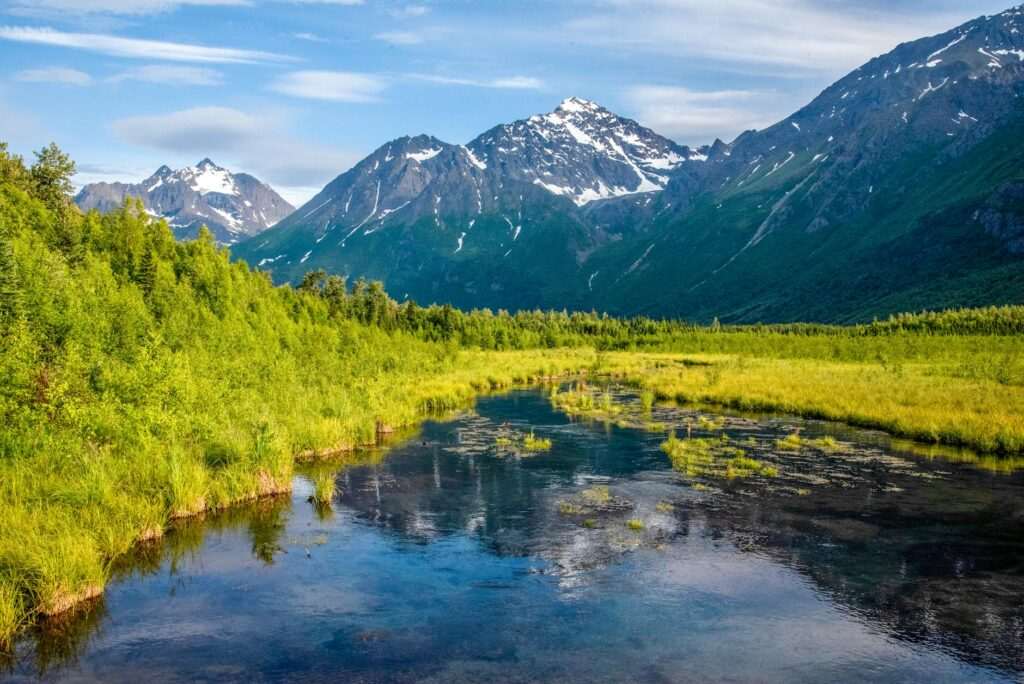
Chugach State Park contains nearly 500,000 acres of mountains, glaciers, river valleys, and alpine tundra — and its western boundary runs directly along the eastern edge of Anchorage. The park is accessible from dozens of trailheads scattered through Anchorage’s Hillside neighborhoods, Eagle River, and the communities along the Seward Highway and Glenn Highway corridors. On any given morning, Anchorage residents drive 10 minutes from their houses and start walking uphill into wilderness. This proximity to a major city — and the park’s scale — makes Chugach one of the most remarkable public lands in the United States. This guide covers the main access regions, the essential trails, and the practical information for planning a visit from anywhere in Southcentral Alaska.
Glen Alps and the Hillside: The Primary Trailhead Area
The Glen Alps trailhead, reached via Upper Huffman Road and Toilsome Hill Drive from south Anchorage, is the most-used entry point into Chugach State Park and the starting point for several of the park’s signature hikes. Parking is $5/day; an Alaska State Parks annual pass covers all state park day-use fees and is worth purchasing for anyone planning multiple visits.
Flattop Mountain is the most-climbed peak in Alaska. The 1.4-mile route (one way) gains 1,350 feet from the Glen Alps parking area to the 3,510-foot summit — steep enough to be a genuine workout but short enough that most reasonably fit adults reach the top in 60 to 90 minutes. The summit delivers a 360-degree view of Anchorage, Cook Inlet, the Alaska Range across the water, and the Chugach peaks stretching north and south. On weekends in summer, the summit can have 50 or more people; weekday mornings and evenings are quieter. The upper section involves some scrambling on loose rock; poles and traction devices in shoulder seasons are useful.
Williwaw Lakes Trail is the moderate backcountry route from Glen Alps — a 13-mile roundtrip into a glacially carved valley of hanging waterfalls, alpine lakes, and Dall sheep terrain. The trail gains elevation gradually and passes through progressively more dramatic scenery; the upper lakes in mid-July, with wildflowers and snowfields still visible on the surrounding ridges, represent some of the finest accessible alpine scenery near Anchorage. The route is straightforward and well-traveled but long enough to require an early start for a comfortable day trip.
Powerline Pass Trail follows the utility corridor from Glen Alps northeast toward Indian Valley — 11 miles one way on a wide, gently graded route through mountain scenery that requires no scrambling. It is the most popular trail in the park for mountain biking in summer and fat biking and cross-country skiing in winter. The trail is accessible to beginners and draws a different crowd than the summit routes: families with dogs, cyclists, and winter recreationists alongside hikers.
Wolverine Peak and Near Point
From the Prospect Heights trailhead (off Upper O’Malley Road), two intermediate routes serve hikers who want ridge travel and Anchorage views without Flattop’s crowds.
Near Point is 5.4 miles roundtrip with 2,250 feet of gain — a shorter but steeper route to a 3,000-foot sub-ridge that frames Anchorage directly below. The views of the city, the inlet, and the mountains across the water are among the best from any easily reached point in the park.
Wolverine Peak extends the same ridge significantly further: 10.6 miles roundtrip, 3,850 feet of gain, to the 4,455-foot summit. The climb is sustained and the upper ridgeline is exposed, but Wolverine is the standard recommendation for visitors who want a full-day mountain experience without technical climbing. Dall sheep are frequently seen on the upper slopes. Allow 6 to 8 hours roundtrip.
Eagle River Area and Nature Center
The Eagle River Nature Center, located 12 miles from the Glenn Highway at the end of Eagle River Road, is a separate hub within the park with its own trail network, naturalist programs, and camping. The Nature Center itself — operated by a nonprofit on behalf of the park — has exhibits on Chugach ecology and wildlife, and its staff offer guided hikes and educational programs for visitors of all ages. The Albert Loop Trail, a 3-mile flat loop near the Center, is the most accessible route in this area and appropriate for families with young children.
The Eagle River valley is prime moose habitat; encounters on the lower trails are common and require the standard protocol of giving animals wide berth. Eagles nest in the valley cottonwoods, and brown bears are present in the backcountry. The Nature Center charges a parking fee separate from the Glen Alps day-use fee.
The Crow Pass Trail
The Crow Pass Trail is the park’s classic multi-day route — a 23-mile traverse from the Crow Creek trailhead near Girdwood north to the Eagle River Nature Center. The route crosses a former section of the historic Iditarod Trail, passes Raven Glacier, and requires a ford of Eagle River that can be thigh-deep and fast in high water. Experienced backpackers typically complete the traverse in two to three days; the annual Crow Pass Crossing race covers it in under four hours. For day hikers, the southern approach from Girdwood to Crow Pass (5 miles one way, 2,000 feet of gain) is a rewarding out-and-back with glacier and alpine views.
Eklutna Lake Area
At the northern end of the park, Eklutna Lake — the largest lake in the park at 7 miles long — is accessible from the Glenn Highway at the Eklutna exit, 26 miles from Anchorage. The Eklutna Lakeside Trail runs 13 miles along the lakeshore to the Eklutna Glacier, making it one of the longer approaches to a glacier in the park system. The Twin Peaks Trail from the same trailhead is a strenuous day hike to the ridge above the lake. Eklutna has a developed campground and is the base for multi-day routes into the park’s northern backcountry.
Wildlife
Chugach State Park wildlife is present throughout the year and visible from trails at all levels of the park. Moose are the most commonly encountered large mammal — on valley-floor trails, in riparian areas, and occasionally on the Hillside roads. Dall sheep are consistently visible on the rocky ridges above Anchorage; binoculars from the Flattop or Wolverine approach trails frequently find white shapes on the crags. Black bears are common in late summer berry patches on the lower slopes. Brown bears are present in the backcountry, particularly in the Eagle River and Eklutna drainages; carry bear spray on any backcountry route. Bald eagles are year-round residents in the Eagle River valley and along the park’s drainages. Marmots and ptarmigan inhabit the alpine zones.
Winter Use
Chugach State Park has extensive winter recreation infrastructure. The Powerline Pass corridor from Glen Alps is the most popular fat biking and classic ski route in the park. The Eagle River Nature Center trails are groomed for cross-country skiing by volunteers. Snowshoeing is appropriate on virtually any summer trail. The alpine terrain above the Hillside trailheads is skied and snowboarded by backcountry skiers throughout winter — Flattop and the ridges north and south carry accessible lines when snow conditions permit. Check the Alaska Avalanche Information Center forecasts for the Chugach region before any winter backcountry travel.
Camping
Eagle River Campground, near the Nature Center, is the primary developed campground with tent and RV sites, running water, and restrooms. Eklutna Lake Campground provides similar facilities in the northern section. Backcountry camping is permitted throughout the park without a permit; Leave No Trace practices apply and human waste must be packed out in bear-active areas. No campfires are permitted in the alpine zone.
Trailhead Logistics
Day-use parking fees apply at Glen Alps ($5), the Eagle River Nature Center, and Eklutna Lake. The Alaska State Parks annual pass ($65) covers all day-use fees across the state park system and pays for itself quickly for frequent visitors. Most trailheads have vault toilets but no water; carry all drinking water. Cell service is reliable at most Hillside trailheads but degrades rapidly in the backcountry. Trail conditions are posted by Alaska State Parks and updated seasonally; early-season snow and late-season ice affect upper routes significantly.
Chugach State Park is why Anchorage works as a city — not despite the wilderness at its edge, but because of it. The ability to walk from a coffee shop to the ridgeline of the Chugach in under two hours is not incidental to the quality of life here. It is the whole point.

No comments yet.