
Fairbanks Alaska 2026 Summer Guide: Midnight Sun Capital from Anchorage
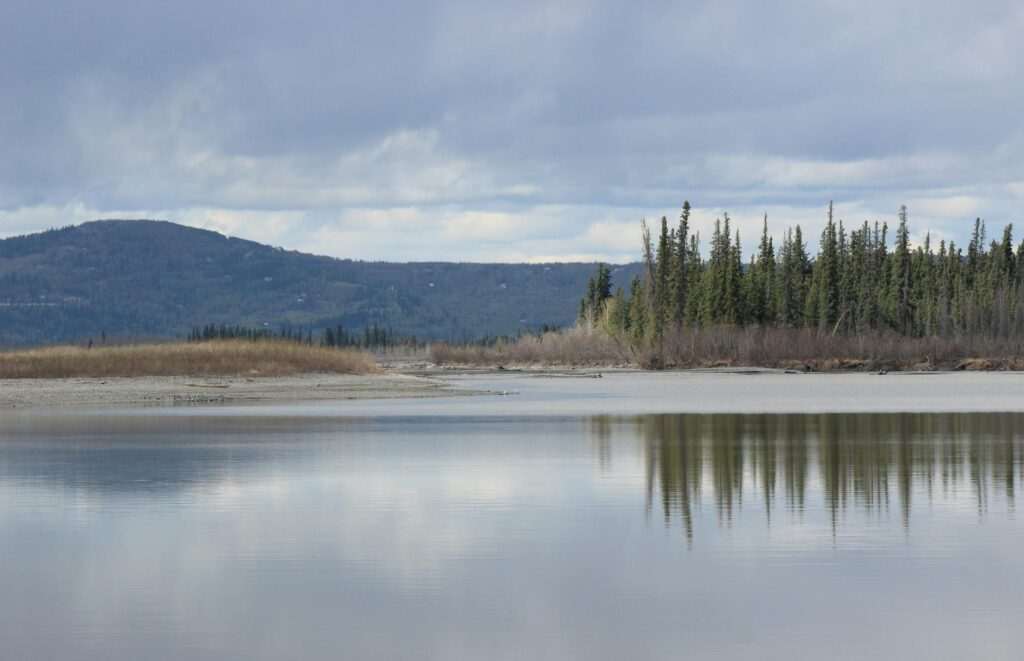
At the summer solstice, the sun does not set in Fairbanks. It dips toward the horizon around midnight, paints the sky orange, and climbs back up. For several weeks in June and early July, there is no darkness — no signal to sleep, no natural end to the day. Fairbanks, 360 miles north of Anchorage at 64 degrees latitude, is where Alaska’s midnight sun is most fully expressed: golf courses run 24-hour rounds, baseball games are played at midnight without lights, and the long gold of the boreal evening stretches from dinner into what would be night anywhere else. For visitors based in Anchorage, a Fairbanks extension adds a dimension of Alaska that Southcentral cannot provide — Interior landscape, Indigenous culture, gold rush history, and the particular quality of light that belongs only to the subarctic summer.
Getting There from Anchorage
Alaska Airlines and other carriers fly Anchorage to Fairbanks International Airport in approximately one hour. Flights run several times daily; fares vary seasonally but the route is well-served. For visitors who want the drive, the Parks Highway (AK-3) connects Anchorage to Fairbanks in approximately 360 miles — allow 6 to 8 hours including stops, and make the stops count. The Talkeetna junction at mile 98 is worth a 14-mile detour into one of Alaska’s most atmospheric small towns: a historic riverfront community with a clear view of Denali on good days and a street-level culture built around bush pilots, mountaineers, and river guides. Denali National Park’s entrance and visitor complex at mile 237 justifies at least an afternoon stop. The full Anchorage-to-Fairbanks drive, done over two days with a Denali overnight, is one of the best road trips in the state.
The Midnight Sun
The midnight sun is not a metaphor. On June 21, Fairbanks receives approximately 21.5 hours of direct sunlight, with the remaining hours spent in twilight bright enough to read by. From late May through late July, there is no true darkness. The practical effect on a visit is significant: the constraints that govern a normal day — meals at set times, activities ending at dusk, the clock as an organizing principle — dissolve. A hike that starts at 9 PM is unremarkable. Dinner at midnight on a restaurant patio with full daylight overhead is normal. The disorientation is real for visitors accustomed to darkness as a cue for sleep; bring an eye mask.
The Midnight Sun Baseball Game, played annually on June 21 by the Fairbanks Gold Panners at Growden Memorial Park, is one of the longest-running annual events in Alaska — a 9-inning game that starts at 10:30 PM and ends without artificial light. If your visit falls near the solstice, attending the game is the most direct way to experience what midnight sun actually means in practice.
Gold Dredge 8
Gold Dredge 8 is a massive historic gold dredge on Fox Creek, 9 miles north of Fairbanks, that operated from 1928 through 1959 and pulled millions of dollars in gold from Interior Alaska creek beds. The five-deck dredge is preserved as a National Historic Engineering Landmark, and guided tours walk visitors through the machinery and history of industrial placer mining. The tour includes gold panning in the tailings — and finds are genuine; Fox Creek still produces color. For visitors with no background in Alaska gold rush history, Gold Dredge 8 provides the context in a format that is more tactile than a museum: you can understand the scale of what was extracted by standing inside the machine that extracted it.
University of Alaska Museum of the North
The University of Alaska Museum of the North sits on the UAF campus above the Tanana Valley with views of the Alaska Range on clear days. The collection spans Alaska natural history, geology, Indigenous cultures, and Arctic science, and includes some of the most significant objects in any Alaska museum: Blue Babe, a 36,000-year-old steppe bison recovered from permafrost with hide, hair, and muscle tissue intact; an exceptional Alaska Native art collection covering Yup’ik, Athabascan, Inupiaq, and Aleut traditions; and a full-scale dinosaur exhibit drawing on Alaska’s significant fossil record. The building itself — designed by Rafael Viñoly with a flowing curved exterior — is one of the more architecturally ambitious structures in the state. Allow two to three hours; admission runs approximately $14–$18 for adults.
Pioneer Park and Riverboat Discovery
Pioneer Park, in central Fairbanks, is a free outdoor historical museum assembled from Gold Rush-era buildings relocated from around the region — a sternwheel riverboat, a small historic train, and a collection of structures that give the park the character of a lived-in artifact rather than a sterile exhibit. The SS Nenana, a National Historic Landmark sternwheeler, anchors the park. Entry is free; individual attractions have modest fees. The park is best for an afternoon walk and a grounding in what Fairbanks looked like before roads replaced rivers as the primary transportation network.
Riverboat Discovery runs a 3.5-hour narrated cruise on the Chena and Tanana Rivers aboard a genuine working sternwheeler. The tour includes a stop at a working Iditarod dog kennel with a musher demonstration and a visit to a traditional Athabascan fishcamp on the riverbank, where Alaska Native guides explain fish wheel operation and subsistence practices. It is the most comprehensive single-activity immersion in Fairbanks history and culture, and it takes place on the rivers that defined the region’s development. Tickets run approximately $60–$70 for adults; advance booking is recommended in peak season.
Day Trip: Chena Hot Springs Resort
Chena Hot Springs Resort, 60 miles east of Fairbanks on a paved road, is the most accessible hot springs in Alaska and functions as a standard Fairbanks day trip for visitors staying in town. The outdoor rock lake — a naturally heated geothermal pool at approximately 106°F — is open year-round. In summer, soaking under continuous daylight in a forest setting is its own kind of experience, distinct from the winter aurora visits the resort is most famous for. The resort also offers guided ATV tours, a renewable energy campus tour, and hiking trails in the surrounding hills. The round trip from Fairbanks takes about 2.5 hours; plan for a half-day minimum.
Wildlife: Creamer’s Field and the Delta Bison Herd
Creamer’s Field Migratory Waterfowl Refuge, a former dairy farm on the northern edge of Fairbanks, attracts sandhill cranes, Canada geese, and dozens of other migratory species during spring and fall movements. In summer, the refuge’s walking trails pass through restored agricultural fields and boreal wetlands, with consistent shorebird and waterfowl activity. Entry is free; the Alaska Department of Fish and Game maintains the site and posts current species sightings.
The Delta bison herd, ranging through the Delta Junction area 100 miles south of Fairbanks on the Richardson Highway, is one of the few free-roaming American bison herds in Alaska — descendants of a 1928 transplant that now numbers several hundred animals. Driving the Richardson Highway between Fairbanks and Delta Junction in early morning offers reasonable odds of spotting animals near the road. The herd’s presence is monitored by ADFG and reported on wildlife viewing apps and local resources.
When to Visit and How It Fits Your Trip
June is the midnight sun peak — the solstice, the baseball game, and the longest possible days. July is the warmest month, with temperatures regularly reaching the 70s and occasionally the 80s, and the highest visitor volume. August brings a perceptible shift: the days shorten noticeably, and by mid-August the northern sky begins showing faint aurora on clear nights — the first hint of the aurora season that fully arrives in September. August visitors get both late summer warmth and the possibility of early aurora viewing.
A Fairbanks extension from Anchorage works naturally as a 3-to-4-day segment within a longer Alaska trip: fly or drive north, spend two full days on the city’s main attractions plus a Chena Hot Springs day trip, and either fly back to Anchorage or connect via the Denali Highway to the Richardson and Glenn Highways for the loop back south. The combination of Fairbanks’s cultural depth — the gold rush history, the Indigenous culture, the scientific research university — and its specific summer character make it meaningfully different from anything available in Southcentral Alaska.
Fairbanks rewards visitors who arrive without expectations calibrated to other cities. The midnight sun, the gold dredge, the riverboat cruise on a braided Interior river — none of these fit the Alaska that most visitors picture before they arrive. That is exactly the point. Go north.
Featured photo by Reagan Ross on Pexels.

No comments yet.