
Lake Hood Seaplane Base 2026: Visiting the World’s Busiest Floatplane Airport
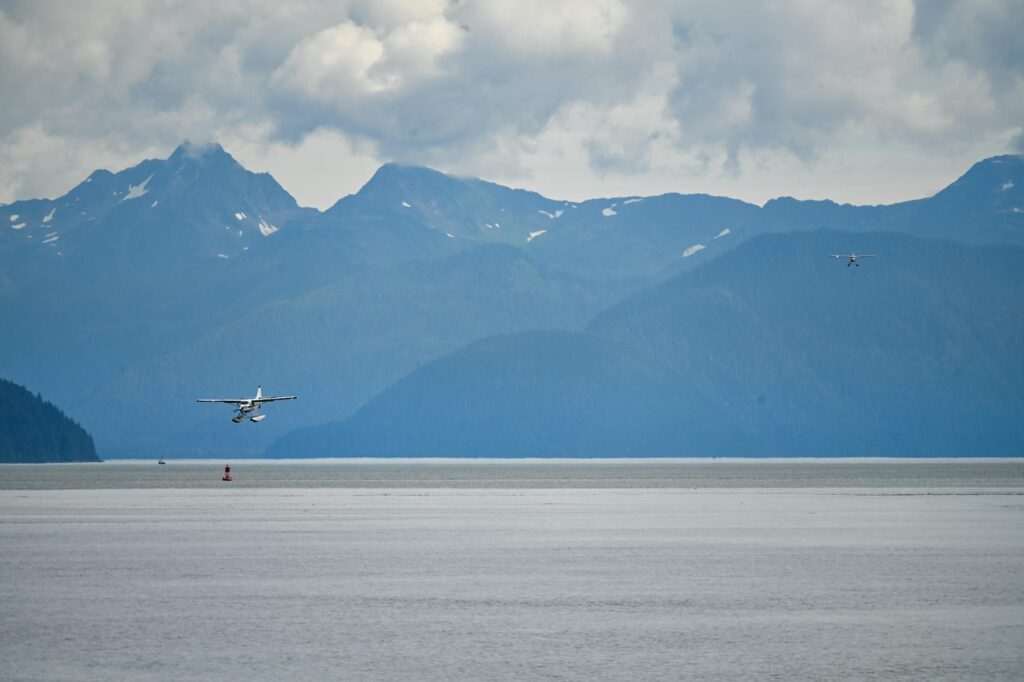
Five minutes from downtown Anchorage, several hundred floatplanes are parked on a lake. On a summer morning, they take off and land at a rate of one every few minutes — a continuous parade of Cessnas, Beavers, and Otters climbing over the Chugach Mountains or descending across the water with spray curling from their floats. Lake Hood Seaplane Base is the world’s largest and busiest floatplane base, and watching it from the public viewing area on the shore costs nothing and requires no advance planning. For a city that sells itself on wilderness access, Lake Hood is the most concentrated expression of how Alaskans actually get to the wilderness — and it is ten minutes from any downtown hotel.
What Is Lake Hood?
Lake Hood is a connected pair of lakes — Lake Hood and Lake Spenard, joined by a short channel — located immediately south of Ted Stevens Anchorage International Airport and sharing its perimeter. The seaplane base operates with its own control tower and runway designations, using the water surface as a runway in summer and the frozen lake surface as a ski plane strip in winter. Approximately 800 floatplanes are permanently based at Lake Hood, tied to floating docks along the shore, ranging from single-engine bush planes used for personal backcountry access to multi-passenger turbines operated by commercial air taxi companies.
In peak summer months, the base records up to 190 aircraft operations per day — takeoffs and landings combined — making it genuinely the busiest floatplane facility in the world by operational volume. For visitors, the significance is simpler: this is where Alaska begins. Every flight to a remote fishing lodge, a backcountry hunting camp, a coastal cabin reachable only by air, a wilderness lake with no name on a topographic map — a meaningful share of them originate from this lake.
The Free Visitor Experience
The public viewing area along the north shore of Lake Hood is accessible from Aircraft Drive, off International Airport Road. There is a parking area and a gravel path that runs along the water, with the floatplane docks and ramps directly visible across a narrow stretch of lake. No admission, no scheduled activities — just the planes and the water.
Arriving on a clear summer morning between 7 and 10 AM puts you at the peak of departure activity, when tour operators, air taxi pilots, and private owners are leaving for the day’s flights. Watching a de Havilland Beaver taxi to the water runway, throttle up, and lift off in a spray of water before banking toward the mountains gives an immediate understanding of why floatplanes have defined Alaskan life for nearly a century. The variety of aircraft is part of the draw — brightly painted Cessna 185s and 206s share the water with vintage turbine Otters and the occasional larger aircraft, and the continuous traffic makes it easy to spend an hour without seeing the same configuration twice.
Alaska Aviation Museum
The Alaska Aviation Museum occupies a hangar on the south shore of Lake Hood at 4721 Aircraft Drive. The museum covers the full arc of Alaska aviation history — from the earliest bush pilots in the 1920s and 1930s who opened the territory’s interior to the present — with an emphasis on the aircraft and people who built that history. Historic planes in the collection include a Stearman biplane, a Grumman Goose (the twin-engine amphibian that served Alaska coastal communities for decades), and various Cessna and Piper floatplane variants that represent the workhorses of the bush flying era.
A significant exhibit covers Alaska aviation during World War II, when the territory became a critical theater following the Japanese invasion of the Aleutian Islands. The Lend-Lease program that ferried aircraft through Alaska to the Soviet Union — thousands of planes flown by American and Soviet pilots through Fairbanks — is one of the lesser-known and more remarkable logistics operations of the war, and the museum covers it in appropriate detail. Admission is approximately $15–$20 for adults; the museum is open seasonally, with reduced hours in shoulder months. Allow 90 minutes to two hours for a thorough visit.
Booking a Scenic Floatplane Tour
Several air tour operators based at Lake Hood run scenic floatplane flights, making the base not only a spectating destination but a departure point for some of the most dramatic aerial sightseeing in Alaska. Common routes and approximate durations:
- Knik Glacier: A 45-to-60-minute flight northeast of Anchorage over the Matanuska-Susitna Valley to the face of Knik Glacier, which calves into a lake studded with icebergs. One of the most accessible glacier flights from the city.
- Denali scenic flight: A 2.5-to-3-hour route north, with a pass near the Denali summit and views of the Ruth Glacier amphitheater. Subject to weather and cloud cover; clear days make this among the most spectacular flights available anywhere in Alaska.
- Backcountry fishing lakes: Air taxi operators fly anglers to remote lake systems in the Chugach and Alaska Range drainages for day or overnight trips. The plane lands on the water, drops you with gear, and returns at a prearranged time — the classic Alaska bush plane experience.
- Prince William Sound coastal tours: Some operators run extended tours southeast to Prince William Sound, covering the fjords and glaciers accessible from the water.
Prices vary by route and operator, typically ranging from $200–$250 per person for shorter glacier flights to $400–$600 for Denali-area tours. Book in advance for July and August; popular routes with established operators fill weeks ahead. Look for operators based on Aircraft Drive and Lake Hood proper.
Bush Flying in Alaska: Why Floatplanes Matter
Alaska has more registered pilots per capita than any other U.S. state, and more floatplanes per capita than anywhere in the world. This is not a quirk — it reflects the basic geography of the state. Alaska has approximately 3 million lakes and a road system that connects only a fraction of the state’s communities and wilderness areas. For the majority of Alaska’s geography, floatplanes are not recreational vehicles: they are the postal service, the ambulance, the grocery delivery, and the way kids get to school. Bush pilots have historically held a social status in Alaska comparable to doctors and firefighters — essential personnel whose judgment and skill directly determine whether people live or die in remote conditions.
Watching Lake Hood from the shore gives you a window into this infrastructure. The commercial air taxi loading gear and passengers, the private owner pre-flighting before a weekend at a cabin, the medevac operator running an urgent flight — all of it visible from a public path, without a ticket, at no cost to the visitor.
Photography at Lake Hood
Early morning is the best time for photography: golden hour light between 5 and 7 AM in June and July illuminates the parked planes from a low angle, and the calm water before the day’s traffic begins produces strong reflections. A wide-angle lens captures the scale of the tie-down area — rows of colorful planes against the mountains. A telephoto (100–400mm range) catches aircraft in motion: the moment of liftoff, the spray trail on the takeoff roll, or a plane banking over the Chugach on climb-out. The combination of foreground interest (the planes and docks) and background (the Alaska Range or Chugach peaks) makes almost any composition work in clear weather.
Combining with Earthquake Park
Earthquake Park, commemorating the 1964 Good Friday Earthquake — the largest recorded earthquake in North American history at 9.2 magnitude — sits about 1.5 miles from the Lake Hood viewing area along the coastal trail. The park occupies land that dropped 8 to 10 feet during the quake, and the irregular terrain, still visible in the bluff topography, is its own kind of geological exhibit. Interpretive signs explain what happened; the views across Knik Arm to the Alaska Range are among the best in the city on clear days. A coastal walk connecting Lake Hood and Earthquake Park, continuing toward the Tony Knowles Coastal Trail, makes a half-day outdoors itinerary that covers two of Anchorage’s most distinctive public spaces.
Lake Hood is the sound of Alaska waking up. In the early summer morning, with planes taxiing and the Chugach white on the horizon, you understand something about Alaska that the visitor brochures cannot fully explain: the wilderness is not out there, unreachable. It is right here, and there is a plane leaving for it in ten minutes.
Featured photo by Beth Fitzpatrick on Pexels.


No comments yet.