
Denali National Park Camping 2026: How to Plan an Overnight Trip from Anchorage
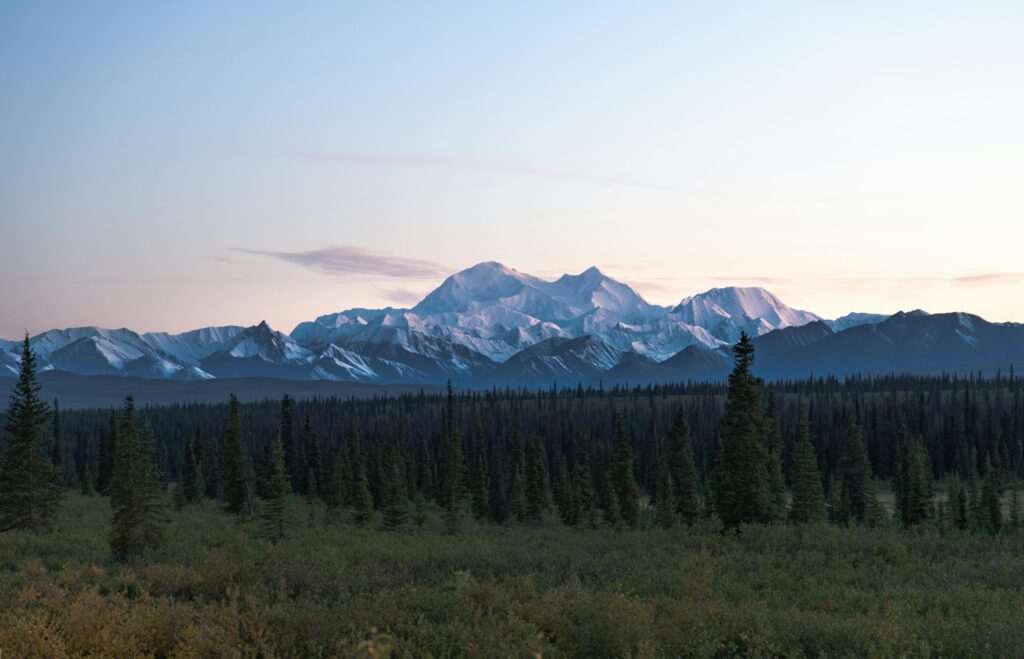
Denali National Park is four to five hours from Anchorage by car, and you could visit it as a day trip — many people do. But camping inside the park is a different experience entirely. It means waking up at Wonder Lake with the mountain filling the horizon on a clear morning, or lying in your tent at Teklanika listening to wolves in the distance, or watching a grizzly sow and her cubs work a hillside from the window of the Camper Bus on the way to your campsite at Mile 85.
The park has one road — the 92-mile Denali Park Road — and only the first 15 miles are open to private vehicles. Everything beyond that moves by bus. Planning a camping trip here requires understanding the campground system, the bus system, and the reservation process well in advance. This guide covers all three.
Getting to Denali from Anchorage
The park entrance is located at the end of the Denali Park Road, reached by taking the Parks Highway (AK-3) north from Anchorage for approximately 240 miles. The drive takes 4 to 5 hours depending on conditions and stops. The Parks Highway passes through Wasilla, Willow, Talkeetna (worth a stop for fuel and food), and the small gateway communities of Healy and Cantwell near the park entrance.
The Alaska Railroad runs seasonal daily service between Anchorage and the Denali Park depot from mid-May through mid-September, departing Anchorage in the morning and arriving at the park in the early afternoon. The train offers a relaxing alternative to driving, with dramatic scenery through the Susitna Valley that the highway misses. Passengers without a car use the in-park bus system for all movement once they arrive.
The Four Main Campgrounds
Riley Creek (Mile 0.5) — Best for Flexibility and Families
Riley Creek is the largest campground in the park (145 sites, mix of tent and RV) and the only one accessible year-round. It sits just inside the park entrance near the Wilderness Access Center, where bus tickets, backcountry permits, and park information are all handled. Sites are forested and relatively sheltered. Because it’s driveable without a bus reservation, it’s the most accessible option and the easiest starting point for first-time Denali campers. The campground itself doesn’t offer dramatic mountain views — the park’s interior does — but the location gives you flexibility to take morning and evening buses into the park. Reservations open in early December for the following season on recreation.gov.
Savage River (Mile 13) — Best for Mountain Views Without the Bus
Savage River is the farthest campground reachable by private vehicle — the road beyond it is bus-only — and offers the best views available without committing to a full bus ride. The campground sits in open tundra near the river, with clear sightlines toward the Alaska Range on good-weather days. This is one of the more popular reservations to secure, particularly for visitors who want mountain scenery but prefer not to spend hours on a bus. Two camping areas (one for tents, one for RVs) share the general area. Book early — these sites fill quickly for July and August.
Teklanika River (Mile 29) — Best for Immersion Without Going to Wonder Lake
Teklanika offers a genuine wilderness camping experience at a manageable distance into the park. The site rules create an intentional immersion: if you drive your own vehicle to Teklanika, you must stay a minimum of three nights and cannot move your car during that time (the road beyond is bus-only, so there’s nowhere to drive anyway). Most campers who book Teklanika drive in on day one, park, and use the Camper Bus for excursions deeper into the park. The campground is positioned near the Teklanika River in open boreal landscape with good wildlife viewing potential — grizzlies, caribou, and Dall sheep are regularly spotted in this corridor. Mosquitoes are significant from mid-June through early August; bring protection.
Wonder Lake (Mile 85) — The Most Coveted Campground in Alaska
Wonder Lake is 85 miles from the park entrance by road — a 5 to 6-hour bus ride — and on clear days it offers the most celebrated view in Denali National Park: the 20,310-foot summit of Denali rising above the lake’s mirror surface, unobstructed by other peaks. The campground has 28 tent-only sites and no vehicle access. Getting here requires the Camper Bus, and reservations release on recreation.gov in early December. Wonder Lake sites for July and August sell out within hours of release. Set a calendar reminder for the December release date and be at your computer when it opens.
The tradeoff: the mountain is only visible on clear days, and Wonder Lake sits in a low, wet valley that generates enormous mosquito populations from mid-June through late July. Bring a head net and full coverage clothing for any camp activity outside your tent. Late August offers fewer mosquitoes and better odds of fall color in the surrounding tundra, though the days are shorter.
The Camper Bus
The Camper Bus (green bus, formally the Camper Connection) is the transportation system for registered campers heading to Teklanika, Wonder Lake, and two other backcountry campgrounds (Sanctuary and Igloo). It’s not a tour bus — there’s no narration — but drivers do stop for wildlife, and the views from the road are extraordinary regardless.
Purchase Camper Bus tickets on recreation.gov at the same time as your campsite reservation. Each ticket covers one-way or round-trip travel on a specific date. Buses run early morning and throughout the day in peak season; most campers take an early bus in and an evening or next-day bus out. Buses have limited space; book your tickets at the same time as your campsite, not as an afterthought.
Visitor buses (narrated day trips) are separate from Camper Buses and operate on different tickets. Both can be booked through recreation.gov.
Backcountry Camping: The Unit System
Denali divides its backcountry into 87 numbered units, each with a small maximum occupancy (typically 4–6 people per night). Backcountry permits are free but require advance planning. The park releases permits up to 24 hours in advance at the Backcountry Information Center near the park entrance — there’s no online booking for backcountry units.
In practice, this means backcountry campers typically arrive the day before their planned entry, pick up their permit in person, and take the Camper Bus the following morning. Popular units (especially those near Wonder Lake and the high-elevation approaches) fill up daily during peak season. The park service also allows backcountry campers to wait-list for units in high demand.
Bears are present throughout the Denali backcountry. Bear canisters are required for all backcountry overnight travel — soft-sided bear bags are not permitted. The park loans canisters for free at the Backcountry Information Center.
What to Pack for Denali Camping
Rain gear: Denali weather is famously variable. Expect rain at any time from May through September. A waterproof jacket and pants are non-negotiable. Waterproof boots or gaiters protect your feet when crossing tundra and creek drainages.
Bear canister: Required for backcountry travel, strongly recommended for frontcountry camping. Store all food, scented items (toiletries, sunscreen), and cooking gear in the canister or in bear boxes provided at developed campgrounds.
Mosquito protection: The combination of wet tundra and long summer days creates conditions for intense mosquito activity, particularly at lower elevations (Riley Creek, Wonder Lake) in June and July. DEET-based repellent, a head net, and long sleeves and pants are essential.
Layers: Temperatures at Wonder Lake in July can range from 40°F overnight to 65°F in the afternoon. At higher elevations, wind chill can push effective temperatures below freezing even in August. Bring a full layer system regardless of your start-point weather.
Offline maps: Cell service is unavailable inside the park. Download the park map via the NPS app or CalTopo before you leave Anchorage.
Wildlife Safety at Camp
Grizzly bears are regularly active in and around all Denali campgrounds. Follow these protocols: store all food in provided bear boxes or your canister — never in your tent or vehicle; cook at least 200 feet downwind from your sleeping area; hang or box your trash; never feed wildlife. Rangers actively patrol campgrounds and will cite violators.
Moose are common throughout the park and can be aggressive, particularly cows with calves in spring and early summer. Give them space — a moose charge is not a bluff. Dall sheep, caribou, foxes, and wolves are also present throughout the park.
Combining Camping with Day Hikes
Denali has no maintained trail system beyond the first few miles near the entrance. Hiking here means cross-country travel on open tundra, moraine, and ridgeline. The park encourages this — visitors can hike anywhere in the park that isn’t a restricted wildlife closure — and the lack of trails means solitude even in summer. Campers at Teklanika and Wonder Lake can day-hike from their sites with no additional permits. The Camper Bus stops on request in most areas, allowing hikers to be dropped at a ridge or tundra slope and picked up later at the same spot or a nearby pull-out.
Adventure tour operators from Anchorage, including Adventures by True North and Get Up and Go Tours, offer guided multi-day trips into Denali that handle logistics including transportation, permits, and gear for visitors who prefer not to self-organize the full overnight experience.
Booking Timeline
Recreation.gov campsite reservations open in early December for the following summer. Wonder Lake and Savage River sites fill within 24–48 hours of opening. Set a reminder for the December release, have your account set up and payment method ready, and book immediately. Riley Creek and some Teklanika sites have more availability but still fill well before spring. Cancellations do appear throughout the season — worth checking weekly if your first-choice campground was sold out at release.
No comments yet.