
Palmer Alaska 2026: The Complete Visitor Guide to the Mat-Su Valley Town
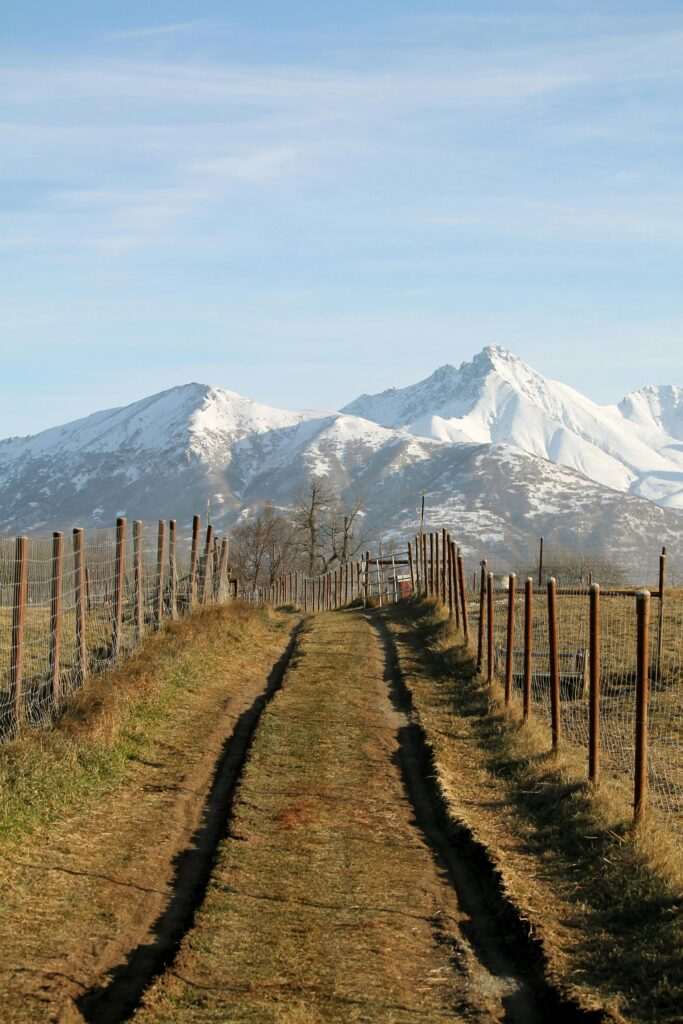
Palmer sits 42 miles northeast of Anchorage in the Matanuska-Susitna Valley, close enough for a day trip but substantial enough to justify staying overnight. It’s a genuine agricultural town — one of the few in Alaska — with a layered history that starts with Depression-era federal colonists, runs through Norwegian heritage and farm culture, and arrives at a present-day community of markets, breweries, and trail access that makes it one of the more rewarding small towns in the state.
Getting There
Palmer is a straightforward drive from Anchorage on the Glenn Highway — 45 minutes in normal traffic, with Chugach Range views most of the way. The highway passes through Eagle River and the Matanuska Valley before dropping into Palmer’s downtown grid. There’s no train or bus service worth noting; this is a drive-yourself destination. Free street parking is available throughout downtown.
The Colony History
Palmer’s founding story is unlike any other Alaska town’s. In 1935, the federal government relocated approximately 200 farming families from the Depression-ravaged upper Midwest — primarily from Minnesota, Wisconsin, and Michigan — to the Matanuska Valley as part of the Federal Emergency Relief Administration’s colonization program. The experiment was controversial, partially chaotic, and ultimately transformative. Many families came from Scandinavian-American farming communities already adapted to short-season agriculture, and Norwegian and Finnish cultural traditions took root alongside the crops.
That heritage is still visible in Palmer’s community identity, in the names of local families, and in the agricultural DNA of the town. The colony period is the reason Palmer, not Anchorage, is where Alaska grows its food.
Museums and Historical Attractions
The Colony House Museum on East Elmwood Avenue preserves one of the original homes built for colonist families in 1935. The interior is maintained as a period exhibit, and the interpretive materials trace the colony experiment in detail — who came, why, what went wrong, and what persisted. Budget 30–45 minutes. Admission is modest and the staff are knowledgeable.
The Palmer Museum of History and Art on South Valley Way covers a broader scope — Palmer’s Indigenous context, the Dena’ina Athabascan peoples who inhabited the valley before colonization, the gold rush era, and the colony period. The art collection features Alaska Native and regional works and rotates regularly. It’s small by metropolitan standards but well-curated for a town this size, and free to enter.
The Matanuska Valley Agricultural Showcase (located near the fairgrounds) displays the valley’s extraordinary produce during summer months, including the famous giant vegetables that grow under Alaska’s extended daylight hours. The Valley has produced record-setting cabbages exceeding 100 pounds and pumpkins over 2,000 pounds — the result of 18–20 hours of daily summer sunlight hitting fertile glacial silt soils. Visiting in late summer means you can see these in person rather than just reading about them.
The Alaska State Fair
Palmer’s biggest annual event draws visitors from across the state every August through Labor Day weekend. The Alaska State Fair is a full-scale agricultural exhibition with giant vegetable competitions, livestock shows, live music, carnival rides, and food vendors that span from reindeer dogs to deep-fried Alaska specialties. The giant vegetable competition is the signature event — growers have been competing since the colony days and the scale of what they produce is genuinely astonishing. If your travel window overlaps with the fair, plan your Palmer visit around it; it’s the most authentically Alaskan event on the Southcentral calendar.
Outdoor Activities
Bodenburg Butte is a short, steep hike that earns outsized views for its effort. The butte rises abruptly from the valley floor east of Palmer and a roughly 2-mile round trip with 600 feet of gain delivers panoramic views of the Matanuska River valley, the surrounding farmland, and the Chugach and Talkeetna ranges. Trailhead access is off the Old Glenn Highway. It’s suitable for most fitness levels and takes about an hour round trip.
Hatcher Pass, accessible from Palmer via the Hatcher Pass Road, offers the region’s best alpine hiking in summer and skiing in winter. The Independence Mine State Historical Park sits at the top of the pass — a preserved gold mine operation from the 1930s–40s — and the surrounding alpine terrain is prime for berry picking, wildflower viewing, and ridge walks. Plan a half day for a meaningful Hatcher Pass excursion.
Glacier access is easy from Palmer. The Matanuska Glacier is about 60 miles east on the Glenn Highway — one of the largest road-accessible glaciers in the country, with guided walk-on tours available through private operators at the glacier access road. A day that pairs a Bodenburg Butte morning hike with an afternoon glacier walk covers the full range of what the valley offers without any redundancy.
The Old Glenn Highway runs parallel to the Matanuska River south of Palmer and is worth driving slowly. Farm stands appear roadside in summer, the river views are excellent, and moose are common in the willow flats. It connects back to Anchorage and makes a fitting scenic return route for any Palmer day trip.
Dining and Craft Beer
Palmer’s food scene punches above its population for a town of 10,000. The downtown core has a handful of locally owned restaurants covering Alaskan comfort food, pizza, and Asian fusion alongside the standard diner fare. For craft beer, the Mat-Su Valley has developed a small but genuine brewing scene: Vagabond Blues Coffee & Café is a Palmer institution for breakfast and coffee, while Valley Brew and nearby Palmer taprooms offer locally made beer that locals take seriously. Farm-to-table ingredients are genuinely local here in a way that’s not marketing — the farms are visible from the restaurant windows.
The Palmer Farmers Market runs on Wednesdays and Saturdays from June through September in the town plaza, with local produce, jams, crafts, and food vendors. If you’re visiting in berry season (late July through September), the market will have fresh Alaska berries, rhubarb, and vegetables that are worth building a schedule around.
Lodging
Palmer has limited but serviceable lodging options. Several bed and breakfasts operate in the downtown area and surrounding valley, offering more character than chain hotels. A handful of mid-range hotels provide standard amenities for families. For visitors who prefer more facilities, Wasilla (15 minutes west) has a fuller hotel inventory including national chains. Camping is available at Matanuska River Park at the edge of town — a clean, well-maintained campground with mountain views that fills up during the State Fair period.
Best Times to Visit
Late July–August is peak season: maximum daylight, active farmers markets, berry picking, and the Alaska State Fair at the end of the window. This is when Palmer is at its fullest and most itself.
September brings fall color, cranberry season, post-fair quiet, and crisp weather — a good choice for visitors who prefer fewer crowds.
December–March offers Hatcher Pass skiing and a quieter town with authentic local character, but many seasonal businesses are closed.
May–June is the green-up, with wildflowers and the first farmers market dates, though the State Fair and peak berry season are still weeks away.
Palmer rewards visitors who slow down. It’s not a checklist destination — it’s a town with genuine roots that shows up for those who spend enough time to notice.
Photo: Stephen Meyers / Pexels


No comments yet.