
RV Road Trip from Anchorage 2026: Routes, Rentals & Campgrounds
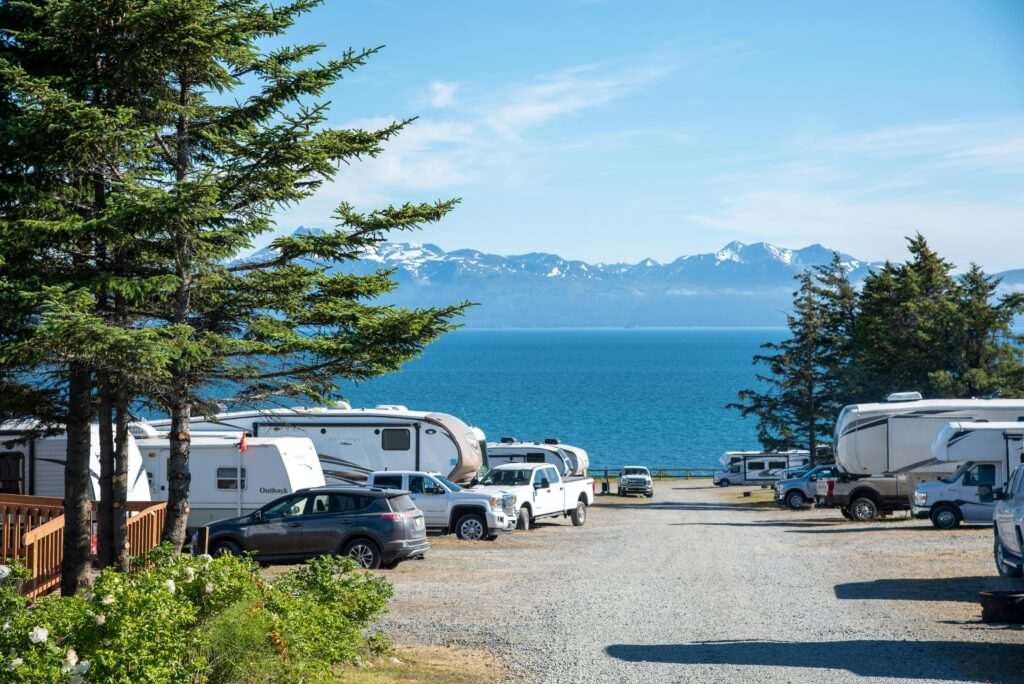
Alaska is one of the last places in North America where an RV road trip delivers exactly what the brochure promises. The highways are genuinely uncrowded. The scenery changes dramatically every fifty miles. Campgrounds sit at the edge of rivers, glaciers, and spruce forests rather than in suburban lots. And the midnight sun means you can drive at 10 PM in full daylight without it feeling strange. Anchorage is the natural starting point — it has the largest cluster of RV rental outfitters in Alaska, the best access roads in all four directions, and enough urban infrastructure (grocery stores, dump stations, propane fills) to provision properly before heading out. Here is how to plan it.
Renting in Anchorage
GoNorth Alaska is Anchorage’s established RV and campervan rental operation, with a fleet ranging from compact campervans to full-size Class C motorhomes. Compact campervans (2-berth, built on a cargo van or truck chassis) are the most maneuverable option — essential if you plan to venture onto gravel spur roads or narrow valley pullouts. Class C motorhomes (24–30 feet) give you a full kitchen, bathroom, and comfortable sleeping for families or groups of four, but limit you to paved routes and designated campgrounds. Prices in peak season (June–August) run roughly $180–$260/day for campervans and $250–$380/day for Class C units; book 3–4 months ahead for July departures.
One-way vs. return rental: Most Anchorage operators require return to the same depot, which makes loop itineraries more practical than one-way routes. A classic loop: Anchorage → Seward Highway south → Homer → back via Kenai Peninsula → Anchorage. Alternatively, Anchorage → Parks Highway north → Denali → back on the same road (the Parks Highway has no parallel route). One-way rentals to Fairbanks or Juneau (via ferry) are occasionally available at premium rates — inquire directly.
What’s included: Reputable operators include bedding, cookware, a camp table, leveling blocks, and a basic tool kit. Confirm whether the rental includes an Alaska State Parks campground pass — some operators bundle this. GPS units are often rentable; Alaska cell coverage is patchy outside Anchorage, so an offline map app (Gaia GPS or Maps.me downloaded before departure) is essential regardless.
The Three Main Corridors
Seward Highway South — The Showcase Route
The Seward Highway running south from Anchorage along Turnagain Arm is Alaska’s most dramatically scenic paved highway — a two-lane road carved between tidal flats and the Chugach Mountains that earns a National Scenic Byway designation. The 127-mile drive to Seward takes 2.5–3 hours without stops, but plan for the full day. Beluga Point at mile 110 is the standard beluga whale pullout in summer; Dall sheep are visible on the cliffs near mile 105 most mornings. The highway splits at Tern Lake Junction (mile 37): right continues to Seward, left goes to Homer via the Sterling Highway.
Key campgrounds on this corridor:
- Bird Creek Campground (mile 101): Alaska State Parks site on Turnagain Arm with direct Cook Inlet views. 28 sites; no hookups. First-come, first-served in shoulder season; reservable in peak summer.
- Ptarmigan Creek Campground (mile 23.1, near Cooper Landing): River access, fishing nearby, 16 sites. No hookups. Excellent base for Kenai River area.
- Resurrection Bay / Seward area: Seward has a large RV park at the Small Boat Harbor with hookups — the most convenient full-service option on this route. Private operators and the city-run waterfront lot both take reservations.
The Homer extension via the Sterling Highway adds 226 miles round-trip from the Tern Lake junction but delivers the Alaska Peninsula experience: the Kenai River (best sockeye salmon river in the world), the massive tidal flats of Kachemak Bay, and the Homer Spit — where halibut charters depart and RV parking is available directly on the Spit with ocean views.
Parks Highway North — Denali Corridor
The George Parks Highway runs 358 miles from Anchorage to Fairbanks, passing through Wasilla and Palmer before climbing into the Alaska Range and arriving at the entrance to Denali National Park at mile 237. This is the most popular RV route in Alaska for good reason: Denali’s peak is visible from the highway on clear days, and the park itself requires advance planning for vehicle access.
Key campgrounds on this corridor:
- Nancy Lake State Recreation Area (mile 67): Canoe-accessible lakeside camping in the Matanuska-Susitna Valley. Good early-trip overnight option before the terrain gets serious.
- Denali State Park (mile 133–169): Several primitive campgrounds with Denali views — Byers Lake Campground (mile 147) is the best-developed option with water and pit toilets. No hookups. Denali views from here on clear days rival anything inside the national park boundaries.
- Denali National Park — Riley Creek Campground (mile 237): The only campground inside Denali accessible to private vehicles and RVs. 146 sites, some with hookups. Reserve 6+ months ahead for summer dates. The Wilderness Access Center, 2 miles inside the park, is where you book shuttle buses into the park interior — private vehicles cannot proceed past mile 15.
Note: Denali National Park charges a vehicle entry fee ($35/vehicle in 2026) in addition to campsite fees. Factor this into your budget.
Glenn Highway East — Matanuska Glacier Corridor
The Glenn Highway running northeast to the Matanuska Glacier and beyond to Glennallen is the least-traveled of the three main RV corridors but arguably the most dramatic after the initial valley section. The highway passes through the Matanuska-Susitna Valley farm country before entering the canyon section near Palmer, where the landscape tightens and King Mountain rises almost vertically from the valley floor. Chugach State Park campgrounds anchor the first stretch east of Anchorage, with additional state sites at Long Lake (mile 85) and Matanuska Lake (mile 35.5).
The Matanuska Glacier pull-out at mile 102 is a half-day detour — on-ice guided walks require booking with permitted operators, but the State Recreation Area viewpoint is free. Sheep Mountain Lodge at mile 113 is the reliable food and fuel stop for this corridor. RVers continuing to Glennallen or Wrangell-St. Elias National Park are entering a longer, more remote route; fuel up whenever possible east of Palmer.
Alaska-Specific RV Driving Considerations
Wildlife on the road: Moose are the most common hazard — large, dark, and frequently encountered at dawn and dusk on highway shoulders and in drainages. They do not yield. Slow down in low-light conditions, particularly on the Seward and Parks Highways. Bears cross roads but do not typically stand in them. Caribou herds can block the road north of Denali.
Narrow pullouts and road shoulders: Many scenic pullouts were designed for passenger cars, not 28-foot motorhomes. On the Seward Highway in particular, popular stops have limited space and no turnaround room for large vehicles. Arrive early (before 9 AM) for the most-visited viewpoints, or skip the pullout and continue to a campground with similar views.
Gravel roads: Campervans can handle most improved gravel roads; Class C motorhomes should stay on paved surfaces unless the campground is specifically noted as RV-accessible. The Denali Park Road, Hope Highway, and the road to Crow Creek Mine in Girdwood are passable for campervans but not for full-size RVs.
Ferry extension: The Alaska Marine Highway System connects Southcentral Alaska to Southeast via ferry. Taking your RV from Whittier to Valdez, or from Homer to Kodiak, is logistically possible and extends the trip significantly. Vehicle ferry reservations require advance booking — at least 2–3 months in summer. The Whittier–Valdez run is the most practical add-on for an Anchorage-based itinerary.
Hookups, Dump Stations, and Practical Logistics
Full hookup RV parks (water, electric, sewer) are concentrated in Anchorage, Wasilla, Seward, and Homer. On the Parks Highway, hookup options thin out significantly north of Wasilla. Plan your water fill and dump station stops before departing each morning — the RV Trip Wizard and iOverlander apps both have crowd-sourced Alaska data, and Sanidumps.com lists dump station locations along all three corridors.
Fuel: Anchorage prices set the baseline; expect 10–20% higher at highway stops and 30–40% higher in remote areas. Fill the tank every time you pass a gas station north of Palmer or east of Cooper Landing. Propane is available in Anchorage, Wasilla, and at most RV parks — fill before leaving the city.
Boondocking (dry camping on public land): Bureau of Land Management and US Forest Service lands allow dispersed camping in most areas without hookups or fees, provided you are off the main highway and on a designated dispersed camping area. The Chugach National Forest between Anchorage and Seward has limited dispersed camping; the BLM lands north of the Alaska Range near Denali have more. The Milepost (the essential Alaska highway guide, available at Anchorage bookshops and Amazon) details legal dispersed camping areas along each corridor.
Camping Under the Midnight Sun
In late June, it never truly gets dark in Southcentral Alaska. The sun sets briefly after 11 PM and rises again before 4 AM, with civil twilight filling the gap. Sleeping in an RV under these conditions requires blackout curtains or a sleep mask — even a well-insulated Class C motorhome passes enough light through the ceiling vent to disrupt sleep by 3 AM. Most rental units either come with curtains or have them available; confirm before departure.
The flip side: you can drive, cook, and set up camp at 9:30 PM in full daylight. Evening campfires happen at midnight with the sun still technically above the horizon. Wildlife activity extends later than it would in a normal photoperiod. The midnight sun rewards flexible scheduling — plan meals and activities by hunger and interest rather than by clock.
An Alaska RV trip requires more advance planning than a road trip in the Lower 48, but it delivers experiences that no other format can match. Book your rental early, reserve Denali campgrounds the moment reservations open, and build in buffer days for weather and for roads that demand more attention than you expected. The itinerary will flex; that is part of the trip.
No comments yet.