
Anchorage on a Canadian Budget: USD Exchange Rate & Cost Planning Guide
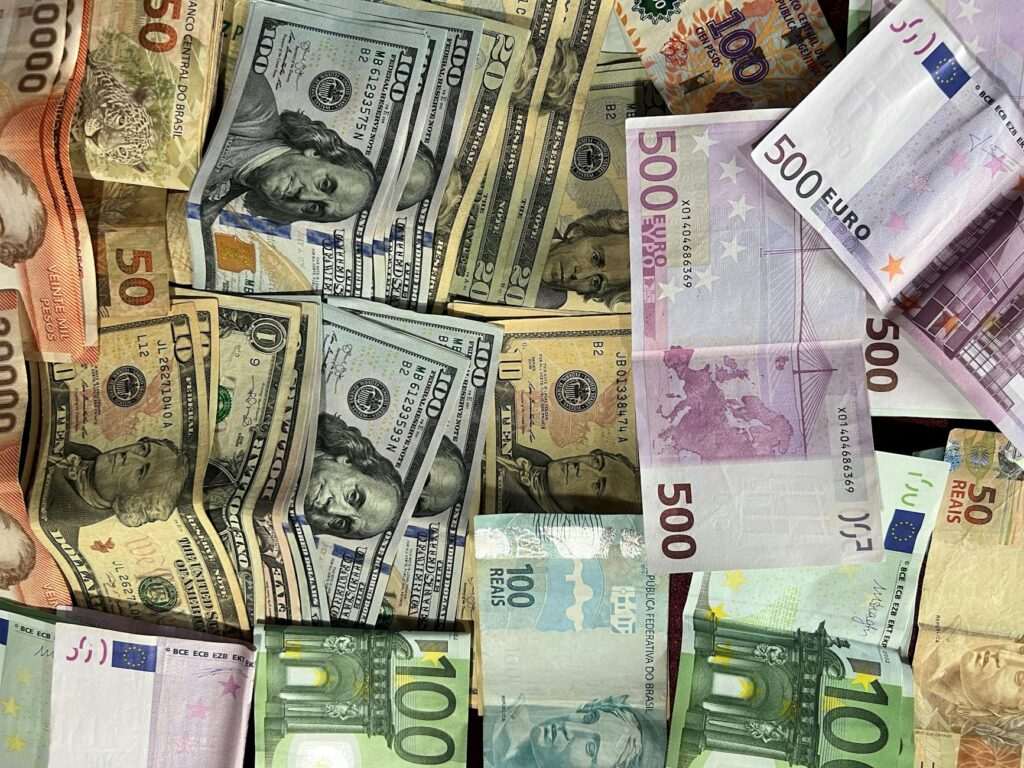
Alaska runs on US dollars — exclusively. If you’re crossing the border from Canada for an Anchorage trip, there’s no debit machine that’ll take your loonies, no restaurant that posts prices in Canadian dollars, and no hotel that’ll convert at the till. That’s the first thing Canadian visitors need to understand, and it makes upfront currency planning more important than it is for most international destinations. The good news? Anchorage has solid ATM and banking infrastructure, and if you plan your exchange strategy before you land, the currency side of your trip stays simple.
USD only: what this means for Canadian visitors
Every vendor in Anchorage — every coffee shop, tour operator, taxi, souvenir store, and restaurant — prices and charges in USD. Unlike a few border towns that occasionally accept CAD, Anchorage has no informal dual-currency tolerance. Your Canadian Visa and Mastercard will work at terminals everywhere, but they’ll process transactions in USD and your bank will handle the conversion at whatever rate applies that day, plus any foreign transaction fees your card charges.
This isn’t unusual for US destinations, but it catches some Canadian visitors off guard because the CAD–USD spread moves. When 1 USD costs you 1.30 CAD versus 1.45 CAD, a $200 USD hotel night feels noticeably different on your statement. The practical tip: check the Bank of Canada’s exchange rate before you go, and use that number to do a rough pre-trip budget in CAD so there are no surprises.
Where to exchange Canadian dollars for US dollars
The best place to get USD is before you leave Canada — at your home bank branch or credit union. Major Canadian banks (RBC, TD, Scotiabank, BMO, CIBC) all offer USD currency exchange. Rates aren’t as sharp as mid-market, but they’re consistently better than airport kiosks, and you avoid the pressure of figuring it out while jet-lagged at the departure gate.
Airport currency exchange kiosks — both at Canadian airports and at Ted Stevens Anchorage International (ANC) — tend to charge the worst rates in the chain. The spread they build in can eat 5–8% of your exchange compared to a bank rate. If you need USD and forgot to exchange before flying, use an ATM at ANC instead. There are ATMs in the baggage claim area and near the car rental counters.
Downtown Anchorage has full banking infrastructure: Wells Fargo, Chase, and Key Bank branches are within walking distance of Fourth Avenue. If you prefer withdrawing USD from an ATM on arrival, that’s a reliable option. Just check your Canadian bank’s international ATM fee schedule ahead of time — most charge $3–5 CAD per withdrawal in addition to whatever the ATM operator charges.
Credit cards: your practical daily tool
For most Canadian visitors, a credit card is the simplest payment tool in Anchorage. Visa, Mastercard, and Amex are accepted almost universally, including at tours, museums, and smaller restaurants. The catch is foreign transaction fees: most standard Canadian credit cards charge 2.5% on purchases in a foreign currency. On a $2,000 USD trip budget, that’s an extra $50 CAD in fees you could avoid.
Fee-free cards worth knowing about: Scotiabank Passport Visa has no foreign transaction fee on purchases. HSBC World Elite Mastercard is another option. If you’re planning a bigger Alaska trip and don’t already have a no-FX-fee card, it’s worth checking whether your bank offers one — the signup window before a trip is a good reason to look.
Tip: even with a no-fee card, tell your bank you’re traveling to the US before you go. A freeze on international transactions mid-trip is an avoidable headache.
What things cost in Anchorage: USD and approximate CAD
Using a working estimate of 1 USD = 1.38 CAD (check the Bank of Canada rate before you travel — this fluctuates), here’s what the main expense categories look like:
- Accommodation: Budget hotels and vacation rentals run $130–200 USD/night (~$179–276 CAD). Mid-range downtown hotels sit at $200–280 USD/night (~$276–386 CAD). Anchorage doesn’t have a lot of budget hostel options, so accommodation is usually the biggest line item.
- Meals: A casual breakfast or lunch runs $15–25 USD (~$21–35 CAD). Dinner at a mid-range restaurant is $30–55 USD per person (~$41–76 CAD). Self-catering from a grocery store (Fred Meyer or Carrs/Safeway) can bring meal costs to $15–20 USD/day per person.
- Activities: The Anchorage Museum runs about $15 USD adults (~$21 CAD). Free options include the Tony Knowles Coastal Trail, downtown markets, and the Visit Anchorage Log Cabin Visitor Center. Full-day guided wildlife or glacier tours run $150–350 USD (~$207–483 CAD).
- Local transport: Rideshare (Uber/Lyft) within downtown to midtown runs $12–20 USD each way (~$17–28 CAD). Renting a car gives you more flexibility at $60–100 USD/day (~$83–138 CAD) plus fuel — gas in Alaska typically runs 10–20% higher than the US Lower-48 due to logistics costs.
Sample 3-night Anchorage trip budget (Canadian traveler)
Here’s a realistic 3-night budget for one person, converting at 1 USD = 1.38 CAD:
- Accommodation (3 nights × $170 USD avg): $510 USD / ~$703 CAD
- Meals ($55 USD/day × 3 days): $165 USD / ~$228 CAD
- Activities (1 paid tour + museum + free options): $175 USD / ~$242 CAD
- Transport (rideshare, no rental): $90 USD / ~$124 CAD
- Incidentals and souvenirs: $60 USD / ~$83 CAD
- Total estimate: ~$1,000 USD / ~$1,380 CAD per person
A budget-conscious traveler staying in cheaper accommodation and self-catering can cut that to $650–700 USD (~$900–965 CAD). For more general money-saving strategies, the Anchorage Budget Travel Tips & Money-Saving Guide 2026 covers accommodation hacks, free activities, and the best value dining options in detail.
Alaska prices vs. the US Lower-48
Expect most goods and services in Anchorage to run 10–20% higher than comparable US cities like Seattle or Denver. Groceries, fuel, and some restaurant meals reflect Alaska’s supply chain reality — nearly everything arrives by ship or air. It’s not extreme, but Canadian visitors who’ve priced trips to US border cities will notice the difference. Factor it into your budget rather than letting it surprise you at the register.
Do any businesses in Anchorage accept Canadian dollars?
No. Anchorage operates exclusively in USD. Unlike some border towns, there’s no informal acceptance of CAD, and no businesses post dual-currency pricing. Exchange your dollars before you go or use ATMs on arrival.
What’s the best way for Canadians to get USD before an Anchorage trip?
Exchange at your home bank branch in Canada before departing — you’ll get a better rate than airport kiosks and avoid the hassle on arrival. If you need cash in Anchorage, ATMs at the airport and downtown branches are the next best option.
Will my Canadian credit card work in Anchorage?
Yes. Canadian Visa, Mastercard, and Amex cards work everywhere in Anchorage. Check whether your card charges a foreign transaction fee (most standard Canadian cards charge 2.5%) and consider a no-FX-fee card to save on a longer or higher-spend trip.
Is Anchorage expensive for Canadian visitors?
Anchorage runs 10–20% higher than comparable US cities, and the CAD–USD exchange adds another 30–40% on top of sticker prices depending on the rate. A realistic solo 3-night trip costs roughly $900–1,400 CAD all-in depending on accommodation choices and activity spend. Budget travelers who self-cater and stick to free activities can come in below $900 CAD.
Alaska is worth the extra planning — once you’ve locked in your currency strategy, the rest of the trip logistics fall into place. Exchange before you fly, carry a no-FX-fee card if you have one, and use the CAD-equivalent figures above to build a trip budget that matches what you actually want to do in Anchorage.


No comments yet.